
Leaky Roof Repair Auckland: Causes, Costs & What to Do
Last updated:
Quick answer: A leaky roof in Auckland most commonly comes down to failed flashing, cracked or slipped tiles, or blocked gutters. Depending on the cause, repair costs range from around $300 for a minor fix to $3,000+ for more significant work. The first thing to do is contain any interior water damage and get a qualified tradie on site to assess it before the damage spreads.
A leaking roof rarely announces itself at a convenient time. More often it is a stain appearing on the ceiling after a heavy Auckland downpour, or a slow drip making itself known in the middle of winter when a repair job is the last thing you want.
The problem with leaky roofs is that the damage you can see on the inside is almost never where the leak actually starts. Water travels along framing, roofing underlays, and ceiling linings before it finds a place to drip. By the time there’s a visible stain or a bucket-filling drip, the damage behind it can be considerably worse than it first appears.
Whether you’re a homeowner in Remuera watching a ceiling stain slowly grow, or a landlord in Manukau managing a rental where the tenant has flagged a leak, the steps are the same: act quickly, limit the interior damage, and get a proper assessment from someone who knows what they’re looking at.
This guide covers the most common causes of leaky roofs in Auckland homes, what you can realistically expect to pay for repairs in 2026, and exactly what to do first when a leak appears.
The Most Common Causes of Leaky Roofs in Auckland
Free cost calculator
How much will your project cost?
Get an instant Auckland price range for your project — no details required to see it.
Flashing Failure
Failed or deteriorated roof flashing is the single most common cause of roof leaks in Auckland. Flashing is the thin metal sheeting, usually aluminium or galvanised steel, that seals the joins where your roof meets a wall, chimney, skylight or vent. Over time, particularly on older Auckland homes, flashing corrodes, lifts or separates at the joins, and water finds its way in at exactly those points.
On a typical 1970s brick-and-tile home in Howick or Papakura, the flashing around chimneys and where the roof meets a parapet wall is often the first thing to go. It is also one of the more affordable fixes when caught early: a licensed roofing tradie can reseal or replace a section of flashing for between $300 and $800 in most cases.
💡 Property tip: If your home has a chimney you no longer use, having it capped and the surrounding flashing properly sealed is one of the highest-return maintenance jobs you can do. Chimney flashing is responsible for a disproportionate number of roof leaks on older Auckland homes.
Cracked, Slipped, or Missing Tiles
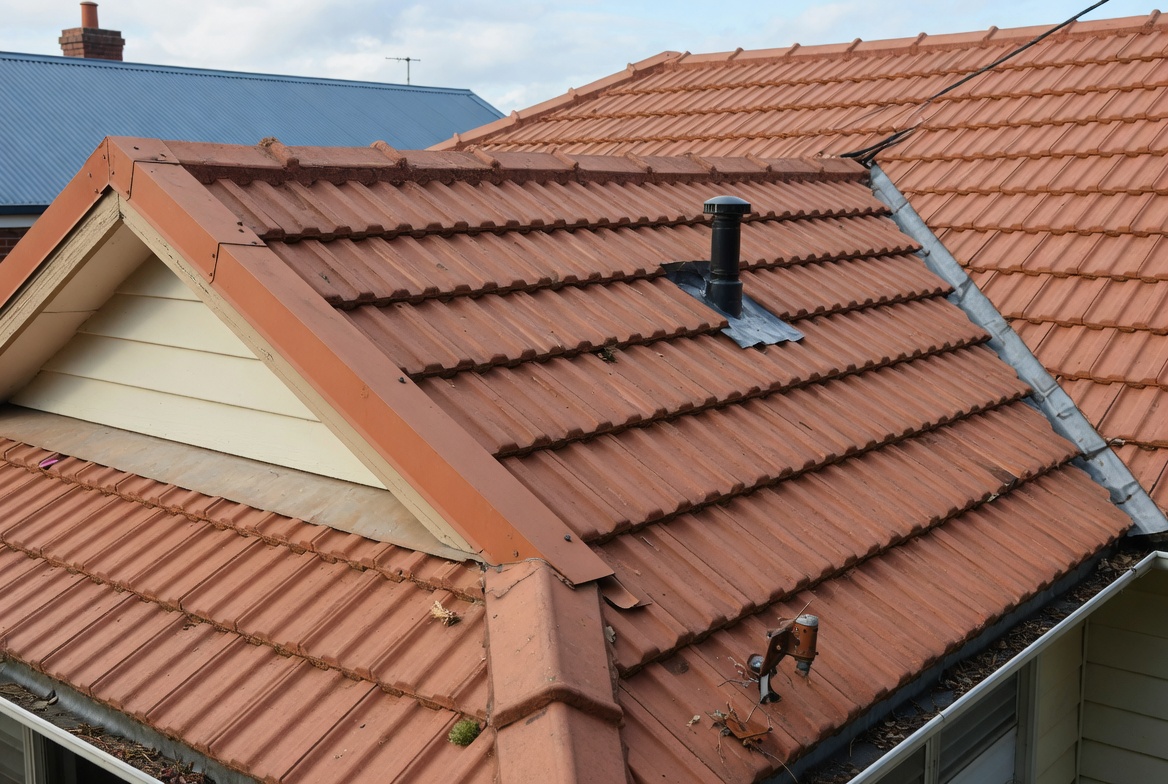
Concrete and terracotta tile roofs are extremely common across Auckland’s older suburbs, from Grey Lynn villas to Epsom bungalows and Flat Bush new builds. Individual tiles crack under foot traffic, shift after earthquakes or high winds, or simply degrade over time. A single cracked tile won’t always cause an immediate leak, but once the underlayment beneath it starts to fail, water will find a path.
The fix itself can be inexpensive: replacing a handful of cracked tiles and re-bedding slipped ridge capping typically runs $400–$1,200. The catch is that getting someone up on a tile roof to properly assess which tiles need attention (not just the obvious ones) matters enormously here. Replacing three tiles while ignoring seven others in the same area is a short-term fix.
Blocked or Damaged Gutters
This one surprises homeowners who assume gutter problems can’t cause ceiling leaks. Overflowing gutters, particularly in leaf-heavy areas like Titirangi, Hillsborough or anywhere with established trees, can force water back up under the roof edge and into the ceiling space. Sagging, cracked, or poorly joined guttering creates the same problem.
Gutter clearing and minor gutter repairs sit at the affordable end of the spectrum, typically $150–$400, and they are also the most commonly neglected maintenance item on Auckland residential properties. Sound familiar?
Roof Membrane and Flat Roof Failures
Flat roofs and low-pitch sections, common on 1960s–1980s Auckland homes and on additions and garage roofs, rely on a continuous waterproof membrane rather than overlapping tiles. When that membrane cracks, blisters, or separates at the joins, water pools and eventually finds its way through. This is a more significant repair category, and diagnosis matters more than on a tiled roof: a membrane can fail metres away from where the water eventually shows up inside.
“The pattern we see most often is a slow ceiling stain that gets written off as a minor gutter issue for months. By the time someone gets up there, the actual fault is a separated flashing at a dormer or a wall junction, and the framing underneath has been wet the whole time. The roof repair barely changes in price. The ceiling, insulation and framing repair underneath it is what multiplies the bill.”
— Superior Property Services Team
How Much Does Leaky Roof Repair Cost in Auckland? (2026 Guide)
Roof repair costs in Auckland vary widely depending on the cause, the roof type, access and how long the leak has been running. Here is a realistic breakdown by repair type.
| Repair Type | Typical Cost Range (NZD) | Notes |
|---|---|---|
| Flashing repair / reseal | $300 – $800 | Higher end if replacement required |
| Cracked / slipped tiles (minor) | $400 – $1,200 | Depends on tile availability and volume |
| Gutter clearing + minor repair | $150 – $400 | Access and gutter length affect cost |
| Flat roof membrane patch | $500 – $2,000 | Full re-membrane can be $4,000–$12,000+ |
| Skylight reseal / replacement | $400 – $1,500 | Higher for full unit replacement |
| Ceiling lining repair (post-leak) | $400 – $2,500 | Includes GIB replacement and repainting |
These figures are indicative for Auckland in 2026 and sit inside the broader picture in our Auckland house repair cost guide. The actual cost of your repair depends on a proper on-site assessment. Call-out and inspection fees typically range from $80 to $150 and are usually credited against the repair cost if you go ahead.
💡 Property tip: Always get the roof assessed AND the ceiling space (if accessible) assessed at the same time. The visible ceiling damage and the actual source of the leak are often in different places, and any mould or framing damage in the ceiling space needs to be identified before lining repairs begin.
Healthy Homes compliance note: For landlords, a leaking roof that causes moisture ingress, whether that shows up as ceiling staining, wet insulation or mould growth, puts you at odds with the Healthy Homes moisture ingress and drainage standard, which requires efficient drainage, guttering and downpipes. Moisture issues need to be addressed promptly. See the moisture ingress and drainage standard on tenancy.govt.nz for the obligations in full.
What Pushes the Cost Up
The longer a leak goes unaddressed, the more expensive it becomes. Not because the roof repair itself changes, but because of what happens to the ceiling lining, insulation and framing underneath. Wet insulation loses its R-value and usually needs replacing. Wet timber framing can develop mould and rot. Where the water has run far enough to reach flooring or wall linings, the scope crosses into flood and water damage repair territory rather than roofing. GIB ceiling linings that have been saturated need to come out and be replaced, not just repainted over.
Access also affects cost. A single-storey home in Papatoetoe is simpler to work on than a two-storey home with a steeply pitched roof in Remuera. Scaffolding requirements add to the cost on more complex jobs.
Tile Roof Leaks: Ridge Capping, Bedding and Pointing
Concrete and terracotta tile roofs behave differently from long-run metal, and most Auckland leak diagnoses on a tile roof come back to one of three things. Worth knowing which, because the three sit at very different price points.
Ridge capping, bedding and pointing
The ridge caps running along the apex and the hips of a tile roof are bedded onto a mortar bed and sealed with a flexible pointing compound over the top. Mortar bedding is the part of a tile roof that fails first, and it fails quietly. The bedding cracks and crumbles with thermal movement over decades, the pointing above it shrinks away from the tile, and water starts running under the caps instead of over them.
You can often see it from the ground with binoculars: hairline cracks along the mortar line, missing chunks at the hip ends, or a cap sitting visibly proud of its neighbours. Re-bedding and re-pointing a run of ridge caps is a defined, quotable job rather than an open-ended one, and it is far cheaper than the ceiling repair it prevents.
Cracked tiles and slipped tiles
A single cracked tile does not always leak straight away, because the underlay beneath it is doing a second job. Once that underlay perishes, every cracked tile above it becomes a leak. On Auckland tile roofs the underlay is usually the real age limit, not the tiles themselves — concrete tiles routinely outlast the building paper under them.
Foot traffic is the most common cause of cracked tiles, which is why an aerial installer, a solar installer or a chimney sweep walking the roof is a reasonable thing to think about when a leak appears shortly after someone was up there.
Valleys and the gutter line
Roof valleys concentrate water from two roof planes into one narrow channel. Fill that channel with leaf litter, moss or broken tile fragments and the water backs up sideways under the tiles on either side. The same thing happens at the eaves when a gutter overflows: water tracks back up under the bottom course of tiles and into the ceiling space.
💡 Property tip: If your tile roof leaks only in heavy, wind-driven rain and the stain sits near an external wall, check the valley and the gutter line before anyone quotes you for tiles. Wind-driven rain overwhelming a partly blocked valley is one of the most commonly misdiagnosed tile roof leaks in Auckland.
Ongoing tile roof upkeep is its own topic, and we have covered the moss, lichen and surface-coating side of it in detail in our guide to concrete tile roof maintenance.
Repair or Replace? When a Leaking Roof Is Past Repairing
At some point patching stops being economic. The honest test is not the age of the roof — it is whether the failures are isolated or general. One flashing, one valley, one run of ridge capping is a repair. Failures appearing in unrelated parts of the roof within the same year usually mean the underlay, the fixings or the coating has reached the end of its service life, and each repair is buying months rather than years.
| What you are seeing | Usually points to |
|---|---|
| One leak, one identifiable point, rest of the roof sound | Repair |
| New leaks appearing in unrelated areas within the same season | Underlay or fixings at end of life — get a replacement assessment |
| Widespread rust perforation on long-run metal, not just surface rust | Replacement |
| Repairs have been done three or more times in three years | Cost of patching is now exceeding the replacement path |
| Sagging or springy roof deck underfoot, or visible framing damage | Structural — needs an LBP assessment before any roofing decision |
If the answer lands on the replacement side, the numbers change substantially and are worth looking at before you commit to another round of patching. Our 2026 Auckland roof replacement cost guide breaks down what a full re-roof runs by material and roof size. Where the leak has already reached the ceiling, insulation and framing, the make-good side is covered in our guide to water damage restoration for Auckland homes.
Healthy Homes compliance note: For a rental, a roof leak is not only a repair problem. The moisture ingress and drainage standard requires efficient drainage and guttering, and separately the landlord must keep the property in a reasonable state of repair under the Residential Tenancies Act. Wet ceiling insulation also stops meeting the insulation standard once it is compressed or damp. If a leak has soaked ceiling insulation in a rental, budget for the insulation as well as the roof — our Healthy Homes standards checklist covers where that sits across the five standards, and persistent damp is how mould claims in rentals usually begin.
What to Do First When You Discover a Roof Leak
Step 1: Contain the Interior Damage
Your first priority isn’t the roof — it’s limiting water damage inside the house. If there’s active dripping, place containers to catch water and move furniture, electronics, and anything valuable away from the affected area. If the ceiling is bulging, which indicates water pooling above the lining, carefully puncture it with a screwdriver to release the water in a controlled way. A bulging GIB ceiling that collapses under its own weight causes far more damage than a controlled release.
Step 2: Find the Source (Carefully)
Don’t go up on the roof yourself in wet or windy conditions. A wet tile or metal roof in Auckland winter weather is not a place to be investigating a leak, and WorkSafe’s guidance on working on roofs is blunt about fragile roofing and unprotected edges for good reason. If you can safely access the ceiling space from inside, a quick look with a torch can help identify the direction the water is coming from — but leave the roof itself to a qualified tradie.
Step 3: Call for an Assessment
Contact a licensed property maintenance company or roofing contractor for an assessment. At Superior Property Services we respond within 1 working day across Auckland, and we can assess the roof, the ceiling space and the interior damage in a single visit rather than having three separate contractors each look at their own piece of the problem.
When you call, note down: when you first noticed the leak, whether it appears after every rainfall or only heavy downpours, and whether there’s any visible discolouration or mould around the stain. That information helps with the diagnosis before anyone gets up on the roof.
“Roof leaks that only appear during heavy rain usually point to a flashing or tile fault at a specific spot, where water volume overwhelms a compromised seal. Leaks that show up in light rain, or keep running after the rain stops, are more likely a membrane, gutter or roof valley issue. Knowing which pattern you have saves an hour of guessing on the roof.”
— Superior Property Services Team
Step 4: Document Everything
If you have home insurance, photograph the ceiling damage before any temporary repairs are made. Most insurers require evidence of the damage in its original state. This applies to homeowners and landlords alike. For landlords, documenting when the issue was reported and when it was addressed is important for Healthy Homes compliance records.
Once the leak is assessed and the source identified, your tradie should provide a written scope of works and a fixed-price quote before any work begins. If someone turns up, does an assessment, and starts talking about open-ended pricing “depending on what we find,” that’s a red flag. A reputable company quotes properly once they’ve assessed the situation. See how our property maintenance service works if you’d like to know what to expect from us.
When a Leaky Roof Means More Than a Roof Repair
Sometimes what looks like a simple roof leak is one symptom of a broader weathertightness problem, rather than a roof fault on its own. Homes with monolithic or EIFS cladding are the usual candidates. In those buildings water can enter through wall cladding, window junctions and deck-to-wall details as well as the roof, and it can travel a long way inside the wall before it appears on a ceiling.
If your home has monolithic or EIFS cladding and you have recurring leaks in more than one place, that is a weathertightness assessment question, not a roof repair question. MBIE’s guidance on weathertightness solutions sets out what remediation involves. Whether your property needs that assessment, and whether any of the resulting work is restricted building work needing consent, is a call for a Licensed Building Practitioner and Auckland Council, not for a blog.
On most Auckland homes a roof leak is exactly what it looks like, and prompt qualified repair stops a small problem becoming a large one.
💡 Property tip: Annual or bi-annual gutter clearing and a visual roof inspection, particularly after winter or following significant storms, is the cheapest insurance you can buy on any Auckland property, and it is exactly what our scheduled gutter and roof checks across Auckland are built around. Most serious roof repairs we attend could have been caught earlier with a basic inspection.
If your repair needs go beyond property maintenance and into full renovation territory, such as a significant weathertightness remediation or a major structural roof repair, our related brand Superior Renovations handles that scope of work.
➡ Request a free no-obligation quote from Superior Property Services
➡ Learn more about our property maintenance services in Auckland
➡ Make an enquiry — we respond within 1 working day
How much does leaky roof repair cost in Auckland?
Roof repair costs in Auckland depend on the cause and extent of damage. Minor repairs such as flashing reseals or a few cracked tiles typically cost $300 to $1,200. More significant work such as flat roof membrane repairs, extensive tile replacement or ceiling lining repairs can range from $1,500 to $5,000 or more. Get an on-site assessment for an accurate quote.
What causes a leaky roof in Auckland?
The most common causes are failed or corroded flashing (around chimneys, skylights, and wall junctions), cracked or slipped roof tiles, blocked gutters causing water to back up under the roof edge, deteriorated flat roof membranes, and failed skylight seals. Older Auckland homes are particularly susceptible to flashing failure and tile movement.
What should I do first when I notice a roof leak?
Contain interior water damage immediately: place containers, move valuables, and if the ceiling is bulging, carefully puncture it to release pooled water in a controlled way. Then photograph the damage for insurance purposes and contact a licensed tradie for an assessment. Do not go on the roof yourself in wet or windy conditions.
Does a leaky roof affect Healthy Homes compliance for landlords?
Yes. A roof leak that causes moisture ingress, wet insulation, ceiling staining, or mould growth is a potential breach of the Healthy Homes moisture ingress and drainage standard. Landlords are required to address moisture issues promptly and maintain the property in a reasonable state of repair under the Residential Tenancies Act.
How do I know if my roof leak is a flashing problem or a tile problem?
Leaks that appear after heavy rainfall at specific points, around chimneys, skylights or where the roof meets a wall, are often flashing failures. Leaks that appear more broadly or in lighter rain may indicate cracked tiles, failed underlayment, or a membrane issue. A licensed roof inspector can identify the source accurately.
Can I fix a leaky roof myself in Auckland?
Minor gutter clearing is manageable for most homeowners. Anything involving getting onto the roof, including tile replacement, flashing repair and membrane work, should be handled by a licensed tradie. Falls from roofs are a serious risk, and unlicensed roof repairs can also void your home insurance or create liability issues for landlords.
How quickly does a roof leak need to be repaired?
As soon as possible. Water damage compounds quickly, because wet ceiling linings, insulation and timber framing deteriorate the longer they stay wet. What might cost $500 to repair if addressed promptly can become a $3,000 to $5,000 job if left for a season. For landlords, delays in addressing leaks can constitute a breach of landlord obligations.
Does Superior Property Services repair leaky roofs in Auckland?
Yes. We provide property maintenance services across Auckland including roof assessment, leak investigation, flashing repair, gutter work, and coordination of tile and membrane repairs. We respond within 1 working day and provide fixed-price quotes after assessment. Call us on 0800 199 888 or request a quote online.
What causes a concrete tile roof to leak?
On Auckland tile roofs the three usual causes are failed mortar bedding and pointing under the ridge caps, cracked or slipped tiles over a perished underlay, and blocked valleys or gutters forcing water back under the tiles. Concrete tiles often outlast the building paper beneath them, so an old underlay is frequently the real age limit rather than the tiles themselves.
How much does it cost to re-bed and re-point ridge capping?
Ridge capping work sits in the same band as other minor tile repairs, typically $400 to $1,200 for a section depending on the run length, roof access and whether the mortar bedding needs full replacement or only re-pointing. It is a defined, quotable job rather than an open-ended one. A full roof re-bed and re-point across every ridge and hip is a larger project and should be quoted after an on-site assessment.
Should I repair or replace a leaking roof?
The test is whether the failures are isolated or general. One flashing, one valley or one run of ridge capping is a repair. New leaks appearing in unrelated parts of the roof within the same season usually mean the underlay or fixings have reached end of life, and each patch buys months rather than years. Widespread rust perforation on long-run metal, or three or more repairs in three years, points to replacement.
Does insurance cover a leaking roof in New Zealand?
Insurers generally cover sudden accidental damage, such as storm damage or a tree hitting the roof, but not gradual deterioration or a lack of maintenance. That distinction is why documentation matters: photograph the damage before any temporary repair, note when you first saw it, and keep records of maintenance you have done. Check your own policy wording and talk to your insurer before work starts.
References
- Tenancy Services — Healthy Homes moisture ingress and drainage standard
- Tenancy Services — Maintaining the property
- Building Performance (MBIE) — Weathertightness solutions
- WorkSafe New Zealand — Working on roofs