
Condensation and Mould in Your Auckland Rental: A Landlord’s Winter Compliance Guide
Last updated:
Quick answer: Mould in a rental is the landlord’s responsibility when the cause is structural — a leak, poor drainage, no subfloor moisture barrier, or a fan that doesn’t vent outside. It’s the tenant’s when it comes from everyday living in a house that already meets the Healthy Homes ventilation, moisture and heating standards, which every private rental in New Zealand has had to meet since 1 July 2025.
Every winter the same phone calls come in. A tenant in a Mt Albert villa reports black spots creeping across the bathroom ceiling. A property manager in Manurewa flags windows running with water by morning and a musty smell at floor level. A landlord in Glen Innes gets a Tenancy Tribunal notice because the mould they thought was a cleaning issue turns out to be a building one.
Condensation and mould are the single most common winter maintenance issue in Auckland rentals, and they’re also the most misunderstood. Landlords assume the tenant isn’t opening windows. Tenants assume the landlord is renting out a damp house. Often both are partly right, and the law splits the responsibility along a fairly clear line once you know where it sits. Get that line wrong and you’re either paying to fix something that isn’t yours, or you’re exposed to a compensation order you could have avoided.
Free cost calculator
Price up your rental’s damp-and-mould fixes
Get an instant Auckland price range for your project — no details required to see it.
This guide is written for Auckland landlords and the property managers who look after their properties. We’ll cover why rentals get damp over winter, exactly who is responsible when mould appears, the three Healthy Homes standards that decide whether you’re compliant, and the order to fix things in so you’re not throwing money at symptoms. Where the job crosses into a full renovation or a repaint, we’ll say so and point you to the right part of the group.
Why Auckland Rentals Turn Damp and Mouldy Over Winter
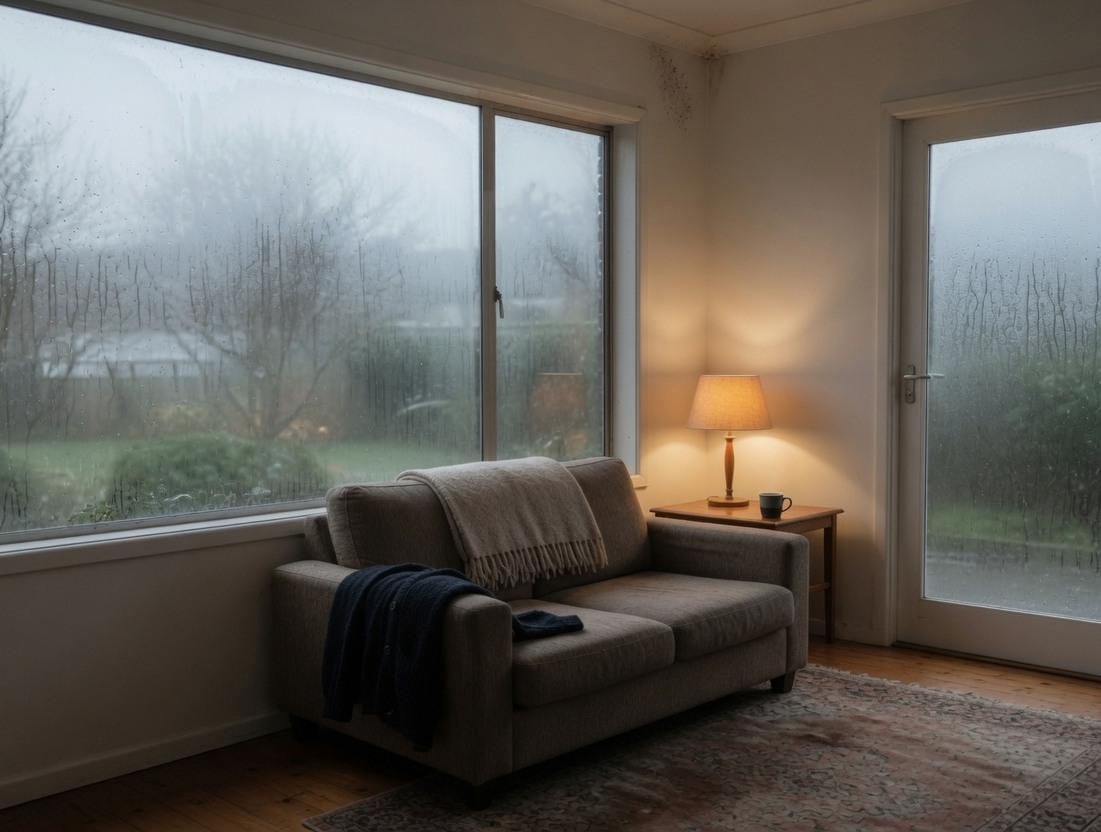
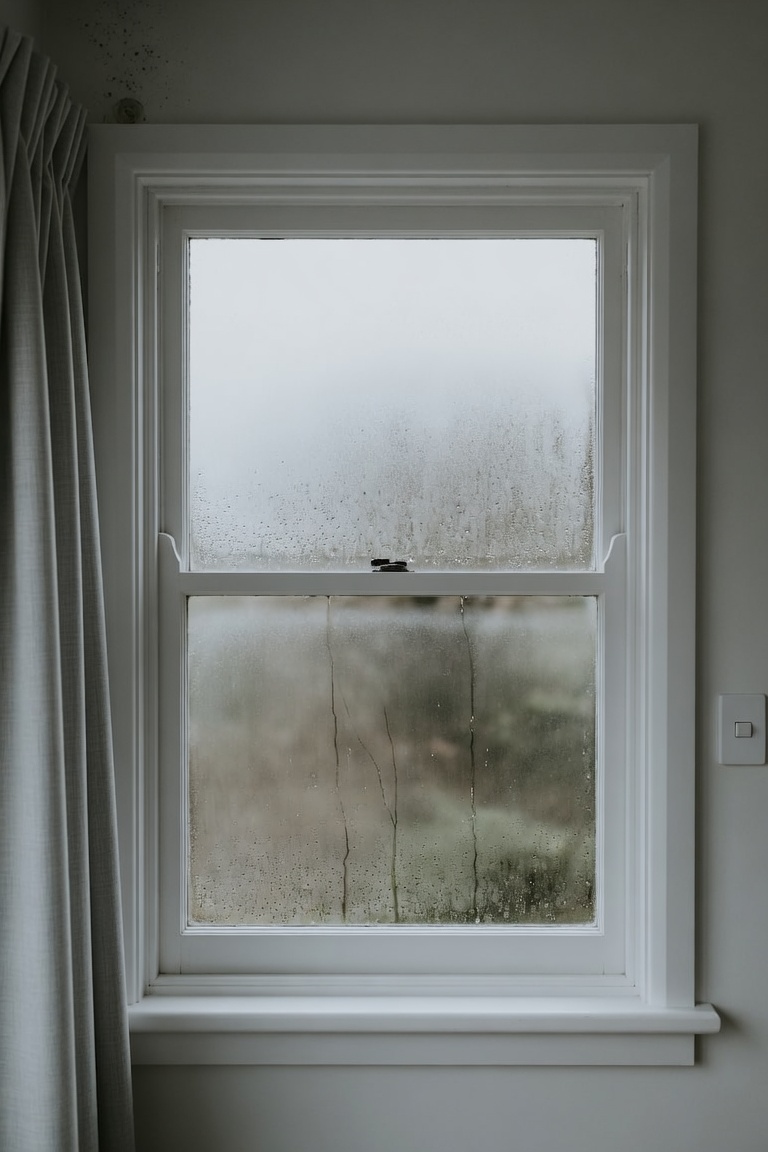
Mould needs three things: moisture, a cool surface, and time. Auckland winters supply all three in bulk. Humidity here sits around 70–80% through the colder months, and indoor surfaces regularly drop below 10°C overnight — which is exactly when water vapour in the air condenses onto glass, walls and ceilings and gives mould a place to grow. A single hot shower puts a surprising volume of water into the air of a small bathroom. Cooking, drying washing indoors and even breathing add to it.
The question that decides everything is: where is that moisture actually coming from, and can it get back out? In a well-sorted rental, occupancy moisture is real but manageable — fans pull it outside, heating keeps surfaces above dew point, and the building fabric stays dry. In a damp rental, the moisture has nowhere to go, or worse, it’s being pushed in from outside or below the floor.
The three building faults we see most
When we inspect a mouldy rental across Auckland, the cause is nearly always one of a short list of building faults rather than anything exotic.
Extractor fans that vent into the ceiling cavity instead of outside. This is the most common one by a wide margin. The fan runs, the tenant thinks the moisture is gone, but it’s actually being dumped into the roof space where it condenses on the underside of the roof and drips back down. Over a winter or two you get mould on the ceiling and rotting timber above it. A fan that doesn’t duct to the outdoors also fails the Healthy Homes ventilation standard outright.
No ground moisture barrier under an enclosed subfloor. In timber-framed homes across South and West Auckland (Papakura, Henderson, Te Atatu), bare soil under the floor wicks moisture straight up into the structure. The tell-tale sign is a musty smell at floor level and mould on skirting boards and the lower part of walls, which points to groundwater rather than a ventilation problem upstairs.
Failed or blocked drainage. Blocked gutters, disconnected downpipes and poor site drainage push water at the building instead of away from it. Damp then shows up on the internal face of an exterior wall, often in a corner, and no amount of tenant window-opening will fix it.
| What you see | Likely cause | Usually whose problem |
|---|---|---|
| Mould on bathroom or kitchen ceiling | Fan venting into ceiling, or no fan | Landlord (building fault) |
| Musty smell + mould on skirtings and low walls | No subfloor moisture barrier / rising damp | Landlord (building fault) |
| Damp patch in a corner of an outside wall | Blocked gutter, leak or poor drainage | Landlord (building fault) |
| Condensation on windows, mould on curtains and wardrobes | Not heating or airing the home, drying washing inside | Tenant (behaviour) — if the building is compliant |
💡 Property tip: Before you accept a tenant’s or your own explanation for mould, check where the bathroom and kitchen fans actually vent. Pop the ceiling access hatch and look — a fan blowing into the roof space is one of the cheapest and most overlooked fixes there is.
Healthy Homes compliance note: Under Tenancy Services’ guidance on mould and dampness, a rental must be free from mould and dampness before it’s rented out, and the landlord is responsible for fixing dampness that comes from external or structural sources. Tenant-side steps like airing and wiping condensation don’t shift that obligation.
Sorting which of these you’re dealing with is the whole game. Once you know whether the moisture is coming from occupancy, from below, from outside or from a fan that isn’t doing its job, the responsibility question answers itself — which is where most of the disputes actually turn.
Who’s Responsible for Mould — Landlord or Tenant?
This is the question that lands landlords in front of the Tenancy Tribunal, and the answer is more settled than most people think. Mould caused by the building is the landlord’s responsibility; mould caused by how the tenant lives, in a house that’s otherwise compliant, is the tenant’s. The Residential Tenancies Act 1986 and the Healthy Homes Standards set the landlord’s side of that line, and Tenancy Services spells out the tenant’s side.
What the law puts on each side
The landlord must provide and maintain a rental that isn’t prone to dampness or mould — that means efficient drainage, a ground moisture barrier under an enclosed subfloor where it’s reasonably practicable, gutters and downpipes that work, and ventilation that meets the standard. If the tenant is doing all the right things and the place is still damp, Tenancy Services is explicit that the landlord should be notified and may need to bring in a qualified building surveyor to find hidden moisture sources.
The tenant’s job is to live in a way that doesn’t create the problem: open windows and curtains when they can, use the extractor fans when cooking and showering, dry washing outside where possible, wipe up condensation, and remove surface mould as it appears — Tenancy Services even recommends diluted white vinegar for that. Crucially, none of those tenant steps can compensate for a building fault. A tenant airing a house with no working bathroom fan is fighting a losing battle, and the Tribunal knows it.
“The argument we hear most is ‘the tenant just isn’t airing the place’. Sometimes that’s true. But if the bathroom fan vents into the ceiling and there’s no moisture barrier under the floor, no amount of window-opening will keep that house dry — and that’s a building problem, not a lifestyle one.”
— Superior Property Services Team
How the Tenancy Tribunal actually decides
Published Tribunal decisions on mould tend to turn on three things, and it pays to understand each before a dispute reaches that point.
First, was the cause structural or behavioural? This is why the diagnosis in the section above matters so much. A fan venting outside, a compliant heater and a dry subfloor put the onus back on tenant behaviour. Missing any of those and the building is the likely culprit.
Second, was the landlord put on notice? If a tenant reported damp or a broken fan in writing and nothing was done, that inaction weighs heavily against the landlord regardless of the original cause. If the tenant never reported it and let mould build for months, responsibility shifts.
Third, was there independent evidence? Photos with dates, an assessor’s report, a building surveyor’s findings — the party with documentation usually prevails. The Tribunal generally apportions responsibility rather than pinning it entirely on one side, so good records protect you even in a shared-fault situation.
💡 Property tip: Log every maintenance report and your response with a date. A short, dated record that a fan was reported and replaced within a working week is worth more at the Tribunal than any verbal assurance.
Healthy Homes compliance note: Failing to meet the Healthy Homes Standards is an unlawful act under the Residential Tenancies Act 1986, and the Tenancy Tribunal can order you to fix the problem, reduce or refund rent, and award exemplary damages of up to $7,200 per breach. It can also compensate a tenant for damaged belongings or alternative accommodation where a rental is unhealthy to live in.
Knowing where the line sits is one thing. Staying on the right side of it is about meeting three specific standards — and those are worth understanding in detail, because they’re what an assessor or the Tribunal will measure you against.
The Healthy Homes Standards That Decide Whether You’re Compliant
Three of the five Healthy Homes Standards bear directly on winter mould: ventilation, moisture ingress and drainage, and heating. Insulation supports all of them. Since 1 July 2025, every private rental in New Zealand has had to meet all five standards, so if your property still doesn’t, the mould problem is also a compliance problem. We won’t rehash the full checklist here — our Auckland landlord’s guide to the five standards covers that end to end. This is the mould-specific detail.
The ventilation standard — the one most rentals fail
Under the Healthy Homes ventilation standard, every kitchen and bathroom must have an extractor fan that vents to the outdoors. For fans installed after 1 July 2019, the minimums are a 150mm diameter (including ducting) or 50 litres per second exhaust capacity in kitchens, and 120mm or 25 litres per second in bathrooms. The fan has to actually vent outside — into the open air, not the roof space.
Here’s the catch that trips up a lot of landlords: A whole-home positive-pressure system on its own does not satisfy the ventilation standard. Tenancy Services names recirculating systems such as HRV and DVS, and any fan that does not extract to the outdoors, as unsuitable. SmartVent sells both positive-pressure units and balanced heat-recovery units that supply and extract, but either way a whole-home system is an enhancement rather than a replacement for the required kitchen and bathroom extractor fans. They move air around the house, but they don’t extract moisture from the kitchen and bathroom to the outdoors, which is what the rule requires. If you’re weighing up one of those systems on top of compliant extraction, our guide to DVS, HRV and SmartVent for Auckland rentals breaks down where each actually helps.
The moisture ingress and drainage standard
The moisture ingress and drainage standard requires efficient drainage for stormwater, surface water and groundwater — that’s working gutters, downpipes and drains carrying water away from the building. Where a property has an enclosed subfloor, the landlord must install a ground moisture barrier if it’s reasonably practicable, either a polythene sheet meeting NZS 4246:2016 or a barrier with a vapour flow resistance of at least 50 MNs/g installed by a professional. That barrier is what stops soil moisture rising into the floor and feeding the mould you find on skirtings.
Heating and insulation as moisture control
Heating isn’t just about comfort — a warm surface doesn’t reach dew point, so it doesn’t grow mould. The heating standard requires a fixed heater in the main living room sized to keep it at 18°C; our heating standard guide walks through the sizing. Insulation does the same job passively by keeping ceilings and walls warmer, and the numbers to hit are covered in our insulation cost guide. A rental that’s warm, insulated and properly vented rarely has a winter mould problem at all.
| Standard | Mould-relevant requirement | Common failure |
|---|---|---|
| Ventilation | Kitchen fan 150mm/50 L/s, bathroom 120mm/25 L/s, vented outside | Fan venting into ceiling cavity; recirculating system counted as compliant |
| Moisture ingress & drainage | Efficient drainage; ground moisture barrier under enclosed subfloor | No subfloor barrier; blocked or disconnected downpipes |
| Heating | Fixed heater sized to hold living room at 18°C | Relying on plug-in heaters; unheated house = cold surfaces |
| All three together | Warm, dry, well-vented rooms | Fixing one in isolation and expecting the mould to go |
Healthy Homes compliance note: A landlord must keep records showing how the property meets each standard and provide them to a tenant within a set timeframe on request. If you can’t demonstrate compliant ventilation, drainage and heating, a mould complaint becomes much harder to defend at the Tribunal. When in doubt, a qualified Healthy Homes assessment documents exactly which standards you pass and fail with photographic evidence.
💡 Property tip: If you own an older rental in a character suburb like Grey Lynn or Ponsonby, don’t assume single-glazed windows are yours to leave. They’re not a Healthy Homes requirement on their own, but they’re often the coldest surface in the house and the first place condensation collects — worth factoring into the heating and ventilation plan.
Meeting the standards is the compliance floor. Actually clearing the mould and keeping it gone is about doing the work in the right order, and knowing when the job has grown past maintenance into something bigger.
Fixing a Damp Rental — What Works, In What Order, and What It Costs
The mistake we see most is landlords painting over mould or wiping it off and calling it done. Surface treatment without fixing the moisture source means the mould is back by the next winter — often worse, because now it’s growing behind the paint. The right sequence is: stop the water getting in, then get the moisture out, then keep the rooms warm. Do it in that order and you fix the problem once.
Step one — stop water reaching the building
If drainage, guttering or a leak is feeding water in, that’s first. There’s no point ventilating a house that’s being wet from outside. For enclosed subfloors with no barrier, laying a ground moisture barrier is one of the higher-value fixes for the money — it cuts the moisture load on the whole house, not just one room. Across Auckland this typically runs around $7–$15 per square metre installed depending on access, though tight or low subfloors cost more.
Step two — get moisture out at the source
This is the ventilation fix, and for most rentals it’s the single biggest lever. Replacing a bathroom fan that vents into the ceiling with a correctly sized unit ducted to the outside solves the most common mould problem we’re called to. The same goes for a kitchen rangehood or extractor that actually vents outdoors. It’s a small job with an outsized effect on a damp house.
Step three — keep surfaces warm
A compliant fixed heater and decent insulation stop surfaces getting cold enough to condense in the first place. If the living room heater isn’t sized to the room or the ceiling insulation is thin or missing, that’s the winter-comfort and mould-prevention fix rolled into one.
When it’s maintenance, and when it’s more
Most damp-and-mould work sits squarely in maintenance and minor-alteration territory, which is exactly what we handle. One call, and we put right the building-side causes of a damp rental across the trades involved: fan and duct, drainage repair, subfloor barrier, insulation top-up, heater install. Because we’re part of the Superior Renovations group, the trades are already coordinated rather than you chasing five separate contractors.
Sometimes the job has grown past maintenance. Widespread black mould through gib usually means replacement rather than treatment, because mould killer alone doesn’t fully clear it and it resurfaces. Retrofitting double glazing to kill condensation at the window, or rebuilding a bathroom, is renovation-scale work — that’s a job for Superior Renovations. And once the moisture is fixed and surfaces need refinishing, a proper anti-mould repaint is best done by Superior Painters, who use mould-inhibiting systems built for high-humidity NZ rooms. We’ll tell you honestly which category your job falls into.
| Fix | Scale | Who handles it |
|---|---|---|
| Replace bathroom fan, duct outside | Maintenance / minor alteration | Superior Property Services |
| Ground moisture barrier, drainage repair | Maintenance | Superior Property Services |
| Anti-mould repaint after the source is fixed | Painting project | Superior Painters |
| Double glazing, full bathroom rebuild | Renovation | Superior Renovations |
💡 Property tip: If your rental needs a fan, a moisture barrier and an insulation top-up, scope them as one job rather than three call-outs. It’s usually cheaper, and you get the whole property compliant in a single visit rather than dragging the work across the winter.
Winter mould in a rental is rarely a mystery once you know what to look for. It’s moisture with nowhere to go, in a house that’s often a fan or a barrier away from being dry. Fix the source, meet the three standards that matter, keep your records, and most of the phone calls stop coming.
➡ Request a free no-obligation quote from Superior Property Services
➡ Learn more about our rental property maintenance in Auckland
➡ Make an enquiry — we respond within 1 working day
Frequently Asked Questions
Is the landlord or tenant responsible for mould in a rental in NZ?
It depends on the cause. Mould from a building fault — a leak, poor drainage, no subfloor moisture barrier, or a fan that doesn't vent outside — is the landlord's responsibility under the Residential Tenancies Act and Healthy Homes Standards. Mould from everyday living in a compliant house, where the tenant isn't heating, airing or wiping condensation, is the tenant's responsibility. The Tenancy Tribunal usually apportions responsibility based on whether the cause was structural or behavioural, whether the landlord was notified, and what evidence exists.
Does the Healthy Homes ventilation standard stop mould?
It removes the most common cause. The ventilation standard requires an extractor fan venting outside in every kitchen (150mm or 50 litres per second) and bathroom (120mm or 25 litres per second) for fans installed after 1 July 2019. Most winter bathroom and kitchen mould comes from fans that either don't exist or vent into the ceiling cavity, so meeting this standard properly clears the bulk of it. Ventilation works best combined with adequate heating and insulation.
Do DVS, HRV or SmartVent systems meet the Healthy Homes ventilation standard?
No. A whole-home positive-pressure system on its own does not satisfy the ventilation standard. Tenancy Services names recirculating systems such as HRV and DVS, and any fan that does not extract to the outdoors, as unsuitable. SmartVent sells both positive-pressure units and balanced heat-recovery units that supply and extract, but either way a whole-home system is an enhancement rather than a replacement for the required kitchen and bathroom extractor fans, because they don't extract moisture from the kitchen and bathroom to the outdoors. You still need compliant extractor fans venting outside in those rooms. A positive-pressure system can help overall dryness on top of that, but it can't replace the required extraction.
What are the penalties for a landlord if a rental is mouldy and non-compliant?
Failing to meet the Healthy Homes Standards is an unlawful act under the Residential Tenancies Act 1986. The Tenancy Tribunal can order the landlord to fix the problem, reduce or refund rent, and award exemplary damages of up to $7,200 per breach. It can also compensate the tenant for damaged belongings or alternative accommodation if the property was unhealthy to live in. Keeping compliance records and acting quickly on reports is the best protection.
How do I tell if mould is a building problem or a tenant problem?
Look at where it is and what's around it. Mould on a bathroom or kitchen ceiling usually means the fan isn't venting outside. A musty smell with mould on skirtings and low walls points to no subfloor moisture barrier or rising damp. A damp patch in the corner of an outside wall suggests a leak or blocked drainage. All of those are building faults. Condensation on windows with mould on curtains and wardrobes, in a house that's warm and vented, is more likely a heating and airing issue.
Why does my Auckland rental get so much condensation in winter?
Auckland winter humidity sits around 70–80% and indoor surfaces often drop below 10°C overnight, so water vapour from showering, cooking and drying washing condenses on cold glass, walls and ceilings. If the house isn't heated enough to keep surfaces warm, or moisture can't escape through proper extraction, it collects and feeds mould. Warmth, ventilation and insulation together break that cycle.
Does a landlord have to install a ground moisture barrier?
Yes, where the property has an enclosed subfloor and it's reasonably practicable to install one. Under the moisture ingress and drainage standard, the barrier must be a polythene sheet meeting NZS 4246:2016 or achieve a vapour flow resistance of at least 50 MNs/g, professionally installed. It's exempt only where an installer can't access the space without substantial building work or safety risk. A barrier cuts soil moisture rising into the floor and is one of the most effective damp fixes.
Can I just paint over mould in my rental?
Not as a fix. Painting over mould without removing the moisture source means it returns the next winter, often growing behind the paint. The right order is to stop the water source, restore proper ventilation, then keep surfaces warm — and only then refinish. Widespread black mould through gib usually needs the board replaced rather than treated, because mould killer alone doesn't fully clear it. Once the source is fixed, an anti-mould paint system helps keep it away.
How quickly should a landlord act on a mould or damp report?
Promptly, and in writing. If a tenant reports damp or a broken fan and the landlord doesn't act, that inaction counts heavily against them at the Tenancy Tribunal regardless of the original cause. A dated record showing the issue was reported and addressed within a working week or so is strong evidence. Superior Property Services responds within one working day, which keeps the maintenance trail clean.
Who fixes mould problems that cross into renovation work?
It depends on scale. Replacing fans, laying moisture barriers, fixing drainage and topping up insulation are maintenance and minor-alteration jobs that Superior Property Services handles under one call. Retrofitting double glazing or rebuilding a bathroom is renovation-scale work for Superior Renovations. An anti-mould repaint once the moisture source is fixed is best done by Superior Painters. Being part of one group means the handover between maintenance, painting and renovation is coordinated rather than left to you.
References
- Tenancy Services — Mould and dampness
- Tenancy Services — Healthy Homes ventilation standard
- Tenancy Services — Moisture ingress and drainage standard
- Tenancy Services — Healthy Homes heating standard