
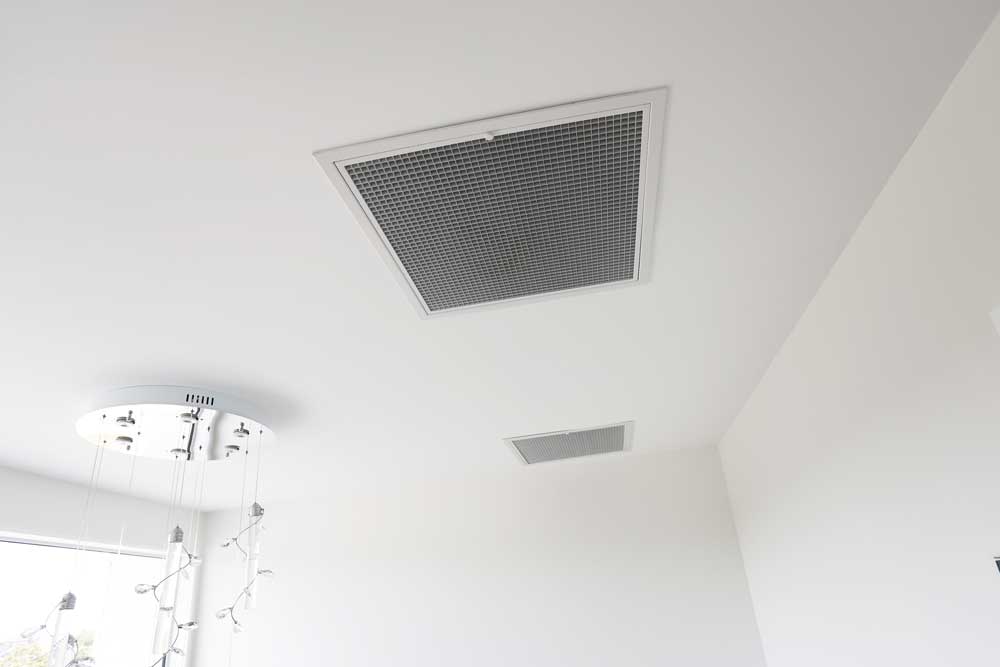
DVS vs HRV vs SmartVent: An Auckland Landlord Guide
Quick answer: None of the three satisfy your Healthy Homes ventilation obligation — the Standard requires compliant extractor fans, vented outside. DVS, HRV and SmartVent are an optional enhancement, not a substitute. Here’s when each is worth installing.
If you’re a landlord weighing up DVS, HRV and SmartVent for one of your Auckland rentals, start with this: the Healthy Homes Standards do not accept any of them as compliance for the ventilation requirement. The Standard, set under the Residential Tenancies (Healthy Homes Standards) Regulations 2019, requires extractor fans vented outside in every kitchen and bathroom — sized to specific flow rates. Positive-pressure ventilation systems push outdoor air into the house. That’s a different job.
We get a version of this conversation most weeks. A landlord rings up because a tenant has flagged damp, mould on the bathroom ceiling, or windows running with condensation by morning. They’ve already been pitched by HRV’s call centre, looked at DVS as the cheaper option, and seen SmartVent in a friend’s house. They want to know which is best.
The honest answer: it depends on what problem you’re actually solving. If the problem is Healthy Homes compliance, none of these are the answer — you need compliant extractor fans and a rangehood vented outside, full stop. If the problem is general moisture, condensation, or a tenant who keeps complaining about a cold damp house, a whole-home system can genuinely help, but only as an enhancement on a property where the basics are already sorted.
This guide is installer-agnostic. We install all three for Auckland landlords. We’re not in the business of selling you a system you don’t need. What follows is the regulatory reality, what each brand actually does, a side-by-side comparison table, a decision framework by rental type, and the install plus 10-year ownership picture. We’ll also cover when the right answer is to skip whole-home ventilation entirely and spend the money elsewhere.
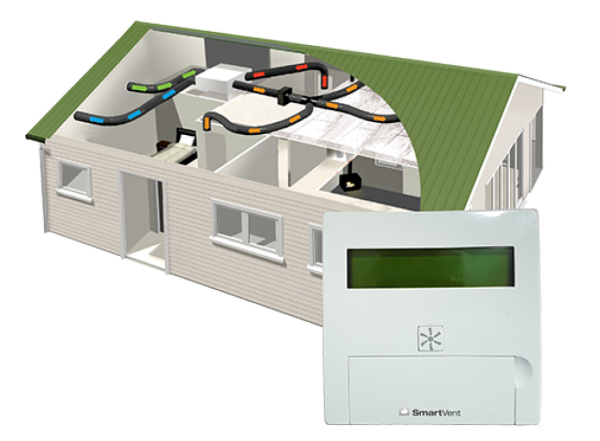
What These Systems Actually Do (And What Healthy Homes Actually Requires)
Free cost calculator
How much will your project cost?
Get an instant Auckland price range for your project — no details required to see it.
Healthy Homes compliance note: Whole-home positive-pressure ventilation systems are not accepted as Healthy Homes ventilation compliance. The Standard requires room-specific mechanical extraction in kitchens and bathrooms, vented to outside. See tenancy.govt.nz for the full standard.
The Healthy Homes Ventilation Rule in 60 Seconds
The Healthy Homes ventilation rule is short and specific. Every kitchen and bathroom in a rental property must have an extractor fan vented to outside. Fans installed after 1 July 2019 must meet specific size or flow rate thresholds:
- Kitchens: minimum 150mm diameter (including ducting), OR extraction capacity of at least 50 L/s
- Bathrooms: minimum 120mm diameter, OR intermittent extraction of at least 25 L/s, OR continuous extraction of at least 10 L/s
- All fans must vent outside — not into a roof cavity or wall void
For fans installed before 1 July 2019, the rule is simpler: they must vent outside and be in good working order. The Standard does not accept recirculating systems, supply-only systems, or whole-home positive-pressure systems as a substitute for compliant extractor fans.
What Positive-Pressure Ventilation Actually Does
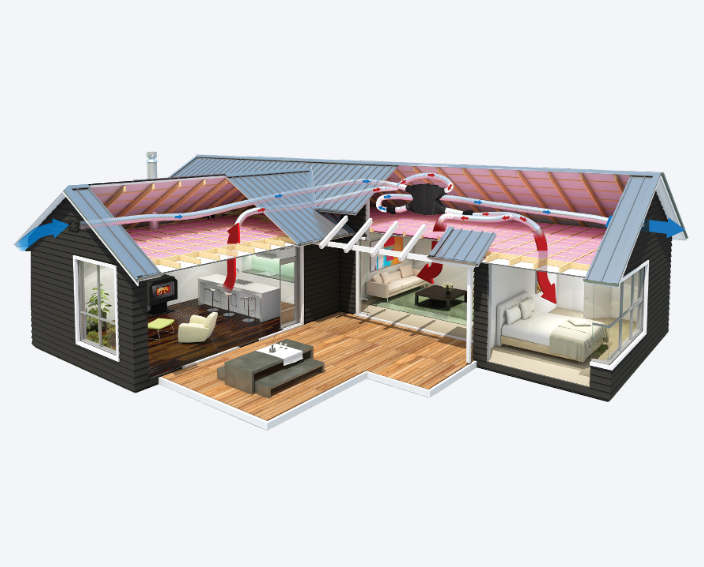
DVS, HRV and SmartVent’s positive-pressure systems (the most common product all three sell) draw air from your roof cavity, run it through a filter, and push it into the house through ceiling diffusers. The theory: pressurising the house pushes stale damp air out through gaps, cracks, and the imperfections in every Auckland weatherboard or timber-framed home.
They work — to a point. They reduce condensation. They improve general air freshness. They warm and dry a damp house in winter, especially if there’s solar heat in the roof cavity to draw on. But they don’t extract moisture from a steaming bathroom while a tenant showers, and they don’t remove cooking steam from a kitchen. That’s what extractor fans are for. The two solve different problems.
💡 Property tip: If you’ve been quoted for a DVS, HRV or SmartVent system on a rental that doesn’t yet have compliant extractor fans in the kitchen and bathroom, install the fans first. They’re cheaper, they’re required by law, and they fix the actual moisture problem at source.
Where the Confusion Comes From
Even SmartVent admits this. On their own blog, they note that “the Healthy Homes requirements only cover mechanical extract ventilation, not supply” — supply being what their positive-pressure systems do. This is why the regulatory truth gets buried. The brands sell PPV. Installers sell PPV. The conversation is about which PPV. Nobody benefits commercially from telling you that you might not need any PPV at all.
The Three Brands: DVS, HRV, SmartVent
DVS
DVS is New Zealand-owned, has been in the market longest, and built its reputation on the simpler positive-pressure model — pulling roof-cavity air, filtering it, pushing it into the house. The product is mechanically straightforward. The install is quick. Pricing sits at the lower end of the three. DVS also sells a heat-transfer line (Reclaim) that moves warmth from your living area to other rooms.
The downsides are what you’d expect from a simpler product: basic filtration, limited smart controls, after-sales support that varies by regional contractor. For a tidy older Auckland rental that needs ventilation help and not much else, DVS is a sensible default.
HRV
HRV is the brand most landlords have heard of. The marketing budget shows. The product itself is fine — comparable in performance to DVS on the positive-pressure side, with smart-controller upgrades, optional bundles (water filtration, heat pumps), and a national service network.
The issues with HRV are commercial, not technical. They run an aggressive call-centre sales model — landlords routinely report follow-up calls that won’t stop. The pricing premium over DVS is real and not always justified by the hardware. Repair costs on the proprietary components can sting. If you’ve had a quote from HRV that feels high, it probably is. Get a second quote before you sign.
SmartVent
SmartVent is the most flexible of the three. NZ-owned, sells both positive-pressure and balanced-pressure (true heat-recovery) systems, and runs through a network of independent installers rather than a direct sales force.
The balanced-pressure systems are the most technically interesting product on the NZ market: they extract stale air from wet areas, supply pre-warmed fresh air to living spaces, and use a heat exchanger to recover warmth from the outgoing air. That’s closer to how European homes ventilate. They cost more than basic PPV. Install quality depends entirely on which installer you get, because SmartVent doesn’t directly control the install — they certify installers and supply the product. Choose your installer carefully.
A Word on the Supermarket Brands
Supervent, Unovent, MoistureMaster and the other lower-cost alternatives are cheaper. Some are mechanically fine. Most won’t be supported in five years’ time. For a long-hold rental where you want product support and replacement parts available a decade from now, stick with the three main brands.
💡 Property tip: Get two quotes minimum, ideally three. Quotes for the same house can vary $1,500–$2,500 between installers. The hardware is largely commoditised — you’re paying for install quality and after-sales support.
Side-by-Side Comparison and Decision Framework
Healthy Homes compliance note: The comparison below is between three optional enhancements. None of them substitute for the kitchen and bathroom extractor fans required by the Healthy Homes ventilation standard.
Side-by-Side Comparison
| Attribute | DVS | HRV | SmartVent |
|---|---|---|---|
| System type | PPV; Reclaim adds heat transfer | PPV; bundles available | PPV or balanced pressure |
| Typical install — 3-bed Auckland | $2,500–$3,500 | $3,500–$5,500 | $3,000–$6,500 |
| Filter change interval | 12 months | 12 months | 12 months |
| Annual filter cost | $80–$150 | $120–$220 | $90–$200 |
| Annual electricity (tenant pays) | $80–$140 | $100–$160 | $80–$180 |
| Smart controls | Basic touchscreen | Touchscreen + app on higher models | App-based, room-by-room sensors |
| Hardware warranty | 5 years | 5 years | 7 years |
| Install network | DVS direct + regional contractors | HRV direct national | Independent installers |
| Best for | Older damp homes on a budget | Landlords who want bundled service | Modern homes; true heat recovery |
| Main weakness | Basic filters, limited tech | Pricing premium, sales pressure | Install quality varies by installer |
Which Rental Suits Which (Or None)
Start by ruling whole-home ventilation IN or OUT for your specific property:
- Pre-1978 villa or bungalow with leaky weatherboards (Mt Albert, Grey Lynn, Ponsonby character homes): PPV from any of the three brands can genuinely help winter damp. DVS is fine here. Don’t overspend.
- 1960s–70s brick-and-tile, 1980s–90s timber (Manurewa, Papakura, Henderson, Te Atatu): all three work. SmartVent’s balanced-pressure system is technically best, but the cost difference rarely pays back on a rental.
- Modern airtight build (2000s+): balanced-pressure (SmartVent) makes sense; basic PPV less so, because there are fewer gaps for stale air to escape through.
- Apartment or attached townhouse: usually none of them. No useful roof cavity, shared roof structures, or body corporate rules. Solve at the extractor fan level instead.
- Property with one specific moisture problem: fix the affected room first. A bathroom that mists for an hour after every shower is a fan problem, not a whole-home problem.
Install Reality, 10-Year Costs, and When to Install Nothing
What the Install Actually Looks Like
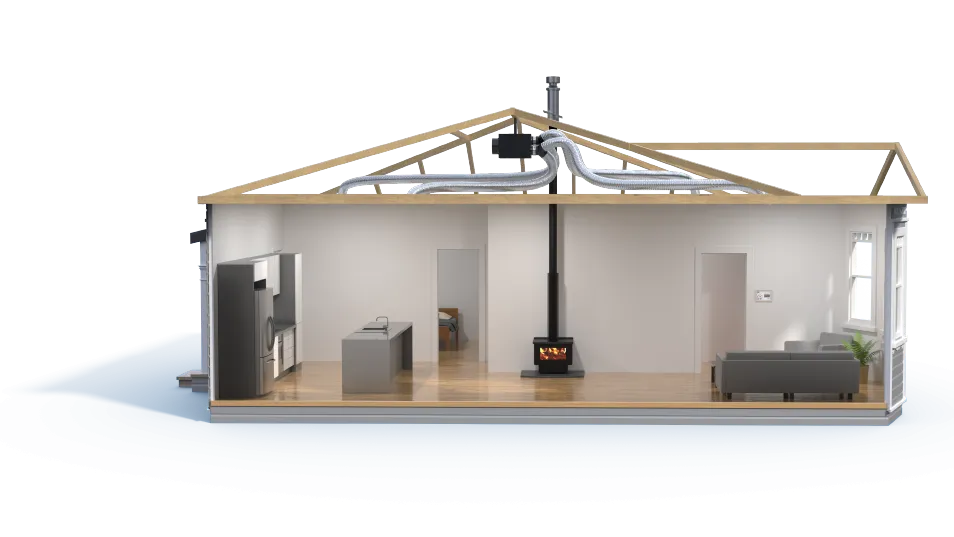
The install for any of the three takes most of a day for a standard 3-bedroom Auckland rental. Roof-cavity access is required, which means tile-roof homes need a tiler to lift and replace tiles around the unit and ducting. Two ceiling penetrations is typical for a 3-bed home, more for larger properties. A licensed electrician wires the controller. Most installs don’t require building consent (they’re classed as minor electrical and ventilation work), but pre-1944 character zones (Grey Lynn, Ponsonby, parts of Devonport) sometimes require sign-off for external ducting penetrations. Check with your installer before you book.
The 10-Year Ownership Cost
Filter changes are the recurring cost everyone forgets. Every system uses MERV-rated filters that need swapping every 12 months. Skipped filter changes are the single biggest reason these systems underperform — a clogged filter means the fan works harder, the electricity bill climbs, and the air quality drops. Build the filter change into your routine inspection cycle.
10-year ownership cost for a basic DVS or HRV positive-pressure system on a 3-bed Auckland rental sits around $4,500–$6,500 — install plus a decade of filters and electricity. SmartVent’s balanced-pressure system pushes that to $7,000–$9,000. Tenants pay the electricity. That matters for two reasons: it’s not on your bill, and tenants in a rental with a continuously-running ventilation system sometimes blame the system for high power bills, fairly or not. Some landlords configure the system to run intermittently rather than continuously to reduce that perception.
💡 Property tip: The Warmer Kiwi Homes programme currently subsidises insulation and approved heaters for eligible properties — it does not cover whole-home ventilation systems. Compliant extractor fans (the actual Healthy Homes requirement) also aren’t subsidised. You pay for those directly.
When the Right Answer Is to Install Nothing
Three situations where whole-home ventilation is the wrong spend:
- Your rental doesn’t yet have compliant extractor fans. Fix that first. It’s law. PPV is optional.
- The moisture problem is in one room. A misting bathroom is a fan or seal problem. A leaky shower, blocked subfloor vent, or missing ground moisture barrier is a structural problem. PPV won’t fix any of them.
- The property is selling or the tenant is leaving in under 12 months. The payback window is too short.
If any apply, the money is better spent on extractor fans, a rangehood, draught-stopping, or a subfloor moisture barrier — all of which affect Healthy Homes compliance and the property’s long-term condition.
The Three Types of Home Ventilation (and Which Actually Meets Healthy Homes)
When people search for home ventilation systems in NZ, they’re usually picturing one thing: a unit in the roof pushing air through the house. That’s only one of three approaches, and it happens to be the one that doesn’t tick the Healthy Homes box. Here’s how the three types actually differ, and which one the Standard is asking for.
Extract-Only: The Only Type That Meets the Standard
Extract-only ventilation is the humble extractor fan: the one in the bathroom ceiling and the rangehood over the hob, pulling moist air out of the room and dumping it outside. This is the only category of ventilation the Healthy Homes standard accepts. Fans installed after 1 July 2019 have to hit a minimum size or flow rate: kitchens need a fan at least 150mm in diameter (including the ducting) or moving at least 50 litres per second; bathrooms need at least 120mm or at least 25 L/s. The one non-negotiable rule across the board is that the fan has to vent outside, not into the roof cavity or a wall void. Full requirements sit on the Tenancy Services ventilation page and in our Healthy Homes Standards guide.
Positive-Pressure: The Roof-Cavity Systems
Positive-pressure ventilation is what most people mean by a “ventilation system nz” search: HRV, DVS, and SmartVent’s most common product all sit here. A unit in the roof draws air from the ceiling cavity (or from outside), runs it through a filter, and pushes it into the house through diffusers, raising the internal pressure slightly so damp stale air leaks out through the building’s gaps. It can help a cold, condensation-prone rental in Henderson or Papakura feel drier over winter. What it doesn’t do is extract steam at the source, which is exactly why a positive-pressure system on its own doesn’t satisfy the ventilation standard. Tenancy Services is blunt about it: recirculating systems like HRV and DVS, or any fan that doesn’t extract to the outdoors, are not suitable to meet the standard.
Balanced and Heat-Recovery Systems
Balanced ventilation is the step up. A balanced ventilation system in NZ supplies fresh air and extracts stale air at the same time, in matched volumes, through two separate duct networks. Add a heat exchanger and it becomes heat recovery ventilation — the outgoing warm, damp air passes its heat to the incoming fresh air without the two streams ever mixing. It’s how a lot of European and modern airtight homes ventilate, and it’s the most efficient of the three. It’s also the priciest to install and the least common sight on an older Auckland rental.

💡 Property tip: Whichever whole-home system you’re weighing up, the extractor fans still have to go in. Sort the compliant kitchen and bathroom fans first, then decide whether a positive-pressure or balanced system earns its keep on top.
Healthy Homes compliance note: A positive-pressure system (HRV, DVS or SmartVent PPV) does not satisfy the Healthy Homes ventilation standard. You still need compliant extractor fans venting outside in every kitchen and bathroom. See the Tenancy Services ventilation standard.
How Positive-Pressure Ventilation Works (and Whether It Heats Your House)
“How does HRV work?” is the question we get most, usually chased straight away by “and does it heat the house?” Fair questions, because the marketing blurs the line and the two brands most landlords have heard of sell the answer as if it’s both. Here’s the plain version, minus the sales pitch.
How Positive-Pressure Ventilation Works
A positive-pressure unit (HRV, DVS, or a SmartVent PPV) sits in the roof and draws air from the ceiling cavity or, on the better setups, directly from outside. That air passes through a filter, then a fan pushes it down into the living areas through ceiling vents. Because the house is being gently inflated with a steady supply of drier air, the internal pressure rises a touch and the damp, stale air already inside gets nudged out through gaps around windows, doors, and the general leakiness of an older Glen Innes or Mangere weatherboard. The system dilutes and displaces moist air rather than sucking it out at the source. That’s the whole trick.
What a Heat-Transfer or Heat-Recovery Add-On Does
Some units offer a heat-transfer or heat-recovery option, and this is where the “it heats the house” idea comes from. A heat-transfer kit moves warm air that already exists, say from a sunny north-facing lounge or a room with a heat pump, into colder bedrooms. A heat-recovery unit (the balanced systems) uses a heat exchanger to claw warmth back from the air being extracted before it leaves the building. Both move heat around. Neither one makes it. If there’s no warmth in the house to begin with, there’s nothing to shift.
So, Does HRV Heat Your House?
No. Not HRV, not DVS, not SmartVent. A positive-pressure system can take the edge off a damp, cold-feeling home, and a drier house does feel warmer at the same temperature. But it is not a heater and it produces no heat of its own. This matters for compliance too: a ventilation system does not meet the Healthy Homes heating standard. That standard requires a fixed heater in the main living room capable of reaching a set temperature, and ventilation contributes nothing toward it. If you’re sorting heating, our Healthy Homes heating standard guide covers what actually qualifies.
Choosing the Best Home Ventilation System
There’s no single best home ventilation system in NZ — the right answer depends on the house. An older, leaky rental gets good value from basic positive-pressure. A modern, airtight build is a better match for a balanced heat-recovery system, because it has fewer gaps for a PPV unit to push air out through. And a one-room damp problem often just needs a better extractor fan, not a whole-home unit at all. Weigh the install cost against the actual problem before you sign anything, and remember the ongoing spend: every one of these systems runs on annual filter changes and daily electricity, and a system that’s the wrong fit for the house quietly costs you both for a decade.
💡 Property tip: If a tenant is complaining about a cold house, a ventilation system won’t fix it on its own. Pair a fixed heater (for warmth and heating compliance) with ventilation (for moisture), and you solve both problems instead of half of one.
The Bottom Line for Auckland Landlords
Get your Healthy Homes ventilation basics in compliance first — extractor fans in every kitchen and bathroom, properly vented outside, sized to the post-July-2019 standard. If you’re sorting ventilation as part of a wider turnover, our Auckland end-of-tenancy Healthy Homes compliance guide walks through the full sign-off. Only after the basics are sorted should you consider whether whole-home positive-pressure ventilation is worth the spend. If it is: DVS for older damp homes on a budget, HRV for landlords who want bundled service and don’t mind paying a premium, SmartVent for modern homes or landlords who genuinely want heat recovery. Don’t let an installer talk you into PPV as a Healthy Homes fix. It isn’t.
If you want a no-pressure assessment of what your specific rental actually needs (extractor fans, PPV, both, or neither) — we can come and look.
➡ Request a free no-obligation quote from Superior Property Services
➡ Learn more about our maintenance services for Auckland landlords
➡ Make an enquiry — we respond within 1 working day
Frequently Asked Questions
Does installing DVS, HRV or SmartVent satisfy the Healthy Homes ventilation standard?
No. The Healthy Homes ventilation standard, set under the Residential Tenancies (Healthy Homes Standards) Regulations 2019, requires extractor fans in every kitchen and bathroom vented to outside — sized to 150mm or 50 L/s in kitchens and 120mm or 25 L/s in bathrooms for fans installed after 1 July 2019. Positive-pressure systems like DVS, HRV and SmartVent's PPV product supply outdoor air to the house. They don't extract moisture from wet rooms, so they don't satisfy the Standard. SmartVent itself confirms this on their own website.
Do I have to install whole-home ventilation in my Auckland rental?
No, it's not a legal requirement. Healthy Homes compliance is about extractor fans, insulation, heating, moisture ingress, and draught-stopping — not whole-home ventilation. Positive-pressure systems are an optional enhancement that can help with general damp and condensation in older homes. If your rental already has compliant extractor fans, a working rangehood, and no major moisture issues, you can skip whole-home ventilation entirely.
How much does each system cost installed in a 3-bedroom Auckland rental?
Typical 2026 install costs: DVS positive-pressure $2,500–$3,500; HRV positive-pressure $3,500–$5,500; SmartVent PPV $3,000–$4,500 or balanced-pressure $5,000–$6,500. Costs vary by roof type (tile roofs cost more for access), number of ceiling diffusers, and whether the existing electrical setup needs upgrading. Get two or three quotes — pricing for the same house can vary $1,500–$2,500 between installers.
Who pays the electricity for a positive-pressure ventilation system?
The tenant. The system runs on the rental property's electricity supply, which is billed to whoever holds the power account — almost always the tenant. Annual electricity cost typically sits between $80–$180 depending on the system, settings, and how continuously it runs. Some landlords set the system to run intermittently rather than continuously to reduce the tenant's bill, though this can reduce effectiveness in damp homes.
Are DVS, HRV or SmartVent eligible for the Warmer Kiwi Homes subsidy?
Generally no. Warmer Kiwi Homes, run by EECA, currently subsidises ceiling and underfloor insulation and approved heaters for eligible properties — not whole-home ventilation systems. Compliant extractor fans (the Healthy Homes requirement) also aren't subsidised. Eligibility rules change periodically, so check eeca.govt.nz before assuming any subsidy applies to your install.
Do I need Auckland Council consent to install a ventilation system?
Almost never. Whole-home ventilation installs are classified as minor electrical and ventilation work and don't require building consent. The exception is heritage zones — pre-1944 character areas where external ducting penetrations through weatherboard or brick may need sign-off. Suburbs like Grey Lynn, Ponsonby, parts of Mt Eden and Devonport have heritage overlays. Check with Auckland Council or ask your installer before booking.
Which system is best for a 1970s Auckland rental with condensation?
For a 1970s timber-framed home with condensation, basic positive-pressure ventilation usually performs well — these homes are typically leaky enough for PPV to push stale air out through gaps. DVS is the sensible default at the lower price point. Before you install anything, check whether the bathroom and kitchen extractor fans are Healthy Homes compliant. Compliant extractors plus draught-stopping often resolve condensation without needing whole-home ventilation at all.
How often do filters need changing and how much do they cost?
All three brands run on annual filter change cycles. Filter costs: DVS $80–$150 per year, HRV $120–$220, SmartVent $90–$200. The price difference reflects filter design and MERV rating. Skipped filter changes are the single biggest cause of system underperformance — the fan works harder, electricity costs climb, and air quality drops. Build the filter change into your routine inspection schedule.
What's the warranty on each brand?
Hardware warranties: DVS 5 years, HRV 5 years, SmartVent 7 years. All three offer extended service plans at additional cost. Warranty claims are more straightforward with DVS and HRV because they run direct service networks. SmartVent claims go through the installer who installed your system, so the install relationship matters. Keep the install paperwork, filter change records, and warranty registration filed with your tenancy compliance documents.
Can I install one in an Auckland apartment or townhouse?
Usually not. Most apartments and attached townhouses don't have a useful roof cavity, share a roof cavity with neighbours, or have body corporate rules that prevent ceiling penetrations. Apartment ventilation is solved at the extractor fan level — compliant kitchen and bathroom fans vented through external walls, plus passive vents where possible. For multi-unit dwellings wanting centralised ventilation, talk to a specialist about a purpose-designed system rather than retrofitting a single-dwelling brand.
How does an HRV system work?
An HRV system, along with the DVS and SmartVent equivalents, is a positive-pressure ventilation unit installed in the roof. It draws air from the ceiling cavity or outside, filters it, and a fan pushes it into the home through ceiling vents. This raises the indoor pressure slightly, which displaces damp, stale air out through the building's gaps. It ventilates by supply and dilution, not by extracting moisture at the source, so it complements your kitchen and bathroom extractor fans rather than replacing them.
Does HRV heat your house?
No. HRV, like DVS and SmartVent, is a ventilation system, not a heater. It can move existing warm air around the house with a heat-transfer add-on, and a drier home feels warmer at the same temperature, but it generates no heat of its own. It also does not meet the Healthy Homes heating standard, which requires a fixed heater in the main living room. If the house is genuinely cold, you still need a heat pump or another fixed heater.
What's the best home ventilation system for a rental?
There isn't one best system for every rental. It depends on the house. Older, leaky Auckland homes get good value from basic positive-pressure ventilation. Modern airtight builds suit a balanced heat-recovery system. A single damp room usually just needs a better extractor fan. Whichever you pick, none of them meets the Healthy Homes ventilation standard on its own, so compliant extractor fans venting outside come first. Get two or three quotes for your specific property before committing.
How much does a home ventilation system cost in NZ?
It depends on the house and the system. Positive-pressure units cost less than balanced heat-recovery systems, and the price shifts with house size, roof type, the number of ceiling vents, and whether the wiring needs work. Rather than trust a single figure, get two or three quotes for your specific property. Factor in the ongoing costs too: annual filter changes and the electricity, which the tenant pays. Our main guide above breaks down the full 10-year ownership picture.
References
- Tenancy Services — Healthy Homes ventilation standard
- EECA — Warmer Kiwi Homes insulation and heater grants
- SmartVent — New Zealand’s building codes and ventilation