
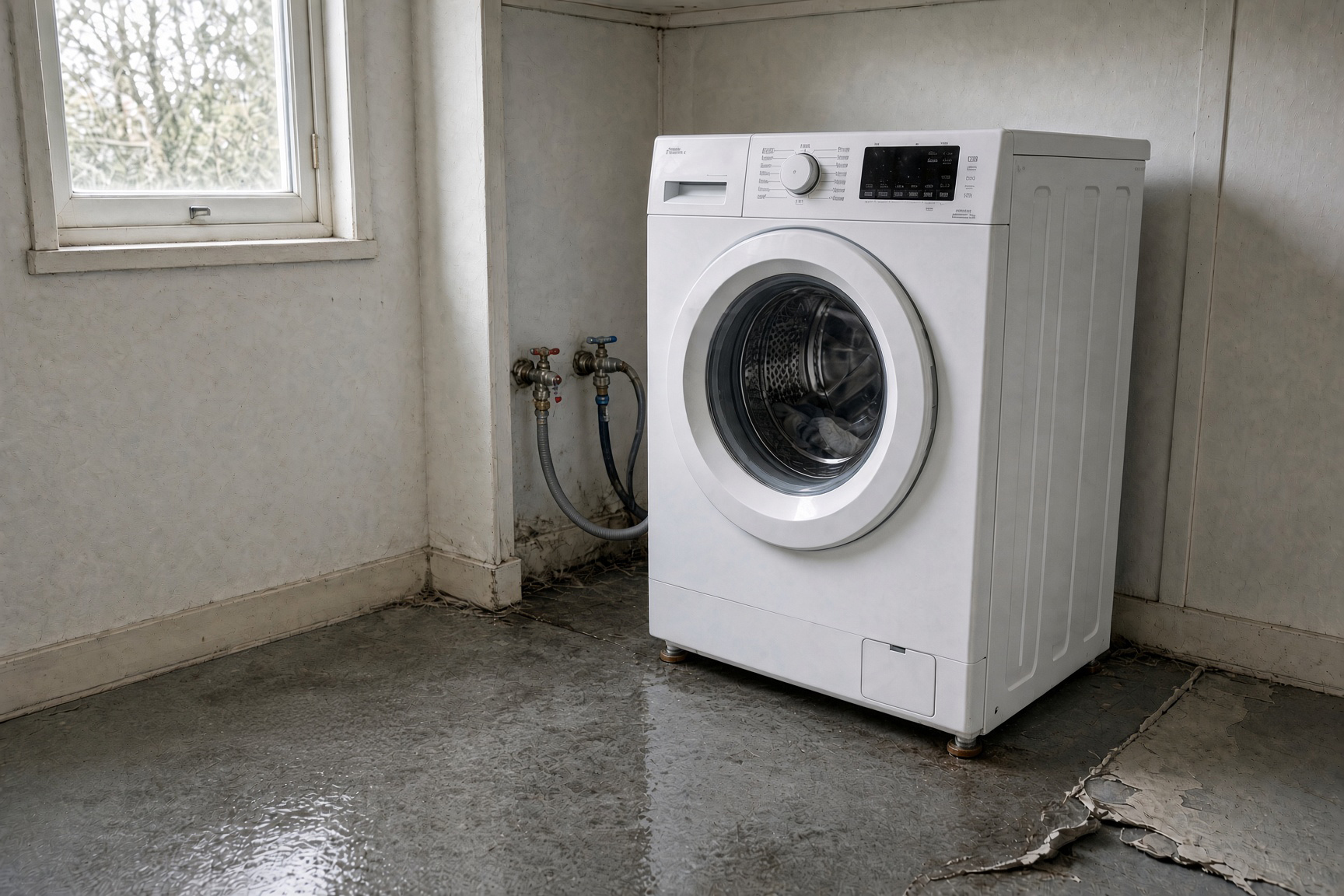
Water Leak Detection in Auckland: How to Find a Hidden Leak and Who Pays for It
Quick answer: Water leak detection starts at your meter. Turn everything off, write down the reading, use no water for at least four hours, then read it again. If the number has moved, the leak is on your side of the meter, and on Watercare’s 2026/27 prices every 1,000 litres it loses costs about $5.82.
A letter from Watercare saying your bill is higher than normal is how most Auckland households find out they have a leak. By the time that letter arrives, the water has usually been running for weeks. A slow drip inside a wall or a split pipe under the lawn makes no noise you would notice and leaves no puddle you would see.
Free cost calculator
Planning a repair after the leak?
Get an instant Auckland price range for your project — no details required to see it.
Here is the part that catches people out. Watercare owns the pipes up to the point of supply, which for water is the outlet of your meter. Everything after that’s yours. That means the pipe running from the meter box to the house, every pipe inside the walls and under the floor, the hot water cylinder, the toilets and the taps. If any of it leaks, you pay for the water it loses and you pay for the repair.
Finding out is cheap. You can confirm whether you have a leak yourself, for free, in one evening. You don’t need a plumber to run the test. You need one when the test says yes and you can’t find where the water is going.
This guide walks through it in the order that saves the most money. First, ruling out the bill problems that look like leaks and aren’t. Then the meter test, step by step, with the checks Watercare itself recommends.
After that, where hidden leaks tend to sit in Auckland homes and what a plumber does to find them, including what you’re and aren’t allowed to fix yourself. Then how to claim Watercare’s leak allowance, which gives some of the money back if you move quickly. The last section is for landlords, because in a rental the questions change: who has to fix it, who pays for the lost water, and how fast.
We write this from the repair side. Superior Property Services sends PGDB-registered plumbers to leaking taps, split pipes and burst flexi hoses across Auckland. A leak found on a meter test is almost always a smaller job than one found through a stained ceiling.
Is It Really a Leak? Rule Out the Bill Before You Start Water Leak Detection
Watercare’s own troubleshooting advice starts somewhere else. It’s common to assume a high bill means a leak, but Watercare suggests ruling out three other causes first. Each one takes a few minutes and none of them costs anything.
Was the meter read correctly?
Meter readers make mistakes, and the only way to know is to read the meter yourself. Compare the number on the dial with the reading printed on the back of your latest bill. It should be the same or slightly higher. On a mechanical meter Watercare bills from the black numbers; on a smart meter it bills from the numbers before the decimal point.
Small differences are normal and correct themselves on the next bill. If your own reading is more than 8 kilolitres away from the billed figure, Watercare asks you to contact it through its online enquiry form or on 09 442 2222, option 2.
Is it a catch-up bill?
Mechanical meters are read every second month. In between, Watercare estimates your use from your two most recent actual readings. If a run of estimates came in low, the next actual reading catches up, and that bill will look high even though nothing is wrong. Your bill’s usage graph marks estimated reads with an “E” and actual reads with an “A”, so check which kind the high bill was.
Smart meters have their own version of this. Watercare says some EDMI smart meters can stop sending data, which produces a run of low or zero bills, followed by a high one once the meter is read manually. If your previous bills showed almost no water use, that’s the likely explanation.
Has your water use changed?
Guests staying for a few weeks, a new appliance, more washing, a summer of garden watering or a hose left running will all lift a bill. Renovation and landscaping work does too. If none of that applies, the leak test is your next step.
💡 Property tip: Photograph the meter dial every time you read it, with the date showing on your phone. If you end up applying for a leak allowance or disputing a bill, a dated photo is far better evidence than a number on a scrap of paper.
What a leak actually costs on an Auckland water bill
Watercare charges twice for most of the water a leak loses. From 1 July 2026, residential water costs $2.46 per 1,000 litres, and the volumetric wastewater charge is $4.28 per 1,000 litres. Wastewater isn’t measured directly: Watercare calculates it at 78.5 per cent of the water that comes through your meter.
Put those together and every 1,000 litres through a house meter costs about $5.82 ($2.46 plus 78.5 per cent of $4.28). Apartments are charged wastewater at 95 per cent of incoming water, which lifts the figure to about $6.53. The fixed wastewater charge of $355.90 a year doesn’t change with use, so a leak doesn’t touch it.
The table below applies that $5.82 to four leak rates. The rates are illustrative, chosen to show the arithmetic, and aren’t measurements of any particular fault. Your own rate is whatever your meter shows in the test below.
| Leak rate (illustrative) | Cost over 30 days | Cost over a 60-day read cycle | Cost over a year |
|---|---|---|---|
| 50 litres a day | $8.73 | $17.46 | $106.21 |
| 200 litres a day | $34.92 | $69.84 | $424.85 |
| 500 litres a day | $87.30 | $174.59 | $1,062.11 |
| 1,000 litres a day | $174.59 | $349.19 | $2,124.23 |
| Rate used | $5.82 per 1,000 litres (house meter, Watercare residential charges from 1 July 2026, GST inclusive) | ||
Two things follow from that table. The water is usually the smaller cost; the damage a hidden leak does to framing, gib and flooring is the bigger one. And because the leak allowance depends on how quickly you fix the leak once you know about it, every week you wait costs you twice.
Water Leak Detection at Home: The Meter Test, Step by Step
The test works because a water meter only turns when water is flowing through it. If nothing in the house is using water and the meter still moves, water is escaping somewhere on your side of it. It’s the same check Watercare tells customers to run before they call a plumber.
Step 1: Find the meter and learn to read it
Most Auckland meters are in the ground at the front of the property, near the left or right boundary, inside a box made of timber, plastic, concrete or metal. The lid is usually blue or black. In flats and apartments one meter may serve the whole building. If the box has disappeared under the garden, clear it; Watercare’s readers need it too.
Not sure the meter is yours? The serial number on the dial should match the one on page two of your bill, under consumption details.
On the usual digital metric meter, the black numbers on a white background count kilolitres (1,000 litres), and that’s what you’re billed on. The white numbers on red show amounts under a kilolitre. Watercare tells you to ignore them when checking a bill, but for leak hunting they are the useful ones, because a slow leak moves them long before the black digits change. On a smart meter, note every number before and after the decimal point.
Step 2: Run the four-hour test
Pick a time when nobody will use water. Overnight is easiest. Then:
- Make sure the dishwasher, washing machine, irrigation and any hose are off, and that no toilet is refilling.
- Go to the meter and write down the full reading, red digits included, or photograph it.
- Use no water at all for at least four hours. No taps, no flushing, no showers.
- Read the meter again.
If the reading has increased, you’re likely to have a leak. If it hasn’t moved, a leak is unlikely and the high bill has another cause. That’s useful to know before you pay anyone to look.
“Run the meter test before you ring anyone, us included. Four hours of not using water tells you whether there’s a leak at all, and that one answer decides whether you need a plumber or just a closer look at the bill.”
— Superior Property Services Team
Step 3: Narrow it down to inside or outside
If the meter moved, the next question is whether the leak is between the meter and the house or somewhere inside. Where your house has its own isolating valve on the supply pipe where it enters the building, close it and watch the meter again. If the meter keeps turning with the house shut off, the water is escaping from the pipe in the ground between the two. If it stops, the leak is inside or under the house. Not every property has an accessible valve in that spot, and a plumber can do this step for you.
Step 4: Check the obvious places
Watercare suggests starting with the places leaks most often show up. Work through these before you assume the worst:
- Behind the dishwasher and washing machine. Pull them out and look for water, staining or a swollen floor.
- Toilets. Put a few drops of food colouring in the cistern and wait without flushing. If colour appears in the bowl, the cistern is leaking through.
- The hot water cylinder relief valve. Check whether it’s dripping into the gully trap outside.
- The garden, lawn and driveway. In dry weather, a damp patch that won’t go away can mark a leaking underground pipe.
- Your ears. With every tap, hose and shower off, listen. Running water you can’t account for is a clue.
Inside the house, the signs of a leak that has already been running for a while include stained or bubbling ceilings, paint lifting, musty smells in one room, and skirting boards or floors that have swollen. We cover those in more detail in our guide to the hidden signs of water damage in Auckland homes.
💡 Property tip: A relief valve that drips into the gully trap isn’t always a leak in the pipework. It can point to a fault in the cylinder’s valves or pressure control, which our guide to hot water cylinder faults works through.
Where Hidden Leaks Hide in Auckland Homes, and How a Plumber Finds Them
If the obvious checks turn up nothing and the meter still moves, the leak is somewhere you can’t see. That’s where DIY leak detection stops and a registered plumber starts. Watercare’s advice is the same: if you suspect a leak but can’t locate it, contact a registered plumber.
The usual hiding places
From the meter inwards, these are the places we look:
- The underground supply pipe between the meter box and the house. Older galvanised pipe corrodes (it’s common in the older villas and bungalows of suburbs such as Grey Lynn, Ponsonby and Mt Eden), joints fail, and tree roots or earth movement can crack it.
- Joints and fittings inside walls, particularly behind showers, basins and the kitchen sink, where a slow drip soaks the framing for months before it reaches a ceiling.
- Under the floor, where pipes run through the subfloor. On a house with a crawl space, water pooling on the ground or damp timber around a pipe run is often the first visible sign. If the timber has already softened, our guide to subfloor repair covers what comes next.
- Shower wastes and trays, which leak into the floor below every time the shower runs. These don’t show on a four-hour meter test because the leak only happens while the shower is in use.
- Flexi hoses under sinks and basins, which fail at the crimped ends.
- Polybutylene pipe such as Dux Quest, usually black or grey plastic. If your house has it, read our guide to Dux Quest pipes and what replacing them involves before you pay for a one-off repair.
That shower point matters more than it looks. A leak that only runs when a fixture is being used won’t move the meter during the test, so a clean result doesn’t clear a shower that smells musty or a ceiling that stains after someone showers upstairs.
What finding the leak actually involves
A plumber works from the simple to the specialised. The first step is usually isolation: shutting off sections of the system one at a time and watching the meter to see which section is losing water. From there it depends on what the plumber finds. Pressure-testing a section to see whether it holds, listening along a pipe run, using a moisture meter on walls and floors, and a thermal camera on a hot water pipe are all common ways to narrow it down.
Underground leaks are the hard ones. Watercare notes that most plumbers will check taps and toilets first but may not be able to pinpoint an underground leak straight away, and will usually call in a specialist service to find it. That’s normal, and it’s cheaper than digging up a lawn on a guess.
We aren’t going to put a price on finding a leak. The honest answer is that it depends on where the water is going, and a quote given before anyone has isolated the system is a guess. What we do is send a registered plumber, find the section that’s losing water, and give you a fixed price for the repair before the work starts.
What you can fix yourself, and what the law says you can’t
Plumbing is restricted work in New Zealand. Tenancy Services states plainly that sanitary plumbing, gasfitting and drainlaying can only be done by tradespeople who are registered and licensed to do it. The Plumbers, Gasfitters and Drainlayers Board sets out the line for homeowners:
- You can install appliances such as dishwashers and washing machines, and replace or repair taps, ball cocks and plugs.
- You can’t do work that involves fixing or unfixing a pipe, plumbing fixture or appliance, including any trap, waste or soil pipe, ventilation pipe or overflow pipe, or any pipe that supplies water.
So changing a tap washer is yours to do. Cutting out and replacing a leaking section of supply pipe isn’t, however simple it looks. You can check a plumber’s licence on the PGDB public register before they start, and the board recommends asking to see a current practising licence.
Most repairs of this kind don’t need a building consent. Schedule 1 of the Building Act 2004 exempts the repair and maintenance of sanitary plumbing, and replacement using a comparable product in the same position, when the work is done by a person authorised under the Plumbers, Gasfitters, and Drainlayers Act 2006 (Schedule 1, Part 2, clause 32).
The exemption has limits, and one of them bites on leaks: clause 32(3)(b) excludes the repair or replacement, other than maintenance, of a building product or assembly that has failed to satisfy the Building Code’s durability provisions. Moving plumbing is a separate question. Clause 35 covers alterations to existing sanitary plumbing only where the number of sanitary fixtures doesn’t increase and no specified system is affected. Whether a particular job needs consent is a call for your plumber and Auckland Council, not something to assume.
Where the leak is only the symptom, the job changes. A shower that has leaked into the floor for years often means the waterproofing behind the tiles has failed, and fixing it properly means stripping the room. That’s a renovation, not a repair, and it’s the kind of work our sister company handles through Superior Renovations’ bathroom renovation service. We will tell you which one you’re looking at once we have seen it.
💡 Property tip: Know where your water shuts off before you need it. For a burst pipe, the fastest way to stop the water is the toby valve, usually at or near the meter box by the front boundary. If water is near power points or the switchboard, turn the power off at the board and stay clear.
Once the leak is found, the repair is usually quick. What takes longer is what the water left behind. We send a registered plumber who can trace the leak and fix it at the joint, and where the water has reached the linings, the same job moves straight on to drying the structure and having our team dry out and reinstate the gib, framing and flooring the leak soaked. Nothing gets closed up until it’s properly dry.
The Watercare Leak Allowance: How to Claim Back Part of a Leak Bill
Watercare offers a leak allowance, a partial credit on your account, to encourage people to fix leaks quickly. It rewards speed. The faster you fix the leak once you know about it, the better your chances. The rules below come from Watercare’s published terms and conditions.
Who is eligible
You’re eligible if you fixed the leak within 21 days of receiving a letter or email from Watercare alerting you to a higher-than-normal bill, or if you fixed it before that letter arrived. For the purposes of the allowance, a leak is a crack, opening, hole or puncture through which water or sewage is unintentionally escaping from pipes, fittings or devices on your side of the point of supply.
Watercare says an application may be declined where:
- the leak was not fixed within 21 days of the high-bill letter or email
- the application arrived more than three months after the leak was fixed
- multiple leak applications have been made for the same property within the last two years
- the high use was likely caused by filling a pool, topping up a water tank, irrigation or exterior cleaning
Watercare words the three-month limit in two places. The terms and conditions say the application must be submitted within three months of receiving the high-bill letter or email, while the decline reasons measure three months from the fix. The safe reading is simple: apply as soon as the repair is done.
What the allowance covers
The allowance is calculated on excess water use compared with your average, worked out from your previous two meter reads. If you haven’t been at the property for a full year, Watercare applies a typical average daily use instead. A second leak within two years of receiving an allowance can be claimed again, but you must include a plumber’s invoice, and that second allowance covers excess wastewater only. Business customers receive a wastewater allowance only.
It’s a partial credit, not a refund of the whole bill. Watercare states that the allowance isn’t there to subsidise a leak left long-term or unrepaired.
How to apply and what happens next
You can apply online through Watercare’s MyAccount or through its customer forms. Watercare says it processes requests within 10 working days. If it accepts, you receive a letter with the allowance amount, what is left to pay and the new due date, and the credit appears on your next bill. Any outstanding amount must be paid in full within 21 days of the date on Watercare’s response.
Don’t be surprised if the bill after the repair is still high. Watercare alternates actual and estimated readings, so an estimate taken while the leak was running can carry the leak into the next bill.
Leaks Watercare fixes, and leaks it won’t
Where the leak is decides who deals with it:
| Where the leak is | Does it raise your bill? | Who fixes it |
|---|---|---|
| Before the meter, towards the road | No | Watercare. Report it on 09 442 2222, option 1, or through LiveChat |
| Inside the meter box | It may | Watercare’s crews, and Watercare may consider adjusting your account |
| After the meter box, towards the house, or in any private pipe or fitting | Yes | Your registered plumber, at your cost. You can then apply for the leak allowance |
Watercare’s contractors can’t repair pipes on the private side, and Watercare generally doesn’t reimburse a private plumber’s invoice. It says there are rare exceptions, decided case by case after its engineers investigate. If paying for a repair is a problem, Watercare points customers to Work and Income on 0800 559 009.
If the leak test comes back clean and your use is still consistently above the target for a household your size (it’s printed on the back of your bill), Watercare says you’re eligible for a free water check through EcoMatters, which takes about an hour.
💡 Property tip: Keep a leak file: the high-bill letter, your dated meter photos, the plumber’s invoice naming the fault and the repair, and the date it was fixed. That’s everything the allowance application needs, and a second claim within two years won’t be accepted without the invoice.
Leak Detection in a Rental: Who Fixes It, Who Pays for the Water, and How Fast
This section is for Auckland landlords and property managers. In a rental, a leak raises three questions a homeowner never has to ask: whose job it’s to report it, whose job it’s to fix it, and who pays for water that went down a split pipe rather than through a tap.
The tenant must report it; the landlord must fix it
Under section 40(1)(d) of the Residential Tenancies Act 1986, a tenant must notify the landlord, as soon as possible after discovery, of any damage to the premises or of the need for any repairs. Tenancy Services adds the consequence: if a tenant doesn’t tell the landlord as soon as possible, the landlord may be able to claim some of the cost of repairing the damage from the tenant if it gets worse.
The repair itself sits with the landlord. Section 45(1)(b) requires a landlord to provide and maintain the premises in a reasonable state of repair, having regard to their age and character. Watercare says the same thing from its side: generally it’s the landlord’s responsibility to fix leaks and pay for repairs on the private network, and it tells tenants to ask their landlord to act quickly “because you’re paying for the water”.
Worn fittings aren’t the tenant’s fault. Tenancy Services lists taps and washers in the kitchen, bathroom or laundry wearing out or leaking as an example of fair wear and tear, which a tenant isn’t responsible for.
When a tenant can fix it and send you the bill
Section 45(1)(d) of the Act requires a landlord to compensate a tenant for reasonable expenses in repairing the premises where the disrepair was not caused by the tenant breaching the agreement, is likely to cause injury to people or property or is otherwise serious and urgent, and the tenant has given the landlord notice or made a reasonable attempt to. A burst pipe flooding the laundry at night fits that description. If tenants can’t reach you, they can get a plumber in and you will be paying for it. Give tenants a number that answers, and agree in writing what they should do about a leak when you’re unavailable. Watercare recommends exactly that arrangement.
Who pays for the lost water
Watercare’s contract is with the property owner. The landlord is always ultimately responsible for the charges at the property, whatever billing arrangement is made with the tenant, because Watercare supplies the property and can’t cut off water as a power company could. The landlord pays the fixed charges.
Between landlord and tenant, Tenancy Services sets the test for metered water. The tenant pays metered water charges only where the property has a separate meter, the supplier charges on metered use, and the charges can be exclusively attributed to the tenant’s use of the property. Water lost through a leak in pipes the landlord is responsible for is hard to fit inside the words “the tenant’s use”. Where that goes in a particular dispute is a matter for Tenancy Services or the Tenancy Tribunal, not for us, but a landlord who fixes the leak quickly, applies for the allowance and sorts the overlap with the tenant directly is unlikely to end up there.
Two practical steps make all of this easier. Authorise your tenant with Watercare so they can deal with bills and payments; an authorised tenant who has paid to fix a leak may be entitled to a leak allowance. And agree the meter reading with your tenant at the start and end of every tenancy, which Watercare recommends so each person pays only for the water they used.
Healthy Homes compliance note: A leaking pipe isn’t one of the five Healthy Homes standards, but the water it leaves behind can put a rental on the wrong side of them. The moisture ingress and drainage standard requires efficient drainage and, where a rental has an enclosed subfloor, a ground moisture barrier if it’s possible to install one. A plumbing leak under the floor can soak the ground and the barrier above it, and damp framing and linings lead to mould. Tenancy Services states that landlords who don’t meet the standards are in breach of the Residential Tenancies Act 1986 and may face financial penalties of up to $7,200.
Building leak checks into the rental year
Most of this can be caught early and cheaply. Run the four-hour meter test at every turnover, before the new tenant moves in, when the house is empty and the test is easy, whether it’s a unit in Manurewa or a villa in Mt Albert. Look behind appliances and under sinks at routine inspections. Read every Watercare bill for an “E” and a jump. A landlord who treats the water bill as a monthly leak check finds problems while they are still a washer and not a wall.
When a leak needs a trade, what matters is speed and one point of contact. We can keep the plumbing side of a rental sorted between tenancies, coordinate access with your tenant, and hand you the invoice and photos the allowance application and your records need. Our guide to landlord repair obligations covers the notice rules and timeframes for repairs in more depth.
💡 Property tip: Put the location of the meter, the toby valve and any house isolating valve in the tenant welcome pack, with a photo of each. A tenant who can shut the water off at 2am turns a flood into a wet floor.
Find It Early, Fix It Once
A leak on the private side of your meter costs you three ways: the water, the wastewater charge on top of it, and whatever the water soaks into while nobody knows it’s there. The meter test costs nothing and takes one quiet evening. If it says you have a leak, get a registered plumber in quickly, keep the invoice, and apply for the allowance the week the repair is done. If you’re a landlord, the same rules apply with one addition: the tenant is paying for that water, so they will be watching how fast you move.
Superior Property Services is one call for the whole job, from finding the leak to putting right the wall, ceiling or floor it damaged. We respond within 1 working day across Auckland; call us on 0800 199 888.
➡ Request a free no-obligation quote from Superior Property Services
➡ Learn more about our plumbing repairs in Auckland
➡ Make an enquiry — we respond within 1 working day
How do I check for a water leak in my house?
Use your water meter. Pick a time when nobody will use water, such as overnight, write down the full meter reading, then use no water at all for at least four hours before reading it again. If the reading has gone up, you're likely to have a leak on your side of the meter. This is the test Watercare recommends before you call a plumber. Then check behind the dishwasher and washing machine, put food colouring in each toilet cistern, look at the hot water cylinder relief valve at the gully trap, and look for damp patches in the garden in dry weather.
How much does a water leak cost in Auckland?
On Watercare residential charges from 1 July 2026, water costs $2.46 per 1,000 litres and the volumetric wastewater charge is $4.28 per 1,000 litres, applied to 78.5 per cent of the water through a house meter. Together that's about $5.82 for every 1,000 litres a leak loses, or about $6.53 in an apartment, where wastewater is charged at 95 per cent. A leak losing 1,000 litres a day would cost about $349 over a 60-day meter read cycle, before any damage to the house.
Who is responsible for a water leak, me or Watercare?
It depends where the leak is. Watercare is responsible for its network up to the point of supply, which for water is the outlet of your meter, and it repairs leaks inside the meter box. Everything after the meter is private, so the property owner pays to fix leaks on that side and pays for the water they lose. A leak on the road side of the meter doesn't raise your bill and should be reported to Watercare on 09 442 2222, option 1.
What is the Watercare leak allowance?
It's a partial credit on your water account for people who fix a leak quickly. You're eligible if you fixed the leak within 21 days of Watercare telling you about a higher-than-normal bill, or before that letter arrived. It covers excess use compared with your average from the previous two meter reads. A second allowance within two years needs a plumber's invoice and covers excess wastewater only. Apply through MyAccount as soon as the repair is done.
Why is my water bill still high after I fixed the leak?
Usually because of how the meter is read. Watercare reads mechanical meters every second month and estimates the months in between from your two most recent actual readings. If an estimate was calculated while the leak was running, or an actual reading was taken before the repair, the leak can carry into the next bill. Watercare notes this in its own FAQs. If the bill stays high after an actual reading taken well after the repair, run the four-hour meter test again.
Can I fix a leaking pipe myself in New Zealand?
Not a pipe. The Plumbers, Gasfitters and Drainlayers Board allows homeowners to install appliances such as dishwashers and washing machines and to replace or repair taps, ball cocks and plugs. Work that involves fixing or unfixing any pipe, trap, waste, soil, vent or overflow pipe, or any pipe that supplies water, must be done by an authorised plumber. So a tap washer is yours to change, but a leaking section of supply pipe needs a registered plumber.
Does fixing a water leak need a building consent in Auckland?
Usually not. Schedule 1, Part 2, clause 32 of the Building Act 2004 exempts the repair and maintenance of sanitary plumbing, and replacement with a comparable product in the same position, when the work is done by a person authorised under the Plumbers, Gasfitters, and Drainlayers Act 2006. The exemption doesn't cover some work, including repair or replacement of a product that has failed the Building Code durability provisions, so confirm a specific job with your plumber and Auckland Council.
How do plumbers find a hidden water leak?
Most start by isolating sections of the plumbing one at a time and watching the meter to find which section is losing water. From there they may pressure-test a section, listen along the pipe run, check walls and floors with a moisture meter, or use a thermal camera on hot water pipes. Watercare notes that plumbers may not be able to pinpoint an underground leak straight away and will usually bring in a specialist service to locate it.
Who pays for a water leak in a rental property?
The landlord fixes it. Section 45 of the Residential Tenancies Act 1986 requires landlords to keep the premises in a reasonable state of repair, and Watercare says landlords are generally responsible for leaks on the private network. The tenant must report the leak as soon as possible under section 40. Tenancy Services says tenants pay metered water only where the charges can be exclusively attributed to their use of the property, and the landlord remains responsible for the account.
Can a tenant apply for the Watercare leak allowance?
Only if they are an authorised tenant. Watercare's contract is with the property owner, but a landlord can authorise a tenant to deal with Watercare about bills and payments. Watercare says an authorised tenant who has paid to fix a leak may be entitled to a leak allowance, and authorised tenants can apply through MyAccount. For everyone else, the application comes from the owner or a property manager with the right authority.
References
- Watercare — How to check for leaks
- Watercare — Higher bill than usual?
- Watercare — Find and read my water meter
- Watercare — Who is responsible for pipes?
- Watercare — Apply for a leak allowance (eligibility and terms and conditions)
- Watercare — Faults and outages FAQs
- Watercare — Landlords, property managers and tenants FAQs
- Watercare — Help for tenants
- Watercare — How residential charges work
- Watercare — Residential water services and wastewater charges 2026-2027 (PDF)
- Tenancy Services — Water and wastewater charges
- Tenancy Services — Damage and repairs
- Tenancy Services — Using licensed practitioners for your property
- Tenancy Services — Moisture ingress and drainage standard
- Residential Tenancies Act 1986 — sections 40 and 45 (legislation.govt.nz)
- Building Act 2004 — Schedule 1, Part 2, clauses 32 and 35 (legislation.govt.nz)
- Plumbers, Gasfitters and Drainlayers Board — Advice for consumers