
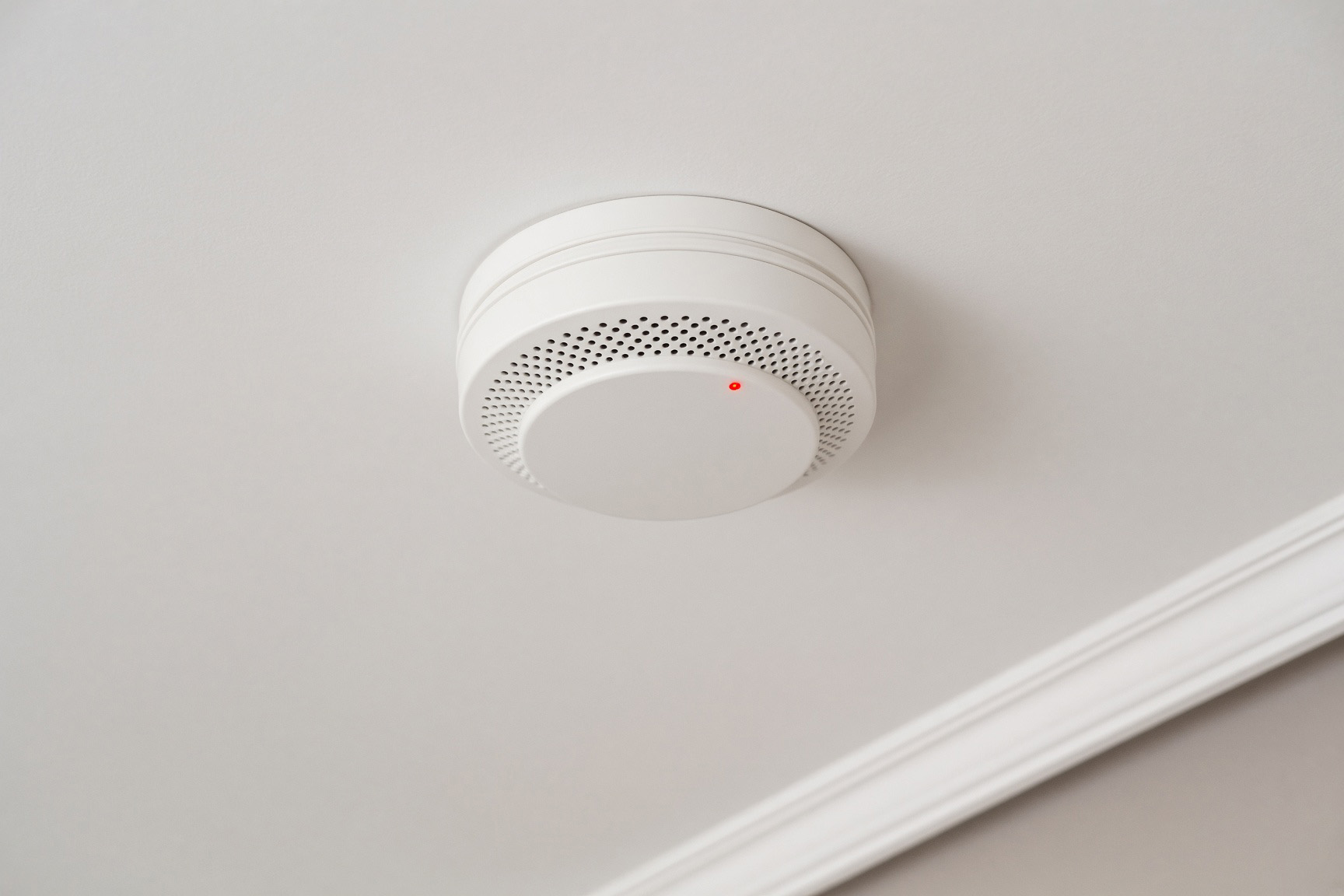
Smoke Alarm Requirements NZ: The Auckland Landlord’s Compliance Guide
Quick answer: The smoke alarm requirements NZ landlords must meet are set by the Residential Tenancies (Smoke Alarms) Regulations 2016 — at least one photoelectric alarm with a certified 8-year battery in or within 3 metres of every sleeping space, plus one on every storey. Interconnection is not required.
Ask ten Auckland landlords what the law says about smoke alarms and at least half will tell you the alarms have to be interconnected. They don’t. That belief has been repeated across so much New Zealand landlord content that it now reads as settled fact, and it costs landlords money every year on quotes for work no tenancy regulation asks for.
Free cost calculator
Budgeting compliance work on a rental?
Get an instant Auckland price range for your project — no details required to see it.
Here is where the confusion comes from. There are two separate rulebooks governing smoke alarms in New Zealand homes, and they say different things. One is tenancy law, which applies to every rental in the country regardless of its age. The other is the Building Code, which applies when you carry out building work under a consent.
The Building Code route does require interconnected alarms. Tenancy law does not.
Get the two mixed up and you go wrong in one of two directions. Either you over-specify and pay an electrician to run interconnected alarms through a 1960s Papatoetoe rental that never needed them, or you assume your alarms are fine because a builder ticked them off during a renovation years ago, and you miss the thing that actually catches landlords out at the Tenancy Tribunal.
That second failure is the expensive one, and it is about to become far more common. The 1 July 2016 deadline pushed a very large number of Auckland landlords to install new alarms in a single compliance round. Smoke alarms carry a recommended replacement date, and Fire and Emergency New Zealand advises replacing them every ten years. Do the arithmetic. Alarms bought in that 2016 rush are now hitting the end of their working life, and an alarm past its replacement date stops being a qualifying alarm under the regulations no matter how loudly it still beeps when you press the button.
This guide sets out what the regulations actually say, word for word where it matters, and where the Building Code cuts across them. It is written for Auckland landlords and the property managers who act for them.
Smoke Alarm Requirements NZ Landlords Must Meet In Every Rental
The governing instrument is the Residential Tenancies (Smoke Alarms) Regulations 2016 (LI 2016/128). If you have seen it cited elsewhere as the “Smoke Alarms and Insulation Regulations”, that was its name until 2 July 2025. Part 2, which carried the old ceiling and underfloor insulation rules, was revoked on that date and the regulations were retitled, because insulation now sits inside the Healthy Homes standards instead. The smoke alarm provisions in Part 1 were untouched and remain in force.
That matters for a practical reason. A landlord article or template checklist that still uses the old title is, at minimum, a year out of date, and you should treat everything else on it with the same suspicion.
Where alarms must go
Regulation 5 does the work. There must be at least one qualifying smoke alarm installed in every sleeping space, or otherwise at the premises within 3 metres of the entrance to that sleeping space. On top of that, regulation 5(8) requires at least one qualifying alarm on every storey or level of the premises that has a habitable space on it.
The word doing the damage there is “sleeping space”, not “bedroom”. The regulations define a sleeping space as a space that is for use, or that can otherwise reasonably be expected to be used, as a bedroom or other sleeping space. That is deliberately wider than the room count on your LIM.
A self-contained sleep-out in Manurewa counts. A converted garage in Massey that the tenants have obviously turned into a fourth bedroom counts. A downstairs rumpus with a bed in it counts. If someone sleeps there, it needs cover.
💡 Property tip: Count sleeping spaces at the routine inspection, not off the original floor plan. If tenants have added a bed to a study or sleep-out since the tenancy started, the alarm obligation follows the actual use of the space.
Tenancy Services states the requirement applies to all rental homes, boarding houses, rental caravans, and self-contained sleep-outs. Boarding house tenancies run on a near-identical rule under regulation 6, with the alarm required in the tenant’s boarding room or within 3 metres of its entrance.
What counts as a qualifying alarm
Regulation 7 defines a “qualifying smoke alarm”, and every alarm installed at the premises has to be one. There are four tests, and an alarm fails the lot if it fails any single one.
| Test under regulation 7 | What it means in practice | Applies to |
|---|---|---|
| Fully operational and in full working order, with no faults, defects or damage | It sounds when tested, the casing is intact, nothing has been painted over or unclipped | All alarms |
| Installed at a location that accords with the manufacturer’s instructions | Ceiling clearances and mounting positions follow the box, not guesswork | All alarms |
| The recommended replacement date must not have passed | An expired alarm is non-compliant even while it is still beeping on test | All alarms |
| Replacement date displayed on the alarm; alarm is photoelectric; manufacturer certifies it was made to AS 3786—1993 or an equivalent standard | You can read the date off the unit at an inspection without opening anything | Alarms that are not hard-wired |
| Battery must be “compliant” | Manufacturer’s instructions certify a life span of at least 8 years, and the battery is not worn out | Alarms that are not hard-wired |
Read that last row carefully, because it is routinely misquoted. The 8-year requirement attaches to the battery’s certified life span, not to the alarm itself. The regulations define a compliant battery as one whose manufacturer’s instructions include a certification, or other statement, to the effect that the battery has a life span of at least 8 years. A ten-year sealed unit clears that comfortably. A 9-volt replaceable battery does not.
The photoelectric and 8-year battery tests only bite on alarms that are not hard-wired. That is a genuine carve-out in regulation 7(1)(d), and it surprises people. A hard-wired alarm still has to be fully operational, installed per the manufacturer’s instructions, within its replacement date and carrying any back-up batteries the unit needs, but the regulations do not separately require it to be photoelectric. Fire and Emergency New Zealand recommends photoelectric regardless, and so do we.
Healthy Homes compliance note: Smoke alarms are not one of the five Healthy Homes standards. They sit under a separate set of regulations, and meeting your Healthy Homes obligations does nothing for your smoke alarm position. Landlords who treat their Healthy Homes assessment as a full compliance sweep are the ones most likely to have an expired alarm sitting in a hallway.
Hard-wired systems with connected sensors
Regulation 8 covers the case where a house has a hard-wired smoke alarm system with connected sensors running off it. Where that system is a “qualifying system”, a connected sensor installed at the relevant location satisfies the requirement instead of a separate qualifying alarm. A qualifying system is one that is fully operational with no faults, defects or damage, has every component installed to the manufacturer’s instructions, and has no component past its replacement date.
This is the provision that applies to newer townhouse developments across Auckland, where the alarms were wired in at build stage. The trap in those properties is the replacement date on individual components, which nobody thinks to check because the system was installed by a professional and looks permanent. It still ages.
If you are running several rentals, the audit and any remedial work are best handled in one pass. That is the kind of job we keep a rental portfolio compliant between inspections with.
The Interconnection Myth: Two Rulebooks, Not One
Nothing in the Residential Tenancies (Smoke Alarms) Regulations 2016 requires interconnected alarms. The words do not appear. Tenancy Services’ own smoke alarm guidance does not mention interconnection either. If your only obligation is tenancy law, standalone alarms in the right places, of the right type, within their replacement date, are compliant.
So where does the interconnection belief come from? From the Building Code, and it is a real requirement in its own lane.
What changed under the Building Code
On 2 November 2023 the Ministry of Business, Innovation and Employment published amended Acceptable Solutions for Protection from Fire. C/AS1 and C/AS2 now cite NZS 4514:2021 for the installation of interconnected smoke alarms to improve fire safety in new residential homes. The change took effect on 2 November 2023 with a 12-month transition that ended on 1 November 2024. Since then, the interconnected route has been the Acceptable Solution position for consented residential work.
Fire and Emergency New Zealand puts it plainly: “If you’re building or renovating and have been issued a building consent, the New Zealand Building Code requires interconnected smoke alarms in every bedroom, hallway and living area.” Note the trigger. It is the building consent, not the tenancy.
“The question we get asked is ‘do I have to interconnect them’, and the honest answer is: it depends entirely on whether you’re pulling a consent. Renting the place out doesn’t trigger it. Consenting building work does. Landlords keep being sold the wrong answer to the wrong question.”
— Superior Property Services Team
Put the two rulebooks side by side and the picture is straightforward.
| Rulebook | What triggers it | Interconnection required? | Coverage |
|---|---|---|---|
| Residential Tenancies (Smoke Alarms) Regulations 2016 | Letting the property under a residential tenancy | No | Every sleeping space or within 3m of its entrance, plus one per storey |
| Building Code Acceptable Solutions C/AS1 and C/AS2, citing NZS 4514:2021 | Building work carried out under a building consent | Yes, as the Acceptable Solution position since 1 November 2024 | Every bedroom, hallway and living area |
| Fire and Emergency New Zealand guidance | Advisory, applies to every home | Recommended, not compulsory | Every bedroom, hallway and living area |
Where the two rulebooks collide on a rental
The overlap catches landlords doing consented work on a property they already rent out. Reclad a Mt Albert rental, add a bedroom to a Henderson house, convert an internal garage under consent, and the building work brings the Building Code with it. At that point interconnected alarms become part of the job, and they are part of it because of the consent, not because there is a tenant in the house.
Where a job crosses into consented building work, the call on what the consent covers belongs to a Licensed Building Practitioner and to Auckland Council, not to a blog post and not to your electrician’s opinion on site. Get the scope confirmed before the work starts, because retrofitting alarms after a final inspection is far more disruptive than wiring them in during the build.
💡 Property tip: If a renovation on your rental has been through consent since November 2024, ask for the alarm specification in the producer statement or handover pack. That paperwork tells you which rulebook the alarms were installed under, and it belongs in the tenancy file.
Why Fire and Emergency still recommends interconnecting
Compliance is a floor, not a target. Fire and Emergency New Zealand recommends long-life photoelectric alarms because, in their words, “They are far more effective than ionisation alarms at detecting slow smouldering fires, which burn for hours before bursting into flames.” On interconnection they are equally direct: if a fire is detected in one room, interconnected alarms trigger every alarm in the home, “so everyone will be alerted to a fire sooner. This is especially important in multi-storey homes and homes with long hallways.”
That description fits a great deal of Auckland rental stock, particularly the two and three-storey townhouses that have gone up across Mt Wellington, New Lynn and Panmure over the last decade. Interconnection is not required in those properties by tenancy law, and it is still the right call in most of them. Wireless interconnection has made it a much smaller job than it used to be, since there is no cabling to chase through a finished ceiling.
Where hard-wiring is the right answer, it is prescribed electrical work and it belongs with a registered electrician. Our team can wire in hard-wired alarms and issue the certification across Auckland, and the same visit can pick up any other electrical items flagged at inspection. If the property is old enough that the switchboard is the real problem, our guide to house rewiring costs covers what that scope looks like.
Landlord And Tenant Responsibilities, And Where The Liability Lands
The regulations split the job. Landlords own the installation and the working state of the alarms. Tenants own the batteries in the specific case where the alarm takes replaceable ones. Both sides are enforceable, and both carry money.
What the landlord must do
The requirements must be met as at the commencement of the tenancy and at all subsequent times during the tenancy. That is regulation 5(2), and the “at all subsequent times” half is the part landlords underestimate. It is not a start-of-tenancy box tick. Tenancy Services frames the same obligation as making sure alarms are working at the start of each new tenancy and remain in working order during it.
The obligation is imposed for the purposes of section 45(1)(ba) of the Residential Tenancies Act 1986, which puts it in the same part of the Act as the landlord’s general repair and maintenance duties. Failing it is an unlawful act, and the exemplary damages the Tenancy Tribunal can award against a landlord for smoke alarm breaches run to $7,200. A tenant who damages, removes or disconnects an alarm faces up to $4,000.
For access, the normal rules apply. A landlord may enter to inspect or work on alarms with 24 hours’ notice, between 8am and 7pm. In practice most landlords fold the alarm check into the routine inspection rather than making a separate visit, which is the sensible approach given inspections are capped at once every four weeks.
What the tenant must do
Regulation 9 imposes a narrow, specific duty on tenants. Where an alarm is not hard-wired, takes batteries, was a qualifying alarm with compliant batteries at the start of the tenancy, and is designed to permit battery replacement, the tenant must replace any battery that becomes worn out with a compliant battery. Tenancy Services adds the obvious companion duty: tenants must not damage, remove, or disconnect a smoke alarm, and should tell the landlord about problems promptly.
Then comes the provision worth committing to memory, because it is a genuine defence and almost nobody quotes it. Regulation 9(4) says that where the tenant is required to replace a worn-out battery, the landlord is not in breach of regulation 5 just because the battery is worn out or has not been replaced with a compliant battery.
Read plainly, that means a flat battery in a tenant-serviceable alarm is not automatically the landlord’s failure. It does not extend to alarms with sealed long-life batteries, which cannot be serviced by the tenant and stay squarely the landlord’s problem. Nor does it help if the alarm was never a qualifying alarm to begin with.
💡 Property tip: Record the alarm type, location and replacement date for every alarm in the initial inspection report, and photograph the label. That single record is what determines whether regulation 9(4) is available to you eighteen months later.
Healthy Homes compliance note: Your Healthy Homes compliance statement covers the five standards only. Smoke alarm evidence sits outside it, so keep the alarm record in the tenancy file separately rather than assuming the compliance statement carries it.
Where this shows up at the Tribunal
Smoke alarm claims rarely arrive on their own. They tend to ride along with a wider maintenance dispute, where a tenant raises repairs that were slow or ignored and the alarm position gets audited on the way through. That is why the documentation discipline matters more than the hardware.
The mechanics of that wider duty, including the notice periods and the reasonable-timeframe test the Tribunal applies, are set out in our guide to landlord repair obligations and the notice clocks that run alongside them. If the alarm question is coming up because a tenancy is ending, the sequencing sits inside our end-of-tenancy inspection and bond refund guide.
The pattern we see across landlord portfolios is not deliberate non-compliance. It is drift. Alarms get installed correctly, the tenancy runs for six years, three of them quietly pass their replacement date, and nobody looks up. Nobody makes a decision to be non-compliant. They just stop checking.
Meeting The Smoke Alarm Requirements NZ Rentals Face: The Practical Job
Done properly, this is a short job. Done piecemeal, it becomes a recurring headache that resurfaces at every inspection. Work through it in one pass, property by property, and record the result.
Step one: audit what is actually there
Walk the property and count three things. Sleeping spaces as they are being used, storeys with habitable space on them, and the replacement date printed on each existing alarm. Most landlords can do this themselves in twenty minutes with a step ladder and a phone camera.
| Check | What you are looking for | Common Auckland failure |
|---|---|---|
| Sleeping space coverage | An alarm in the space, or within 3m of its entrance | Sleep-outs and converted garages left off the count |
| Storey coverage | At least one alarm in a habitable space on every level | Lower level of a split-level home with no alarm at all |
| Replacement date | Date printed on the unit, not yet passed | Alarms from the 2016 compliance round reaching ten years old |
| Alarm type | Photoelectric, with the date visible on the unit | Older ionisation alarms still in service |
| Battery | Certified life span of at least 8 years, not worn out | 9-volt units the tenant has to remember to replace yearly |
| Condition and position | No faults, defects or damage; mounted per the manufacturer’s instructions | Painted-over casings and units unclipped after a false alarm |
Step two: replace rather than patch
If an alarm is within two years of its replacement date, replace it now. Swapping every alarm in the property at once resets the whole house to a single date you can diarise, instead of leaving you with five alarms expiring across four different years. That is worth more than the small saving from keeping the newest one.
Move to sealed long-life photoelectric units while you are at it. Fire and Emergency notes that most smoke alarms now come with a built-in, sealed, long-life battery, which will last as long as the smoke alarm, about ten years, compared with the old 9-volt batteries that start chirping to be replaced after about a year. Taking the battery out of the tenant’s hands removes an entire category of mid-tenancy phone call.
💡 Property tip: Do not put a smoke alarm in the kitchen. Fire and Emergency advises using a heat alarm there instead, because cooking smoke will set a smoke alarm off and a tenant who gets nuisance alarms will eventually disconnect it.
Step three: know which parts you cannot do yourself
Fitting a battery-powered alarm to a ceiling is not prescribed electrical work, and a landlord can do it. Hard-wiring alarms into the fixed wiring is a different matter entirely, and it is not available to you as a landlord. Tenancy Services is unambiguous on the point: landlords are prohibited from doing any fixed wiring work including fitting of power points on properties that they are renting out.
Hard-wired installation is prescribed electrical work carried out by a registered electrician, and it generates certification you should file. Our guide to the electrical Certificate of Compliance explains which document you should be handed and when. The same message comes from Fire and Emergency, who note that they do not install interconnected alarms for code of compliance and direct people to a licensed electrician for that work.
Step four: keep the record
Photograph every alarm label, log the locations and dates, and store it with the tenancy agreement. If a dispute arrives, the landlord who can produce a dated record of a compliant installation is in a very different position from the landlord relying on memory. The same file should carry your Healthy Homes evidence, and our Healthy Homes standards checklist for Auckland landlords sets out what belongs in it.
Healthy Homes compliance note: Tenancy Services requires landlords to supply Healthy Homes compliance records within 21 days of a tenant asking for them. Smoke alarm records sit outside that obligation, but the practical answer is the same file and the same discipline. If you are building the record for one, build it for both while you are in the property.
Getting it done in one visit
Most rentals need an audit, a handful of replacements, and occasionally an electrician for a hard-wired unit or an interconnected upgrade. Superior Property Services runs that as a single job across Auckland, with one point of contact rather than three trades to chase, and we come back within 1 working day of your enquiry. Call 0800 199 888 or use the quote form and we will confirm scope before anyone turns up.
Where the work grows past maintenance scale, we hand it over rather than stretch. A consented renovation or a full recladding belongs with Superior Renovations, and a full interior or exterior repaint between tenancies belongs with Superior Painters. Both sit inside the same group and the same trade network, which is why the handover does not cost you a fresh round of quoting.
The One Thing To Do This Month
Go and read the replacement dates off the alarms in every property you own. Not the test button, the printed date. If any of them were installed in the 2016 compliance round, they are at or near the end of their working life right now, and an expired alarm fails the regulations on a test that has nothing to do with whether it still makes a noise.
Twenty minutes per property. For the money, there is not much on a landlord compliance list that pays back faster. The alarms that kill tenancies are not the missing ones. They are the ones everybody assumed were fine.
➡ Request a free no-obligation quote from Superior Property Services
➡ Learn more about our compliance maintenance for Auckland rentals
➡ Make an enquiry — we respond within 1 working day
What are the smoke alarm requirements NZ landlords must meet?
Under the Residential Tenancies (Smoke Alarms) Regulations 2016, every rental must have at least one qualifying smoke alarm in each sleeping space or within 3 metres of its entrance, plus at least one on every storey or level with a habitable space. Alarms that are not hard-wired must be photoelectric, display their recommended replacement date, be certified to AS 3786-1993 or an equivalent standard, and carry a battery certified for a life span of at least 8 years.
Do rental properties in NZ need interconnected smoke alarms?
No. The tenancy regulations contain no interconnection requirement, and Tenancy Services guidance does not mention one. Interconnection comes from the Building Code instead. Acceptable Solutions C/AS1 and C/AS2 cite NZS 4514:2021 for interconnected alarms in new residential homes, effective from 2 November 2023 with a transition that ended on 1 November 2024, and Fire and Emergency confirms it applies where a building consent has been issued.
How often do smoke alarms need to be replaced in a rental?
The regulations require that an alarm's recommended replacement date has not passed, so the manufacturer sets the clock. Fire and Emergency New Zealand advises replacing all smoke alarms every ten years with new long-life photoelectric units. Alarms installed for the 1 July 2016 tenancy deadline are reaching that ten-year point now, which makes 2026 a heavy replacement year for Auckland landlords.
Who is responsible for smoke alarm batteries, the landlord or the tenant?
Both, depending on the alarm. The landlord must ensure alarms are qualifying alarms at the start of the tenancy and at all times during it. Where an alarm is not hard-wired, takes replaceable batteries and was compliant at the start of the tenancy, regulation 9 requires the tenant to replace a worn-out battery with a compliant one. Regulation 9(4) then protects the landlord from breach in that specific situation. Sealed long-life alarms remain entirely the landlord's responsibility.
What is a sleeping space under the smoke alarm regulations?
The regulations define it as a space that is for use, or that can otherwise reasonably be expected to be used, as a bedroom or other sleeping space. That is wider than the bedroom count on a floor plan. A self-contained sleep-out, a converted garage being slept in, or a downstairs room with a bed in it all count, and each needs an alarm in it or within 3 metres of its entrance.
What penalty can a landlord face for a smoke alarm breach?
Tenancy Services states that landlords face up to $7,200 for non-compliance with the smoke alarm requirements, and tenants face up to $4,000 for damaging, removing or disconnecting an alarm. The landlord obligation is imposed for the purposes of section 45(1)(ba) of the Residential Tenancies Act 1986, which makes a failure an unlawful act the Tenancy Tribunal can award exemplary damages for.
Do hard-wired smoke alarms have to be photoelectric in a rental?
Not under regulation 7. The photoelectric requirement, the displayed replacement date and the 8-year battery certification apply only where the alarm is not hard-wired. A hard-wired alarm must still be fully operational with no faults, installed to the manufacturer's instructions, within its replacement date and carrying any back-up batteries it needs. Fire and Emergency New Zealand recommends photoelectric alarms regardless of how they are powered.
Can a landlord install smoke alarms themselves in New Zealand?
A landlord can fit a battery-powered alarm to a ceiling. Hard-wiring is different. Tenancy Services states that landlords are prohibited from doing any fixed wiring work, including fitting of power points, on properties they are renting out. Hard-wired or interconnected mains-powered installation is prescribed electrical work for a registered electrician, and Fire and Emergency directs people to a licensed electrician for code of compliance work.
Are smoke alarms part of the Healthy Homes standards?
No. The five Healthy Homes standards cover heating, insulation, ventilation, moisture ingress and drainage, and draught stopping. Smoke alarms sit under the separate Residential Tenancies (Smoke Alarms) Regulations 2016. Passing a Healthy Homes assessment tells you nothing about your smoke alarm position, and the compliance statement in your tenancy agreement does not cover it, so keep alarm evidence in the tenancy file separately.
Where should smoke alarms not be installed?
Fire and Emergency New Zealand advises against putting a smoke alarm in the kitchen, where smoke from cooking will set it off, and recommends a heat alarm there instead. Heat alarms are also an option for the laundry, bathroom and garage. Alarms cannot detect smoke through a closed door, so placement has to follow the layout of the house as well as the manufacturer's mounting instructions.
References
- New Zealand Legislation — Residential Tenancies (Smoke Alarms) Regulations 2016 (LI 2016/128)
- Tenancy Services — Smoke alarms
- Fire and Emergency New Zealand — Smoke alarms
- Building Performance — New Building Code documents published on 2 November 2023
- Building Performance — F7 Warning systems
- Tenancy Services — Healthy Homes standards
- Tenancy Services — Healthy Homes compliance statement
- Tenancy Services — Using licensed practitioners for your property