
Why Your RCD Keeps Tripping: An Auckland Electrical Safety Guide
Last updated:
Quick answer: An RCD (residual current device) is a safety switch that cuts the power within a fraction of a second when it detects electricity leaking to earth, protecting you from a serious or fatal electric shock.
It’s 6pm on a wet Tuesday in Henderson. You switch on the jug, the bathroom heater kicks in, and half the house goes dark. You head to the switchboard, find one switch flicked to off, push it back up, and everything’s fine again for a few hours. Then it happens once more. Sound familiar? That switch is almost certainly your RCD, and it isn’t being difficult for no reason. It’s doing exactly what it was installed to do.
Free cost calculator
Budgeting for electrical or maintenance work?
Answer a few questions and we’ll email you an Auckland price range.
A tripping RCD is one of the most common electrical call-outs we get across Auckland, and it’s also one of the most misunderstood. Plenty of people assume the switch is faulty and just want it “made to stop”. Most of the time the switch is the one thing in the story that’s working properly. It has spotted a fault somewhere in your wiring or an appliance and shut the power off before that fault could hurt someone.
This guide is written for homeowners. We’ll cover what an RCD actually is, why yours keeps tripping, and the safe steps you can take yourself to narrow down the culprit before you pick up the phone. There’s a clearly marked section for landlords further down. We’ll also be blunt about where the line sits: some checks are fine for you to do, and some work is prescribed electrical work that only a registered electrician is legally allowed to touch. We won’t be quoting a price for RCD or switchboard work here, because it genuinely depends on your board and what’s found on site.
What an RCD is and how it actually protects you
An RCD, or residual current device, is a protective switch that lives in your switchboard. Its job is simple to describe and clever in practice. It continuously monitors the current flowing out to a circuit and the current flowing back. In a healthy circuit those two numbers match. Every amp that goes out comes back. When they stop matching, it means some current is escaping somewhere it shouldn’t, usually leaking to earth through a fault or, in the worst case, through a person. The instant the RCD sees that imbalance, it switches the circuit off within a fraction of a second.
That speed is the whole point. Electricity leaking through a human body can stop a heart very quickly. An RCD reacts far faster than you could, and long before a standard fuse or circuit breaker would notice anything wrong. A fuse protects the wiring from overload and fire. An RCD protects you from a shock. They’re doing two different jobs.
There’s a number worth knowing. Under the Electricity (Safety) Regulations 2010, an RCD used to protect against electric shock is deemed electrically unsafe if its rated residual current is more than 30 milliamperes. In plain terms, the RCDs protecting your power points and lights are built to trip at a very small leakage, well below the level that would do you harm. That sensitivity is a feature, not a fault, and it’s why an RCD can seem “twitchy” compared to old fuse wire.
You’ll come across a few forms of the same idea. A fixed RCD sits in the switchboard and covers whole circuits, and an RCD switch is the term most people use for that board-mounted device. A portable RCD plug is the type you plug into a socket, then plug your appliance into, often used with power tools, extension leads or outdoor gear. All of them give you the same core RCD protection.
“When an RCD trips, treat it as your house raising its hand and telling you something’s wrong. The wrong move is to keep resetting it until it ‘gives up’ — because a healthy one never will.”
— Superior Property Services Team
Here’s the part that trips people up. An RCD isn’t a nuisance device that occasionally fails. It reports faults. So when yours goes off, the useful question isn’t “how do I stop the RCD doing this”, it’s “what is the RCD trying to tell me”. Nine times out of ten, once we find and fix the real fault, the tripping stops. We had a job in Papakura where a homeowner had lived with a “faulty” safety switch for months. The switch was fine. A cracked outdoor socket was letting rain in every time it drizzled.
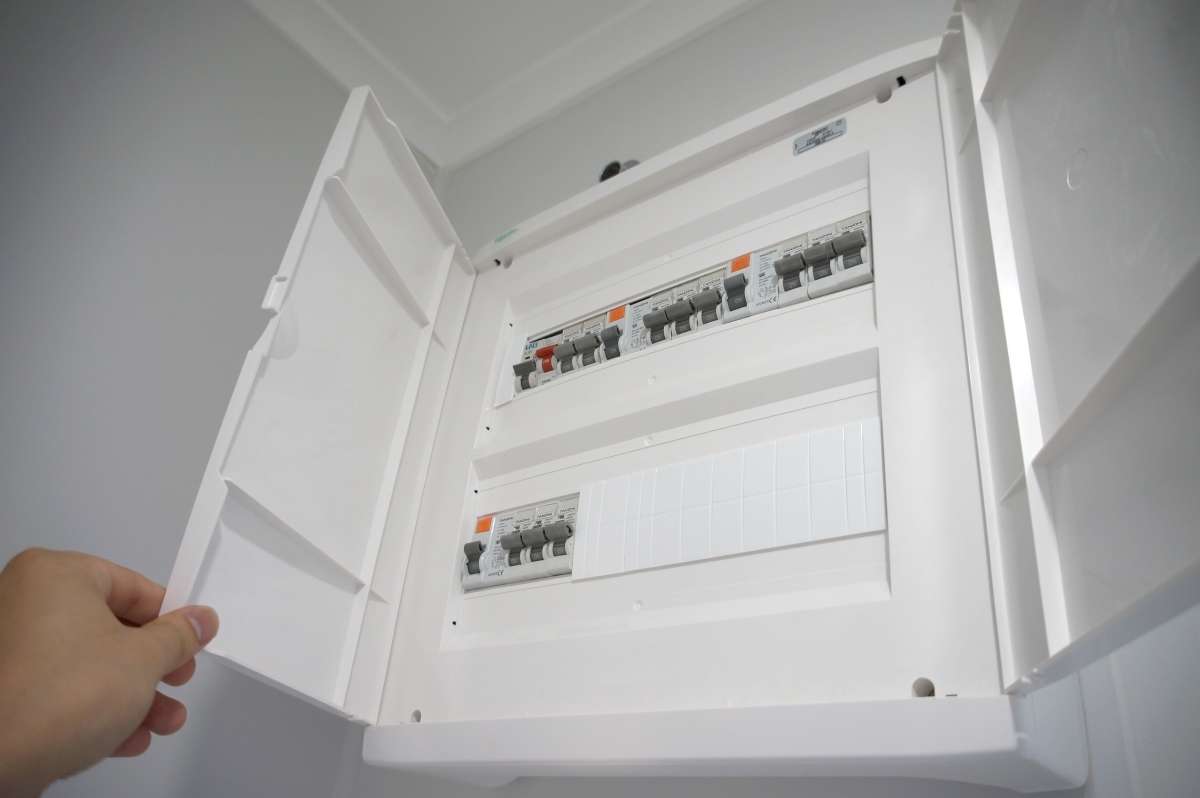
💡 Property tip: Find your RCD now, before you ever need it in a hurry. Open the switchboard, look for a switch with a small “T” or “Test” button on it, and note which one it is. In a night-time trip you’ll be glad you’re not squinting at labels by torchlight.
Why your RCD keeps tripping — the usual suspects
When your RCD keeps tripping, it’s detecting leakage somewhere. Your job, before an electrician gets involved, is to help narrow down where. The causes are repetitive once you’ve seen a few hundred of them, so let’s walk through the common ones in the order we tend to find them.
A faulty appliance is the number one cause. Something plugged into your circuit is leaking to earth. The classic offenders are appliances with heating elements or that sit in damp spots: an ageing kettle, a fridge, a washing machine, a dishwasher, an old bar heater, or a hot water cylinder element on its way out. Elements degrade with age and start letting a trickle of current escape, and seals perish and let moisture in. Either can be enough to push the leakage past that 30mA threshold and flick the switch. Often the appliance still seems to “work” right up until it trips the board.
Moisture is the second big one, especially in Auckland. We get plenty of rain, and outdoor sockets, garden lighting, spa and pool gear, and outbuildings are all exposed. Water gets into a fitting, creates a leakage path to earth, and the RCD does its job. This is the kind of fault that comes and goes with the weather, which is exactly why it drives people mad. It trips on wet mornings, behaves all through a dry spell, then starts again with the next southerly. A homeowner in Te Atatu swore their trip was “random” until we lined it up with the rain and traced it to a weathered garden light.
Too many appliances on one RCD can add up. Every appliance has a tiny amount of natural earth leakage that’s completely normal on its own. Stack enough of them on a single RCD-protected circuit and the small amounts combine. On a cold evening when the heater, dryer, dishwasher and jug are all running at once, that cumulative leakage can nudge over the limit and trip the switch even though no single appliance is faulty. This is a design and load issue rather than a broken part, and it’s a conversation to have with an electrician about how your board is arranged.
Then there’s the wiring and the RCD itself. Damaged, aged or rodent-nibbled cabling can leak to earth inside your walls or roof space. And an RCD is a mechanical device with a lifespan. After many years and many trips it can become oversensitive and start going off when there’s no real fault left to find. That’s a genuine possibility, but it sits at the bottom of the list on purpose. We rule out appliances, moisture and load first, because those are far more common. Assuming the switch is worn out is how people end up replacing a perfectly good RCD while the real fault stays hidden.
“An intermittent trip that lines up with the weather is almost always water getting in somewhere outside. If it only happens when it rains, we’re looking outdoors before we ever open a wall.”
— Superior Property Services Team
💡 Property tip: Keep a quick note on your phone every time the RCD trips — the date, the weather, and what was switched on. Two or three entries usually reveal the pattern, and it saves an electrician a lot of hunting.
How to find the faulty appliance yourself — safe steps
Here’s the good news. If your RCD trips and you suspect an appliance, there’s a safe process-of-elimination you can run yourself, without opening anything or touching any wiring. It’s the same logic an electrician uses, and doing it before you call means you often turn up to the appointment already knowing the culprit.
Start by unplugging everything on the affected area. Pull out the plugs of every appliance you can reach on the circuits that lost power: heaters, the fridge, the washing machine, chargers, lamps, the lot. Then go to the switchboard and reset the RCD by pushing the switch firmly back to on. If it stays on, the fault is in one of the appliances you just unplugged, not in the fixed wiring.
Now plug them back in one at a time. Reconnect a single appliance, switch it on, and wait. Move to the next. Keep going. When the RCD trips again, the appliance you just plugged in is very likely your leaking one. Set it aside and stop using it until it’s been checked or replaced. If nothing trips until several are running at once, that’s the combined-load situation from earlier, and it’s a useful finding to report too.
While we’re here, it’s good practice to know how to test the RCD itself. Press the button marked “T” or “Test” on the device. A healthy RCD should trip off immediately. Push the switch back up to reset it, and you’re done. It’s sensible to do this periodically so you know your safety switch will actually fire when it matters. If you press Test and nothing happens, that’s a real problem and a reason to call a registered electrician.
Knowing where the line sits between a homeowner check and prescribed electrical work matters. Here’s the plain version:
| Safe to do yourself | Stop and call a registered electrician |
|---|---|
| Resetting the RCD by pushing the switch back on | The RCD won’t reset, or trips again the instant you reset it with everything unplugged |
| Unplugging appliances and reconnecting them one by one | You’ve found nothing after the unplug test, so it points to the fixed wiring |
| Pressing the Test button to check the RCD works | The Test button does nothing when pressed |
| Noting when trips happen and what’s running at the time | Any burning smell, scorch marks, buzzing, or warm switchgear |
| Replacing or repairing the faulty appliance you identified | Anything involving the switchboard, sockets, cabling or the RCD itself |
That last row is the firm one. Installing, replacing or repairing a fixed or socket-outlet RCD is prescribed electrical work in New Zealand. It must be done by a registered, licensed electrician, not a homeowner and not a handyman. Getting the wiring inside a switchboard wrong can turn a working safety system into a live hazard. So run the safe checks, gather your clues, and hand the actual electrical work to someone licensed to do it. If you’re at that point now, you can request a quote and we’ll arrange a registered electrician.
💡 Property tip: If the RCD trips again immediately with absolutely everything unplugged, stop testing. That points to a fault in the fixed wiring, and repeatedly forcing the switch back on won’t help — it just leaves a live fault sitting there.
RCDs, AS/NZS 3000 and your safety obligations
Beyond the day-to-day nuisance of a tripping switch, RCDs sit inside a proper regulatory framework in New Zealand. The core standard is AS/NZS 3000, commonly called the Wiring Rules. It’s the electrical installation standard that governs how homes are wired, and it requires RCD protection on socket-outlet and lighting final subcircuits in new and altered installations. In everyday language, when a home is newly wired or an existing installation is altered, the power points and lighting circuits are required to have RCD protection.
What this means for an older Auckland home is straightforward. A 1960s place in Mt Eden that has never been rewired may have limited RCD coverage, or none on some circuits, simply because the rules were different when it was built. That’s not automatically illegal, but any time work is done, the modern standard applies to what’s altered. It’s one reason a rewire or a switchboard upgrade often adds RCD protection the house never had. If you’re weighing up that work, our guide on what it costs to rewire a house in NZ is a sensible read first.
When electrical work is completed, you should receive documentation for it. An Electrical Certificate of Compliance is the record that prescribed electrical work was done and tested to standard. Keep these. They matter when you sell, when you insure, and when a future electrician needs to understand what’s already been done to your board.
For landlords & property managers
If you own a rental, RCD protection is a tenant-safety matter you should take seriously. Your tenants are living with whatever electrical setup your property has, and an unprotected or faulty circuit is a risk you carry as the owner. A tripping RCD in a tenanted home is worth acting on promptly rather than leaving a tenant to keep resetting it.
To be clear about scope, this is a general electrical safety point, not a Healthy Homes item — RCDs are not part of the Healthy Homes standards. The practical takeaway is the same one homeowners get: any actual RCD, switchboard or wiring work on your rental is prescribed electrical work and must go to a registered electrician, who can also issue the compliance paperwork you’ll want on file for the property. A Remuera investor we work with now has us check the boards whenever there’s a tenancy change, and it’s caught more than one tired RCD before it became a tenant’s problem.
If you manage rentals across Auckland, our property maintenance for landlords covers electrical checks alongside the rest of the property, so it’s one call rather than five.
For homeowners, the same principle applies without the tenancy layer. You’re responsible for keeping your home’s electrical system safe, and an RCD that trips repeatedly is the system asking for attention. Our Auckland property maintenance service coordinates a registered electrician so the diagnosis, the fix and the certification all happen properly rather than piecemeal.
💡 Property tip: Whether you own or rent out the place, keep every Certificate of Compliance in one folder. When you sell or refinance in a suburb like Manukau, being able to show the board and RCDs were done to standard makes the whole process smoother.
When it’s the RCD itself, or the switchboard’s age
Sometimes, after the appliance checks come back clean and the wiring gets a proper look, the answer really is the RCD itself. It’s a mechanical switch, and like anything mechanical it wears out. An RCD that’s tripped thousands of times over fifteen or twenty years can become oversensitive and start going off with no genuine fault behind it. When an electrician has ruled everything else out, replacing an end-of-life RCD is the fix. Just note the order — the switch is the last suspect, not the first.
The switchboard around it tells a story too. Older Auckland homes often still run the original board, sometimes with ceramic fuses and little to no RCD coverage. A board like that isn’t necessarily dangerous on its own, but it limits what protection you can have and makes fault-finding slower. If your place has never had its board touched since it was built, and you’re getting repeated trips, a switchboard assessment is often where the real answer lives.
We’re often asked what an RCD replacement or a board upgrade costs, and the honest answer is that it depends. It depends on the type and age of your board, how your circuits are arranged, how many RCDs are involved, and what the electrician finds once the cover is off. That’s why we don’t publish a flat figure. The right move is to get a quote for your actual board rather than budgeting off a number you read somewhere. When you’re ready, request a free no-obligation quote and you’ll get a figure that reflects what your home actually needs.
A word on the temptation to “just leave it”. Plenty of people put up with an occasional trip for months because resetting the switch is quick. The problem is that every trip is the RCD catching a real leakage event. Ignoring it doesn’t make the fault go away, and if the switch is the thing wearing out, you’re relying on the one component you can least afford to have fail. A homeowner in Glen Eden told us they’d been resetting theirs “for about a year” before they called. The board was original to the 1970s house, and the RCD was on its last legs.
💡 Property tip: If your switchboard still has old ceramic fuse holders, book an assessment even if nothing’s tripping right now. An electrician can tell you what RCD protection you have and, just as usefully, what you don’t.
The thread through all of this is the same. An RCD isn’t the problem, it’s the messenger. Run the safe checks, gather the clues, and hand the electrical work to someone registered to do it.
➡ Request a free no-obligation quote from Superior Property Services ➡ Learn more about our property maintenance in Auckland ➡ Make an enquiry — we respond within 1 working day
Why does my RCD keep tripping?
An RCD trips because it has detected current leaking to earth on that circuit. The most common causes are a faulty appliance with a degraded element or seal, moisture getting into an outdoor socket or fitting, too many appliances sharing one RCD so their small leakages add up, damaged cabling, or an RCD reaching the end of its life. Unplug everything on the affected circuit, reset the switch, then reconnect appliances one at a time to find the culprit. If it trips with everything unplugged, call a registered electrician.
What is an RCD?
An RCD, or residual current device, is a safety switch in your switchboard that continuously compares the current flowing out to a circuit with the current returning. In a healthy circuit these match. If some current leaks to earth through a fault or a person, the RCD detects the imbalance and switches the power off within a fraction of a second. It protects people from electric shock, which is a different job from a fuse or circuit breaker that protects the wiring from overload.
Can I reset an RCD myself?
Yes. Resetting an RCD by pushing the switch back to the on position is safe for a homeowner to do. What you must not do is any electrical work on the device, the switchboard or the wiring, which is prescribed electrical work for a registered electrician only. If the RCD will not reset, or trips again immediately with all appliances unplugged, stop resetting it. That points to a fault in the fixed wiring and needs a licensed electrician to investigate.
How much does it cost to replace an RCD?
It depends. The cost varies with the type and age of your switchboard, how your circuits are arranged, how many RCDs are involved, and what the electrician finds on site. A single RCD swap and a full switchboard upgrade are very different jobs, so we do not publish a flat figure. The reliable way to get an accurate number is to request a quote for your actual board. All such work must be done by a registered electrician and completed to AS/NZS 3000.
What is the difference between an RCD and a circuit breaker?
They protect against different things. A circuit breaker or fuse protects the wiring from overload and short circuit, cutting power when too much current flows, which guards against overheating and fire. An RCD protects people, tripping when it detects even a small current leaking to earth, which is what causes electric shock. Many modern boards use combined devices, but the core distinction holds: a breaker guards the wiring, an RCD guards you. Both belong in a properly protected switchboard.
How do I test my RCD?
Press the button marked T or Test on the RCD in your switchboard. A healthy RCD should trip off immediately, confirming the mechanism works. Then push the switch back up to reset it. It is good practice to test your RCD periodically so you know it will fire when it matters. If you press the Test button and nothing happens, that is a genuine problem and a reason to contact a registered electrician, because a safety switch that will not trip on test cannot be relied on to protect you.
Is an RCD a legal requirement in New Zealand?
AS/NZS 3000, the Wiring Rules, requires RCD protection on socket-outlet and lighting final subcircuits in new and altered installations. So when a home is newly wired or an existing installation is altered, those circuits are required to have RCD protection. Older homes that have never been rewired may have limited or no RCD coverage, which is one reason a rewire or switchboard upgrade often adds it. Under the Electricity (Safety) Regulations 2010, an RCD protecting against shock is deemed unsafe if its rated residual current exceeds 30 milliamperes.
Why does my RCD only trip when it rains?
Weather-linked tripping almost always means moisture is getting into your electrical system, usually outdoors. Rain finds its way into a weathered outdoor socket, garden light, spa or pool fitting, or an outbuilding, creating a leakage path to earth that the RCD detects. Because it depends on the weather, it seems random until you line the trips up with wet days. Note when it happens and what is outside on that circuit, then have a registered electrician trace and repair the affected fitting. Do not keep resetting it through the wet.
Can a faulty appliance trip my RCD?
Yes, and it is the single most common cause. Appliances with heating elements or that sit in damp areas are frequent offenders: ageing kettles, heaters, fridges, washing machines, dishwashers and hot water cylinder elements. As elements degrade or seals perish, they start leaking a small current to earth, and once that leakage passes the threshold the RCD trips. To find the culprit, unplug everything on the circuit, reset the RCD, then reconnect appliances one at a time until it trips. Stop using whichever appliance triggers it.
Do I need an electrician to install or replace an RCD?
Yes. Installing, replacing or repairing a fixed or socket-outlet RCD is prescribed electrical work in New Zealand and must be done by a registered, licensed electrician, not a homeowner or handyman. A registered electrician will also test the work and can issue an Electrical Certificate of Compliance, the record you will want when you sell, insure or refinance. You can safely reset an RCD and run the unplug test yourself, but the actual electrical work on the device or board goes to a licensed professional.
References
- WorkSafe New Zealand — electrical safety and residual current devices (RCDs)
- Electricity (Safety) Regulations 2010, regulation 24 — RCD residual current safety threshold
- Standards New Zealand — AS/NZS 3000 Electrical installations (the Wiring Rules)