
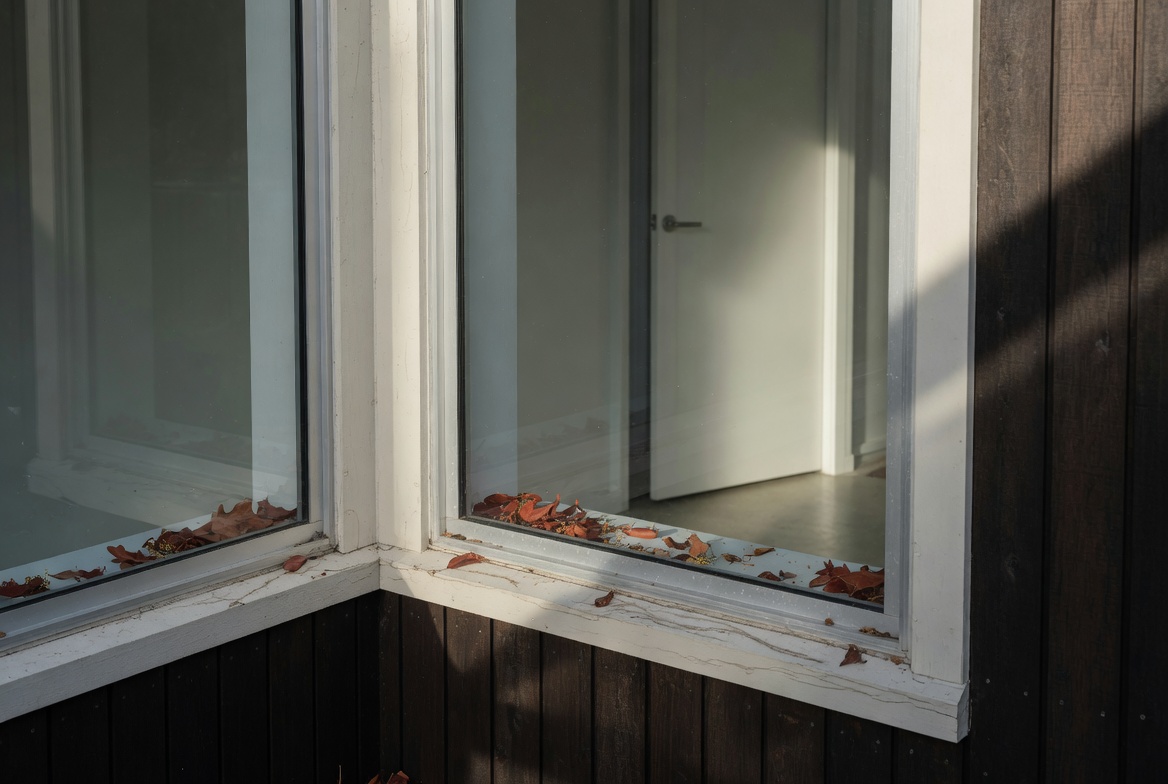
Aluminium vs uPVC vs Timber Windows NZ (Honest Guide)
Quick answer: For most Auckland homes, thermally broken aluminium is the safest all-round choice. uPVC delivers the warmest frame for the price but isn’t right for every house. Timber suits character villas where Council heritage rules apply. This guide isn’t written by anyone trying to sell you one.
You’ve decided your windows need replacing. Now you’re caught between three materials, six brand names, and a stack of quotes that don’t agree with each other.
The honest answer is that none of the three is universally best. Each one does some things brilliantly and others poorly. The right material depends on your house, your suburb, your climate exposure, your aesthetic, and whether you’ve factored in the gib repair, architrave replacement and repaint that most installer quotes leave out.
Here’s the problem with most comparisons you’ll find online: they’re written by people who sell one of the three materials. Aluminium dealers explain why aluminium wins. uPVC importers explain why uPVC wins. Timber joiners explain why timber wins. The “neutral” articles tend to be lightweight roundups that read like brochure summaries.
We sit in a different position. Superior Property Services coordinates window installs across Auckland as part of our property maintenance services, bringing in the joiner, the builder, the gib stopper and the painter to get the whole job done. We don’t manufacture or import any one material. We have fitted thermally broken aluminium in coastal Mission Bay, uPVC in mid-century Howick homes, and refurbished timber sashes in 1920s Mt Eden bungalows. All three perform brilliantly in the right house — and all three fail in the wrong one.
This guide breaks down each material the way an installer thinks about it. The real strengths, the real weaknesses, what coastal Auckland does to each one, how each handles Healthy Homes draught stopping, what Council heritage rules mean for your choice, and the long-term maintenance bill nobody quotes you up front. By the time you finish, you’ll know which material fits your house — and which ones to politely walk away from when the dealer comes knocking.
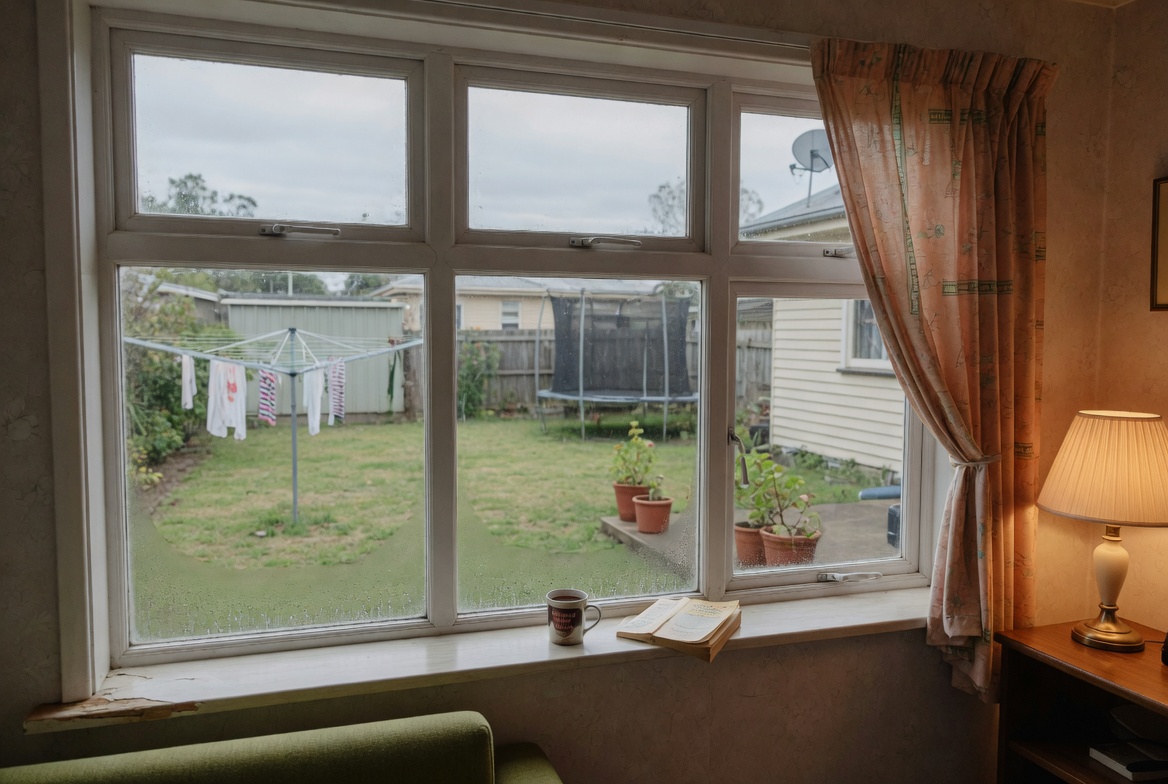
The three materials at a glance
Free cost calculator
How much will your project cost?
Get an instant Auckland price range for your project — no details required to see it.
Before we go deep on each one, here’s the honest snapshot: what each material is actually good at, and where it falls down.
| Factor | Aluminium (thermally broken) | uPVC | Timber |
|---|---|---|---|
| Cost per unit (supply + install) | $2,400–$3,500 | $2,000–$3,000 | $3,000–$5,500 |
| Thermal performance (frame) | Good (thermally broken only) | Best | Good |
| Maintenance (annual) | Wash twice a year | Wash twice a year | Inspect; repaint every 5–7 years |
| Expected lifespan | 30–40 years | 25–35 years | 50+ years (with maintenance) |
| Coastal saltwater performance | Needs marine-grade powder coat | Excellent | Good (with maintenance) |
| Frame slimness / glass area | Slimmest | Bulkiest | Mid |
| Colour options | Wide (any powder coat) | Limited (mostly white) | Unlimited (paint or stain) |
| Heritage zone approval | Usually no | Usually no | Yes |
| Best fit (Auckland) | Most standalone homes | Inland thermal upgrades | Villas and character homes |
Now into the detail. Each material gets its own honest section, including the things its salespeople would rather not discuss.
Aluminium windows in NZ — strong, slim, and now actually warm (if you spec it right)
Aluminium has been the default New Zealand window since the 1960s. Walk down any Auckland street built between 1965 and 2020 and you’ll see aluminium frames on nearly every home. There is a reason for that, and there is also a reason a lot of homeowners replacing those frames are now looking at the alternatives.
What makes aluminium the NZ default
A large share of New Zealand aluminium joinery runs through one Waikato operation. APL extrudes and finishes aluminium profiles and supplies them to fabricators nationwide, and three of the brand names you will see on Auckland quotes are APL brands: Vantage, First Windows & Doors and Altherm. They share the underlying profile systems and differ in dealer network, fabrication and powder coat options. Other systems companies, including Fairview and Nulook, run their own separate profile suites, so not every aluminium quote is the same product underneath.
What that means practically: within the APL brands you are often comparing fabricators and installers more than you are comparing windows. Between systems companies you are comparing genuinely different profile suites, so check the thermal spec rather than assuming it carries across.
Aluminium is genuinely good at what it does. It’s strong enough to support large panels of glass with slim sightlines, which is why architects keep specifying it for modern homes. Window performance in New Zealand is specified by SNZ TS 4211:2022, which replaced the older NZS 4211:2008. If a quote still cites the 2008 standard, that is worth a question, though which version applies to a particular job is a matter for the designer and Council rather than the dealer. It powder-coats in any colour. It doesn’t warp, rot or swell. Maintenance is basically washing it twice a year.
The thermal break — the upgrade that changes everything
Here’s where most older Auckland homes get into trouble. Standard aluminium is an excellent conductor of heat. That means in winter, the outside cold transfers straight through the frame into your living room. You will see the result on any frosty Mt Albert morning: condensation running down the inside of the frame, sometimes pooling on the sill.
Thermally broken aluminium fixes that. A polyamide barrier sits inside the frame, breaking the thermal bridge between the outside metal and the inside metal. APL’s ThermalHEART® system is the most common NZ version. The frame stops being a cold conductor and starts behaving more like uPVC or timber.
The catch: thermally broken aluminium typically costs 15–25% more than standard aluminium. A standalone home with 12 to 16 windows might pay an extra $4,000 to $8,000 to upgrade the spec across the whole house. For an inland Howick or Pakuranga home where winter mornings get genuinely cold, that is money well spent. For a sheltered Remuera home with good orientation the standard spec may be fine, though we would still recommend the upgrade if you are staying long-term.
💡 Property tip: If a quote says “aluminium double glazing” without specifying thermally broken, assume it isn’t. Ask the dealer directly — and ask which ThermalHEART® profile they’re quoting. Standard aluminium with double glazing still has a cold frame, even if the glass is warm.
Where aluminium falls short
Two real weaknesses. First, thermal performance. Even thermally broken aluminium trails uPVC on raw frame performance, so for homeowners chasing maximum warmth on a fixed budget, uPVC outperforms aluminium dollar for dollar.
Second, coastal corrosion. Aluminium handles standard Auckland conditions fine. But within 500 metres of saltwater, which covers Mission Bay, Takapuna, St Heliers, the Devonport waterfront, Browns Bay and Cockle Bay, windows that aren’t powder-coated to marine-grade specification start showing corrosion within 5 to 10 years. Pitting around the sill, white salt deposits on the frame, and eventually structural degradation at the worst points. Marine-grade powder coat adds 5–10% to the cost and is non-negotiable for coastal properties.
When aluminium is the right call
If you are in a standalone Auckland home built after 1970, whether that is Howick, Albany, Pakuranga, Glen Eden, East Tāmaki, Manukau or Henderson, thermally broken aluminium is almost always the right answer. It’s the proven NZ product. The supply chain is mature. Every Auckland builder knows how to install it. The look is appropriate to the architecture. And you won’t have an aesthetic clash with the neighbouring homes when you re-sell.
For modern architectural homes wanting big glass openings, whether sliding doors, picture windows or floor-to-ceiling panels, aluminium is the only material that handles the structural span without dominating the view with bulky framing.
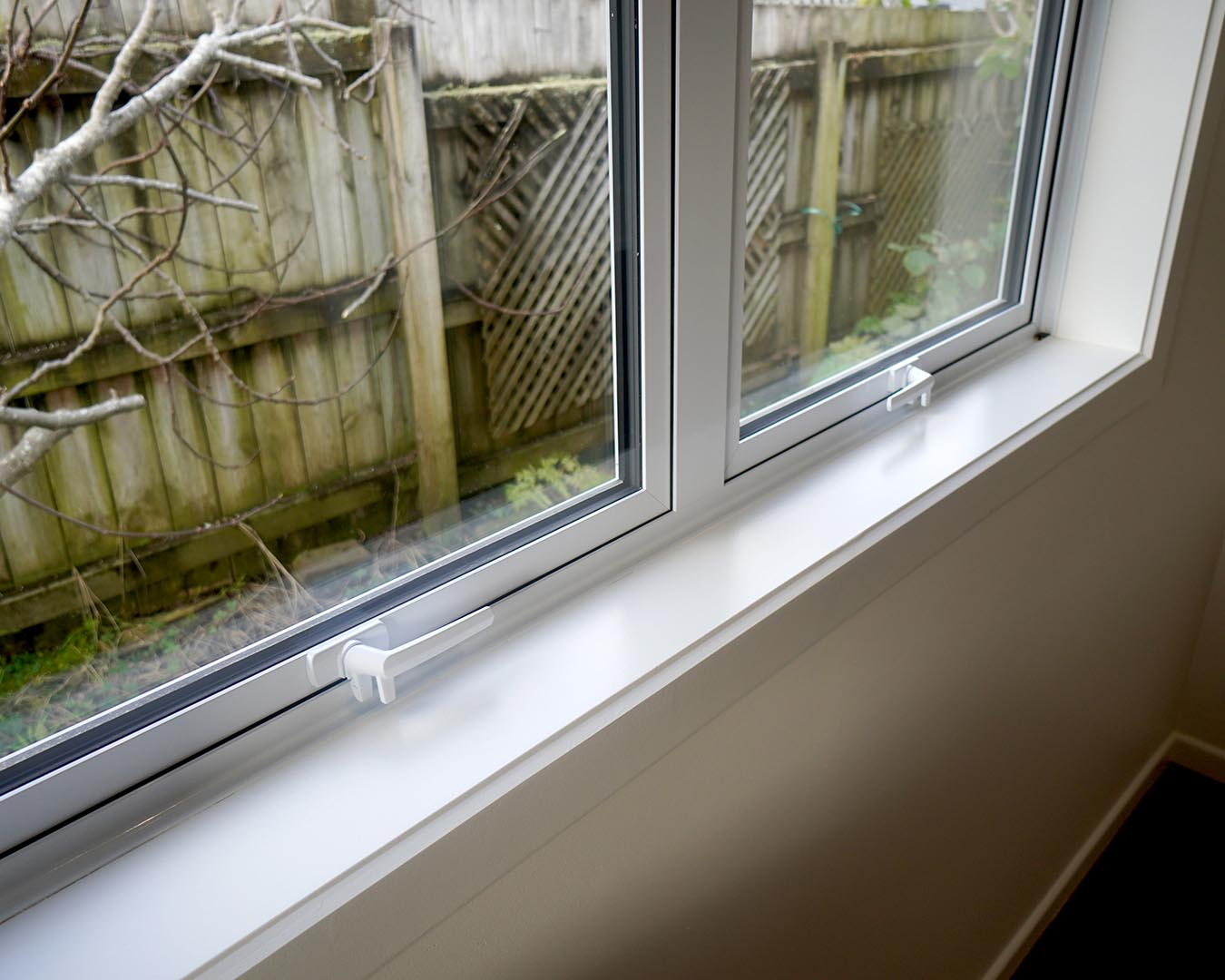
uPVC windows — the thermal performance winner with two real caveats
Aluminium has been the NZ default for sixty years. uPVC has been in this country meaningfully for about fifteen. That gap matters — both in why uPVC outperforms aluminium thermally, and in why a lot of Auckland tradies are still cautious about it.
Why uPVC outperforms aluminium thermally
uPVC, or unplasticised polyvinyl chloride, is a thermal insulator by default. There is no heat bridge to break, because the material itself doesn’t conduct heat the way metal does. For raw frame thermal performance, uPVC is the clear winner of the three materials.
Most quality uPVC windows come with multi-chambered profiles, typically four to six air-filled chambers running through the frame, that add further insulation. Pair that with proper double or triple glazing and you get a window that performs closer to wall-insulation values than to a typical aluminium frame.
For Auckland homeowners chasing serious warmth, especially in inland suburbs where winter mornings hit single digits, uPVC delivers the most thermal performance per dollar. The clearest cases we see are 1980s inland homes with standard aluminium frames, where interior condensation runs off the frame every winter morning and pools on the sill until it starts damaging the timber below. Swapping the frame material, rather than only the glass, is what changes that pattern, because the frame is where the cold is coming through.
The UV question — does uPVC actually degrade in NZ sun?
This is the question every Auckland homeowner asks, and the honest answer is: it depends entirely on the product.
Cheap or non-NZ-spec uPVC will degrade in NZ sun. New Zealand sits under some of the highest UV levels of any developed country, well above typical northern European conditions. uPVC profiles engineered for German or UK weather are not engineered for that. White uPVC from a generic importer can chalk, yellow or become brittle within a decade if it isn’t formulated for high-UV climates.
NZ-spec uPVC is a different product. UV-stabilised formulations are made specifically for high-UV markets, and reputable European imports aimed at Australia and New Zealand use those profiles with warranties to match. BRANZ, in its guidance on window frame selection, lists UV resistance as one of the defining considerations for uPVC, alongside frame construction (uPVC frames typically carry a steel stiffener inside the profile), hardware and finish. Colour stability is assessed as part of BRANZ product appraisals. The 25 to 35 year service life we quote below is our own installer view of well-specified NZ product, not a published BRANZ figure.
If a uPVC quote is significantly cheaper than the others, ask exactly where the profile is extruded, what the UV warranty is, and whether the product is engineered for Australasian conditions. If the dealer can’t answer those questions cleanly, walk.
💡 Property tip: Ask any uPVC supplier for the specific UV warranty in writing — not the structural warranty. A 10-year structural warranty is meaningless if the colour-fastness warranty is 5 years. Reputable NZ-spec product will warrant against UV degradation for 20+ years.
Sightlines, aesthetic and the look problem
uPVC frames are bulkier than aluminium. The multi-chamber profile that gives uPVC its thermal performance also makes it visually heavier. On a small window, a bathroom or a hallway, you barely notice. On a large picture window or sliding door the difference is obvious. You’ll lose 10–20% of the visible glass area compared to a thermally broken aluminium equivalent.
Colour is the other constraint. Most uPVC is white, because that’s the natural colour of the extruded profile. Coloured uPVC exists, with foil-laminated finishes in woodgrain or anthracite grey common in Europe, but the range in NZ is narrower and the cost premium is meaningful. If you want pure black aluminium-look frames, uPVC is a harder fit.
When uPVC is the right call
uPVC is the right answer for an inland Auckland home where thermal performance is the top priority, the architecture is modern or transitional, and the budget is tight. It’s also the right answer for coastal homes where the saltwater attack on non-marine-grade aluminium would be a long-term liability. It is a common reason coastal homeowners land on uPVC: they have watched non-marine-grade aluminium on a neighbouring property pit and bloom within a decade, and they would rather not manage the question at all.
“None of the three materials is universally best, and anyone telling you otherwise sells one of them. Aluminium can look completely wrong in a 1920s villa. uPVC can quietly outperform marine-grade aluminium on a coastal site. The material that wins is the one that suits the specific house, not the one at the front of the dealer’s catalogue.”
— Superior Property Services Team
Timber windows — the heritage choice with a maintenance bill
Timber is the original New Zealand window. Every villa, bungalow and pre-1960 home in Auckland has timber joinery from new — and a lot of it is still in service, sometimes a century later, sometimes barely. The decision for owners of these homes isn’t usually “aluminium or uPVC”. It is “refurbish the timber I have, replace with new timber, or risk a heritage-rule fight by going aluminium.”
Where timber wins
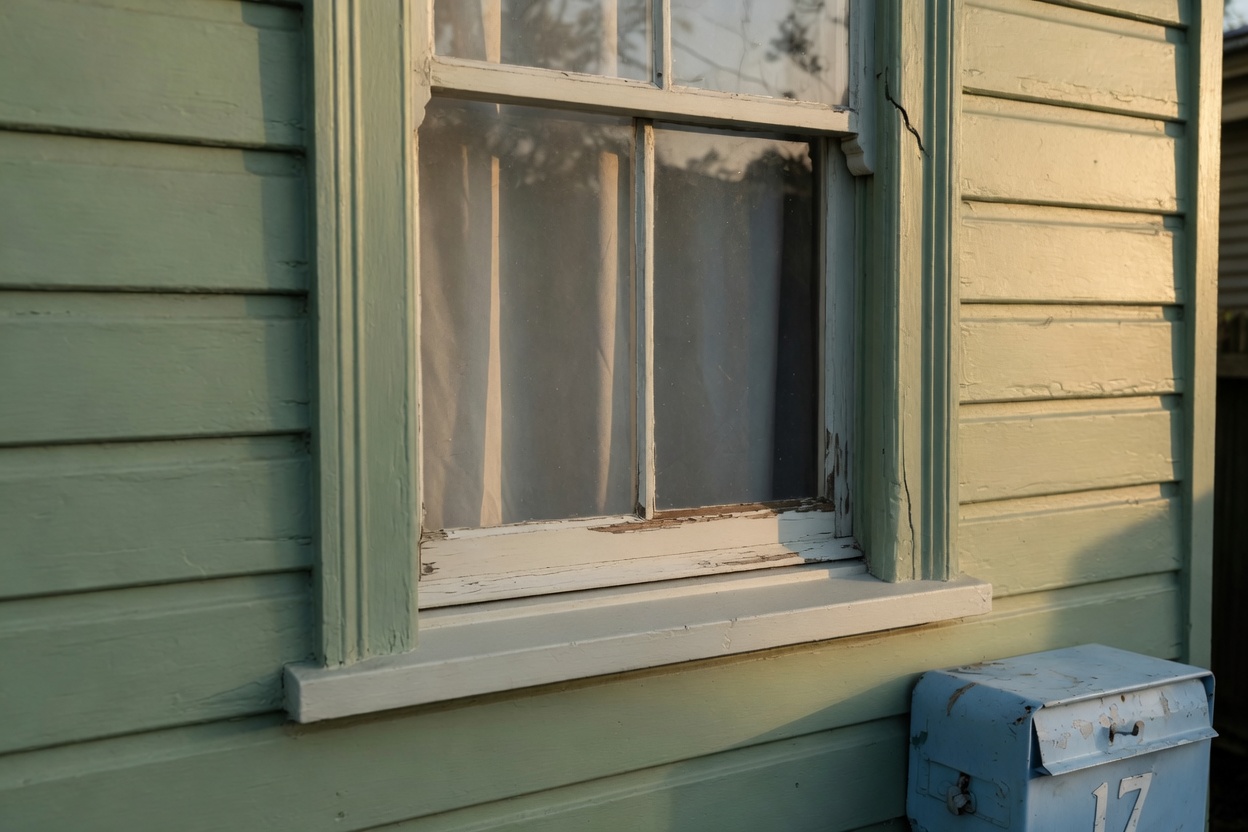
Three places timber genuinely beats the other two.
Aesthetic and heritage value. A 1920s Mt Eden bungalow looks wrong with aluminium frames. The proportions, the sash detail, the architrave: all of it was designed for timber. Drop an aluminium window into that wall and you’ve lost a chunk of the home’s character and resale value. Auckland Council’s special character area rules across Mt Eden, Ponsonby, Grey Lynn, Devonport, Parnell and Epsom typically require timber replacements for street-facing windows on listed homes. Going aluminium without consent can land you with a remediation order.
Natural thermal performance. Solid timber is a natural insulator — wood’s thermal conductivity sits between uPVC and thermally broken aluminium. Double-glazed timber windows perform thermally about as well as good uPVC, and significantly better than non-thermally-broken aluminium.
Lifespan when maintained. We’ve worked on Remuera and Mt Eden villas where the original 1910 timber sashes are still operational after a century, with periodic repaint and the occasional sash cord replacement. No other window material gets close to that lifespan.
The maintenance reality
Here’s the trade-off nobody mentions until you’ve signed the quote. Timber windows need ongoing attention.
The minimum maintenance schedule is a full repaint every 5 to 7 years for exterior-exposed timber, sooner on west-facing or south-coastal elevations where wind-driven rain hits harder. Between repaints, check for paint flaking, sash bottom softness (the classic rot point), and seal condition around the glazing. Catching rot at the sash bottom when the timber is still mostly sound is a $200 repair. Catching it two years later when the rot has spread up the stile is a $1,500 sash replacement.
The maintenance bill across 30 years for a 12-window house adds up. Conservatively, four repaints at $4,000 to $6,000 each plus periodic minor rot repairs comes to around $20,000–$30,000 of upkeep across a typical timber window’s life, money that aluminium and uPVC owners simply don’t spend.
💡 Property tip: If you’re keeping timber windows, get a painter to do an exterior touch-up inspection annually — small chips and cracks repaired in year 3 stop becoming rot in year 7. We coordinate this work with our painting team as part of our wider property maintenance rounds for character home owners.
Council heritage rules — what you can and can’t do
If your home is in an Auckland Council special character area or listed in the Council’s heritage schedule, your window options are constrained. Street-facing frames almost always have to remain timber. Some rear elevations can be changed, but require consent. Painting colour choices may also be restricted.
Before you spec any window material in a character home, check your property’s overlay status on the Council’s GIS viewer or your LIM report. Spending $40,000 on aluminium frames you then have to remove and replace at your own cost is the most painful version of this mistake, and it does happen.
Aluclad timber — the buy-once option
Aluclad timber pairs a solid timber inside frame with an aluminium cladding on the outside. You get the timber aesthetic and thermal performance internally, and a maintenance-free aluminium shell facing the weather. German imports dominate this segment in NZ.
The cost is real. Aluclad timber typically runs 60–100% more per unit than thermally broken aluminium. For most Auckland homes that’s hard to justify on pure cost-benefit. But for high-end character homes wanting period-correct interior detail with no exterior maintenance, or for passive house builds chasing maximum thermal performance, aluclad is a credible answer.
Which window material is right for your Auckland home — a decision framework
Forget the marketing. Here’s how we actually think about material choice when we’re walking through an Auckland house with a homeowner who needs to make a decision.
If you own a character villa or bungalow (Mt Eden, Ponsonby, Grey Lynn, Devonport, Epsom, Parnell, Remuera)
Default to timber, almost always. Council heritage rules may require it. The aesthetic match preserves resale value. Refurbishing existing sashes with new double-glazed inserts is often a better-value path than full replacement. Original century-old sashes can be restored and re-glazed for well under half the cost of replacement, retaining the heritage detail.
Walk away from aluminium and uPVC quotes for the street-facing windows. They’ll look wrong, may breach consent rules, and will hurt resale.
If you own a standalone home built 1970–2010 (Howick, Albany, Pakuranga, Glen Eden, East Tāmaki, Hillsborough)
Default to thermally broken aluminium. The architecture suits it. The supply chain is mature. Every local builder knows how to install it. You’ll match the neighbours visually, which matters for resale.
Consider uPVC if thermal performance is the priority and you are committed to the warmth upgrade over slim sightlines. Avoid standard non-thermally-broken aluminium: it is a false economy, and the condensation problems get expensive over time.
If you own a coastal home (Mission Bay, St Heliers, Takapuna, Browns Bay, Devonport waterfront, Cockle Bay, Maraetai)
Marine-grade aluminium or uPVC. The corrosion risk on non-marine aluminium isn’t theoretical. We see it constantly on coastal Auckland homes from around year 8. If you’re going aluminium on the coast, the marine-grade powder coat is non-negotiable. If you’d rather sidestep the corrosion question entirely, uPVC handles saltwater attack better than any aluminium product.
Timber works on the coast but the maintenance interval gets shorter, at every 3 to 5 years for repaint, with close attention to sash bottoms. Most coastal homeowners we work with eventually go uPVC for exactly this reason.
If you own a rental property
Aluminium, almost always. Lowest maintenance, longest service life, easiest to repair when a tenant breaks something. uPVC is acceptable for inland rentals where the thermal upgrade helps with Healthy Homes draught compliance. Timber is hard to recommend for rentals unless the property sits in a character area where Council rules require it, because the maintenance cycle is too expensive against rental income.
For landlords planning broader rental upgrades, our work with Auckland landlords and property managers increasingly bundles window upgrades with Healthy Homes ventilation and insulation work for a single trade-coordinated visit.
If you’re building new
The choice opens up significantly. Aluminium thermally broken is the default for modern architecture. uPVC is a credible warmth-first choice for the inland/non-coastal new build. Aluclad timber is on the table for premium and passive house projects. Whatever you choose, spec it at the design stage with your architect. Retrofitting a different material 12 months after handover costs three times as much as getting it right first time.
The hidden costs and Auckland-specific factors installer quotes never include
Most dealer quotes cover supply and installation of the windows themselves. They don’t cover everything that happens around the window during and after install. This is where 20–30% of a typical window project budget actually sits, and most homeowners don’t find out until the quote arrives mid-project.
Gib damage, architraves and repaint — the budget the dealer doesn’t quote
When old windows come out, the surrounding wall comes out with them. Internal gib at the reveal gets damaged. Architraves usually crack or split during removal. The plaster around the new frame needs stopping and sanding. Then the whole interior reveal and surround needs repainting to match the existing wall.
On a 14-window standalone home in Howick, this work adds roughly $6,000–$12,000 to the project depending on the painting scope. Some homeowners use the opportunity to do a full interior repaint at the same time, which is genuinely efficient. Others get blindsided because their installer quoted “windows only” and the builder, gib stopper and painter are now separate calls.
This is exactly why our window and joinery replacement work across Auckland runs as a single coordinated package: joiner, builder, gib stopper and painter, all sequenced under one quote. One call, all trades. That’s the entire point of how we run property maintenance work across Auckland.
Healthy Homes draught stopping compatibility
Healthy Homes compliance note: All three materials can meet the Healthy Homes draught stopping standard if installed correctly. The standard requires unreasonable gaps and holes in walls, ceilings, windows, floors and doors that cause a noticeable draught to be blocked. The issue isn’t the material — it’s the install. Old timber sashes and degraded rubber seals on existing aluminium are the most common Healthy Homes draught failures we see in Auckland rentals.
For landlords replacing windows specifically to hit Healthy Homes compliance, the material question matters less than the install quality and the surrounding seal work. We have remediated rentals where the windows were new but the surrounding reveals weren’t properly sealed, and the home still failed the draught assessment.
Council consent: when you actually need it
This is the part most comparison articles get wrong, so here is what the legislation actually says. Clause 8 of Schedule 1 of the Building Act 2004 exempts building work in connection with a window, including a roof window, or an exterior doorway in an existing dwelling of not more than 2 storeys. That exemption is broader than the “same size opening” rule you will read elsewhere.
It carries two carve-outs that matter, and both bite on exactly the Auckland housing stock this guide is about:
The durability carve-out. The exemption does not apply where the window being replaced has failed to satisfy the Building Code for durability, for example through a failure to comply with the external moisture requirements. In plain terms: if the old window failed because water was getting in, replacing it is not exempt work.
Specified systems. The exemption also does not apply if the work modifies or affects any specified system.
On top of all that sits the resource consent layer. Special character and heritage overlays are administered separately under the Auckland Unitary Plan and are unrelated to the building consent question. Whether your particular job is exempt is a call for Auckland Council and a Licensed Building Practitioner, not for a dealer and not for this article. Ask before you commit to a material on a character home, because the difference between an approved and a declined application is sometimes a single product spec.
The coordination problem
The single biggest cost overrun we see on Auckland window projects isn’t the windows themselves. It’s gaps between trades. The joiner finishes, the builder isn’t booked for two weeks, the gib stopper waits another fortnight, the painter is double-booked, and now the homeowner is living with exposed reveal plaster for six weeks. Every gap is dead time during which something else can go wrong.
That’s why we don’t sell window replacement as a product. We sell it as a coordinated project: a single quote, a single point of contact, every trade sequenced in advance. As part of the wider Superior Construction Group trade network, we draw on the same builders, joiners and painters we use across the renovation business, and we respond to enquiries within one working day. If you’d rather have one phone number for the whole job than four separate trade callbacks, that’s what we do.
💡 Property tip: Before signing any window quote, get a written scope of what is included for the surrounding work: gib repair, architrave, paint reinstatement, exterior weatherproofing. If the quote is silent on these, ask explicitly. Most installer disputes start with a quote that didn’t define where the work stopped.
What Each Window Material Actually Costs in Auckland
The single most common question we get after the material question is the price gap. Per installed window, uPVC is the cheapest of the three, thermally broken aluminium sits in the middle, and timber is the most expensive. The gap is smaller than most people expect, and it is not where the real money in a window project sits.
Per-window and whole-house comparison
The figures below are the Auckland supply-and-install ranges used through this guide, extended across a typical 14-window standalone home so the gap is visible at project scale rather than per unit.
| Material | Per window (supply + install) | 14-window home (windows only) | The cost driver to watch |
|---|---|---|---|
| uPVC | $2,000 – $3,000 | $28,000 – $42,000 | Profile origin and UV warranty; coloured finishes carry a premium |
| Aluminium (thermally broken) | $2,400 – $3,500 | $33,600 – $49,000 | Thermal break adds 15–25% over standard aluminium; marine-grade coat adds 5–10% |
| Timber | $3,000 – $5,500 | $42,000 – $77,000 | Refurbishing existing sashes is often well under half the replacement cost |
| Aluclad timber | 60–100% above thermally broken aluminium | Quoted per project | Only earns the premium on premium character or passive house work |
| Then add: gib, architraves, repaint | Roughly 20–30% of project | $6,000 – $12,000 | Applies to all three materials; most dealer quotes exclude it |
Is uPVC actually cheaper than aluminium?
On a like-for-like basis, yes, but by less than the marketing implies. The per-window gap between uPVC and thermally broken aluminium runs roughly $400 to $500 on a typical unit, which is around 15 to 20%. Across a whole house that is real money, but it is smaller than the gap the surrounding work opens up.
Two things close the gap quickly. Coloured or foil-laminated uPVC costs meaningfully more than standard white, so if you want anything other than white the price converges with aluminium. Going the other way, specifying marine-grade powder coat on aluminium adds 5 to 10%, which widens the gap on a coastal site. Compare the two on the exact spec you would actually install, not on the entry-level version of each.
The thirty-year number nobody quotes
Purchase price is only the first payment. Aluminium and uPVC both need washing twice a year and essentially nothing else. Timber needs a full exterior repaint every five to seven years, sooner on west-facing or south-coastal elevations.
Across thirty years on a 12-window house, that maintenance cycle adds roughly $20,000 to $30,000 to timber — four repaints plus periodic rot repair, against near-zero for the other two. On a character villa that cost is usually worth paying, because the aesthetic and consent position leave you little choice and the resale value reflects it. On a rental it rarely is.
💡 Property tip: Ask every dealer to quote the same three things: the frame material and whether it is thermally broken, the glazing specification, and what happens to the interior reveal after install. Two quotes that look $8,000 apart are often quoting different scopes rather than different windows.
For the full per-unit and per-square-metre breakdown across replacement methods, including retrofit double glazing and full frame replacement, see our companion 2026 Auckland window replacement cost guide. Windows are also one line in a bigger maintenance budget, and for landlords weighing this against the rest of the year’s work our rental property maintenance cost guide puts it in context.
The Building Code Clauses Your Windows Have to Satisfy
Most window comparisons stop at warmth and looks. The compliance side is more involved than that, and it is worth knowing what a designer is actually working to. BRANZ notes that the statutory requirements for windows are scattered across numerous clauses of the New Zealand Building Code rather than sitting in one place, and lists the clauses that apply:
| Clause | What it covers for a window |
|---|---|
| B1 / B2 | Structural performance and resistance to wind load; durability |
| E2 / E3 | Weathertightness; condensation control |
| F2 / F4 | Hazardous building materials (glazing); prevention of falls out of an open window |
| G4 / G7 | Ventilation, where the window provides it; natural light admission |
| H1 | Energy efficiency |
Two of those deserve a mention because homeowners trip on them. F4 is why a first-floor bedroom window may need a restrictor or a higher sill, which can change the window style you are allowed to specify. H1 is why the glazing and frame spec on a consented job is not purely a comfort choice any more. BRANZ also notes that these requirements can conflict with each other, which is a large part of why a designer earns their fee on anything beyond a straight swap.
Where the frame materials actually sit on thermal performance
Rather than take any dealer’s word for it, BRANZ ranks window frame materials in approximate increasing order of thermal performance as: aluminium, steel, thermally broken aluminium, thermally broken steel, composite timber and aluminium, timber, fibreglass, then uPVC.
That ordering matches what we see on site. Standard aluminium is bottom. The thermal break lifts aluminium up several places but does not take it past timber. Timber genuinely outperforms thermally broken aluminium. uPVC sits at the top. Fibreglass sits just below uPVC and is a newer arrival in this market, available in profiles and configurations similar to aluminium, though the supply base here is still thin.
For a rental, frame thermal performance interacts with the rest of the Healthy Homes picture rather than standing alone. Insulation and heating carry most of the compliance weight, and a colder frame drives the condensation that turns into a mould complaint. Our Healthy Homes standards checklist covers where each standard actually sits, and if condensation has already become a problem in a tenancy, mould in a rental property covers the liability split. Where windows are only part of a wider thermal upgrade, our cost to insulate a house guide covers the rest of the envelope.
Bringing it all together
None of the three materials wins universally. Thermally broken aluminium remains the safest default for most Auckland homes, with a proven supply chain, a mature install base and an aesthetic that suits the housing stock built since 1970. uPVC outperforms it on raw thermal performance and is the right answer for inland warmth-focused upgrades and most coastal homes. Timber is the right answer for character villas and bungalows where heritage rules, aesthetic and long-term home value all push in the same direction.
The material is only half the question. The install, plus the gib, painter, builder and weather-seal work around it, is the other half. If the trade coordination falls apart, even the best window material won’t save the project.
For pricing on each material across replacement methods, the companion piece to this guide breaks the numbers down further. See our 2026 Auckland window replacement cost guide for full per-unit and per-square-metre pricing including the post-install work.
➡ Request a free no-obligation quote from Superior Property Services
➡ Learn more about our property maintenance services in Auckland
➡ Make an enquiry — we respond within 1 working day
Which is best for NZ: aluminium, uPVC or timber windows?
There isn't a universal winner. For most standard Auckland homes built after 1970, thermally broken aluminium is the safest all-round choice: proven supply, slim sightlines, and specified against SNZ TS 4211:2022 (which replaced NZS 4211:2008). For inland thermal upgrades on a tighter budget, uPVC delivers the best frame thermal performance per dollar. For character villas and bungalows in heritage areas like Mt Eden, Ponsonby, Devonport and Grey Lynn, timber is usually the right answer and may be required by Auckland Council.
Are uPVC windows good for the New Zealand climate?
NZ-spec uPVC is made for this market and holds up well. The risk sits with cheap or generic European-spec uPVC that was never engineered for New Zealand's UV levels, which run well above typical northern European conditions. BRANZ names UV resistance as a defining consideration for uPVC frames, and assesses colour stability as part of its product appraisals. Always ask for the UV warranty in writing, separately from the structural warranty, and confirm the profile is engineered for Australasian conditions.
Do timber windows still rot in NZ?
Untreated or poorly maintained timber windows will rot in NZ's wet climate, particularly at sash bottoms and on west-facing or south-coastal elevations. Properly maintained timber, repainted every 5 to 7 years with regular inspection, can last 50+ years. Original sashes on Auckland villas are routinely still operational after a century with periodic refurbishment. The maintenance discipline is non-negotiable: skip the repaint cycle and rot becomes an expensive problem fast.
What is thermally broken aluminium and is it worth it?
Thermally broken aluminium has a polyamide barrier inside the frame that prevents heat transfer between the outside metal and the inside metal. APL's ThermalHEART® is the most common NZ version. It typically costs 15 to 25% more than standard aluminium but eliminates the cold-frame condensation that plagues older Auckland homes. For any home you plan to live in long-term, especially in colder inland suburbs like Howick or Pakuranga, the upgrade is genuinely worth it.
Why are NZ aluminium windows so cold?
Standard aluminium is an excellent conductor of heat, so in winter the outdoor cold transfers straight through the frame to your interior. That's why you see condensation running down the inside of older Auckland aluminium frames on frosty mornings. The fix is thermally broken aluminium, which inserts a polyamide barrier breaking the thermal bridge. If your existing aluminium frames are non-thermally-broken, upgrading the spec at replacement is the single biggest interior comfort gain you will make.
Can I install uPVC windows in a character villa?
Usually not on street-facing elevations. Auckland Council's special character area rules across Mt Eden, Ponsonby, Grey Lynn, Devonport, Parnell and Epsom typically require timber replacements that match the original heritage detail. uPVC and aluminium will both clash with the architecture and may breach consent rules. Check your property's overlay status on Auckland Council's GIS viewer or your LIM report before committing, because the difference between approved and declined is sometimes one product spec.
Are uPVC windows cheaper than aluminium in NZ?
Generally yes on a like-for-like basis. uPVC typically runs $2,000 to $3,000 per installed unit in Auckland versus $2,400 to $3,500 for thermally broken aluminium of equivalent size, a gap of roughly 15 to 20%. It narrows when you spec coloured uPVC or higher-end European product, and widens when aluminium needs marine-grade powder coat. Remember the supply quote is only part of the project: gib repair, architraves and repaint typically add another 20 to 30% to either material's total cost.
How long do aluminium, uPVC and timber windows last?
Thermally broken aluminium typically lasts 30 to 40 years in NZ conditions. NZ-spec uPVC lasts 25 to 35 years with minimal maintenance. Timber lasts 50+ years if maintained, repainted every 5 to 7 years and inspected regularly, but degrades quickly without that discipline. Aluclad timber typically matches or exceeds aluminium lifespan with timber-quality interior aesthetics. Coastal exposure shortens all three lifespans unless properly specced for marine conditions.
Which window material handles Auckland coastal salt best?
uPVC is the strongest performer in saltwater conditions, because it is chemically inert and ignores salt attack entirely. Marine-grade powder-coated aluminium is the next best option but adds 5 to 10% to the cost and is non-negotiable within 500 metres of the coast. Standard non-marine aluminium will show pitting and corrosion within 5 to 10 years on coastal Auckland homes like Mission Bay, Takapuna, St Heliers, Browns Bay and Devonport. Timber handles salt acceptably but the maintenance interval shortens to every 3 to 5 years.
Do I need building consent to replace windows in Auckland?
Often not. Clause 8 of Schedule 1 of the Building Act 2004 exempts building work in connection with a window, including a roof window, or an exterior doorway in an existing dwelling of not more than 2 storeys. Two carve-outs apply: the exemption does not cover a replacement where the old window failed to satisfy the Building Code for durability, for instance through a failure to meet the external moisture requirements, and it does not cover work that modifies or affects a specified system. Special character and heritage overlays add a separate resource consent layer under the Auckland Unitary Plan. Confirm your specific job with Auckland Council and a Licensed Building Practitioner before you commit.
Is aluclad timber worth the extra cost in NZ?
Aluclad timber typically costs 60–100% more per unit than thermally broken aluminium, which makes it hard to justify on pure cost-benefit for most Auckland homes. It earns its premium on three specific projects: high-end character homes wanting period-correct interior timber with no exterior maintenance, passive house builds chasing maximum thermal performance, and architecturally significant new builds where longevity drives the value calculation. For a standard Howick or Pakuranga family home, the premium is hard to recover.
Will uPVC windows fade in NZ sun?
Cheap or non-NZ-spec uPVC can yellow, chalk or become brittle within a decade under New Zealand's high UV levels, which run well above typical European conditions. BRANZ lists UV resistance as a defining consideration for uPVC frames, and colour stability is assessed in BRANZ product appraisals. The practical test is the UV warranty in writing: reputable NZ-spec product warrants colour-fastness separately from structural performance. If a supplier can't quote the two separately, that's a red flag.
References
- Building Act 2004 — Schedule 1, exempt building work (clause 8, windows and exterior doorways)
- Standards New Zealand — NZS 4211:2008, superseded by SNZ TS 4211:2022 (Specification for performance of windows)
- BRANZ — A view on window frame selection
- BRANZ — Replacing windows in existing openings
- Tenancy Services — Healthy Homes draught stopping standard
- Auckland Council — special character and heritage overlays