
Replacing Kitchen Cupboard Fronts NZ — Refresh or Reno?
Quick answer: Replacing kitchen cupboard fronts means swapping the doors and drawer fronts while keeping the existing cabinet boxes — the fastest, cheapest way to make a tired kitchen look near-new. For Auckland landlords, a like-for-like swap is often a deductible repair best timed between tenancies.
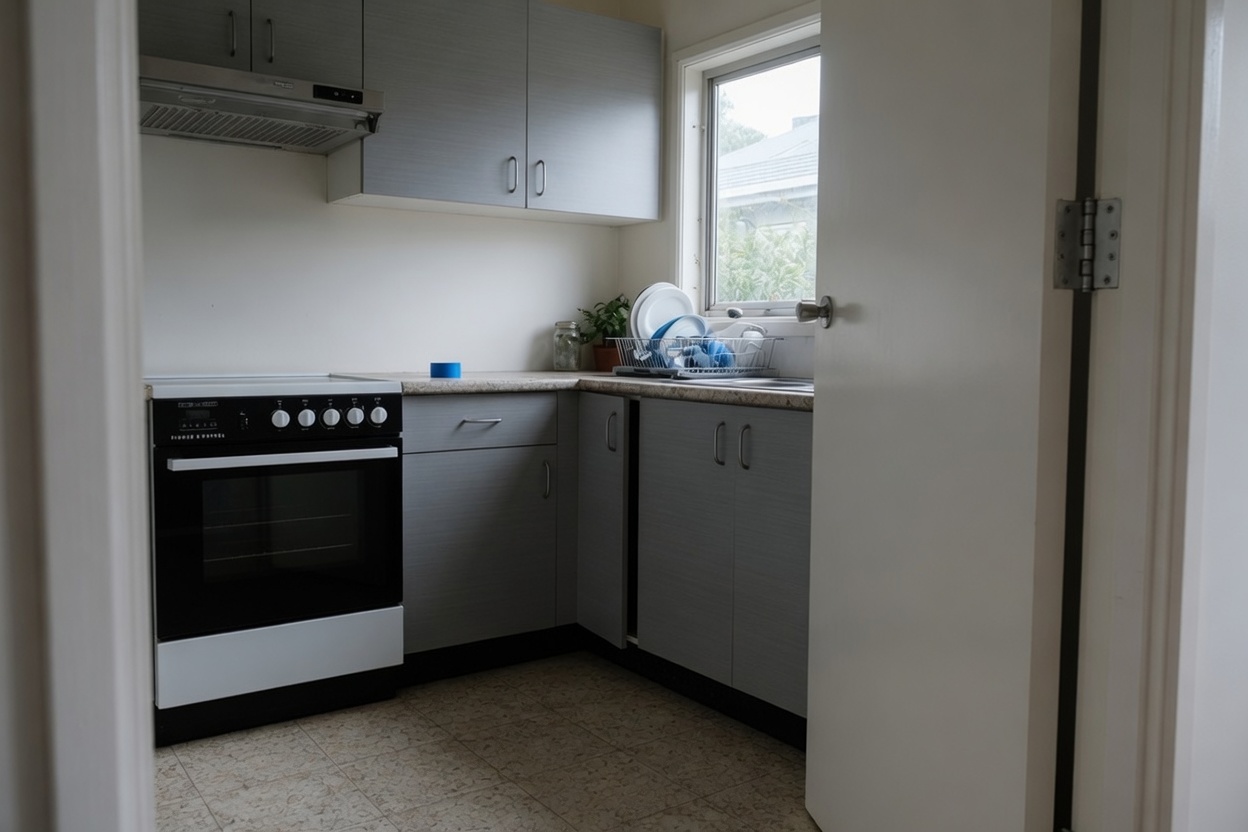
A tenant’s just handed back the keys on a place in Papakura, and the kitchen looks every one of its fifteen years. The benchtop’s fine. The layout works. But the doors are chipped, the laminate’s peeling at the edges, and two hinges have packed it in. You don’t need a new kitchen. You need new fronts — and you need them done before the next tenant signs.
That’s the job this guide is about. Replacing kitchen cupboard fronts is the trade name for swapping the doors and drawer fronts while leaving the carcasses — the cabinet boxes bolted to your wall — exactly where they are. Done right, it can take a dated kitchen and make it read as near-new for a fraction of a rebuild. Done on the wrong kitchen, it’s money you’ll wish you’d spent elsewhere.
We’ve written this for two readers. Landlords and property managers come first — because for a rental, replacing cupboard fronts is a turnover decision with timing, durability and tax consequences a homeowner never thinks about. Homeowners come second, further down, with the small-job version and an honest line on when you’re actually after something bigger.
And we’ll be straight about where our job ends. If your carcasses are sound and you want fresh fronts, that’s a minor alteration we handle most weeks across Auckland. If you’re really after a full reface with new end panels, or you want to move the sink and knock out a wall, that’s a renovation — and that’s our parent company, Superior Renovations. Same group, same trades, different scale. We’ll tell you which camp you’re in before you spend a dollar.
What Replacing Kitchen Cupboard Fronts Actually Means (and Roughly What It Costs)
Free cost calculator
How much will your project cost?
Get an instant Auckland price range for your project — no details required to see it.
The word “replacing” hides at least three different jobs at three very different prices. Most dodgy quotes — and most homeowner confusion — come from one person asking for a door swap and another pricing a reface. Before you get a single number, work out which job you’re actually buying.
Fronts, Drawer Fronts and the Carcass Test
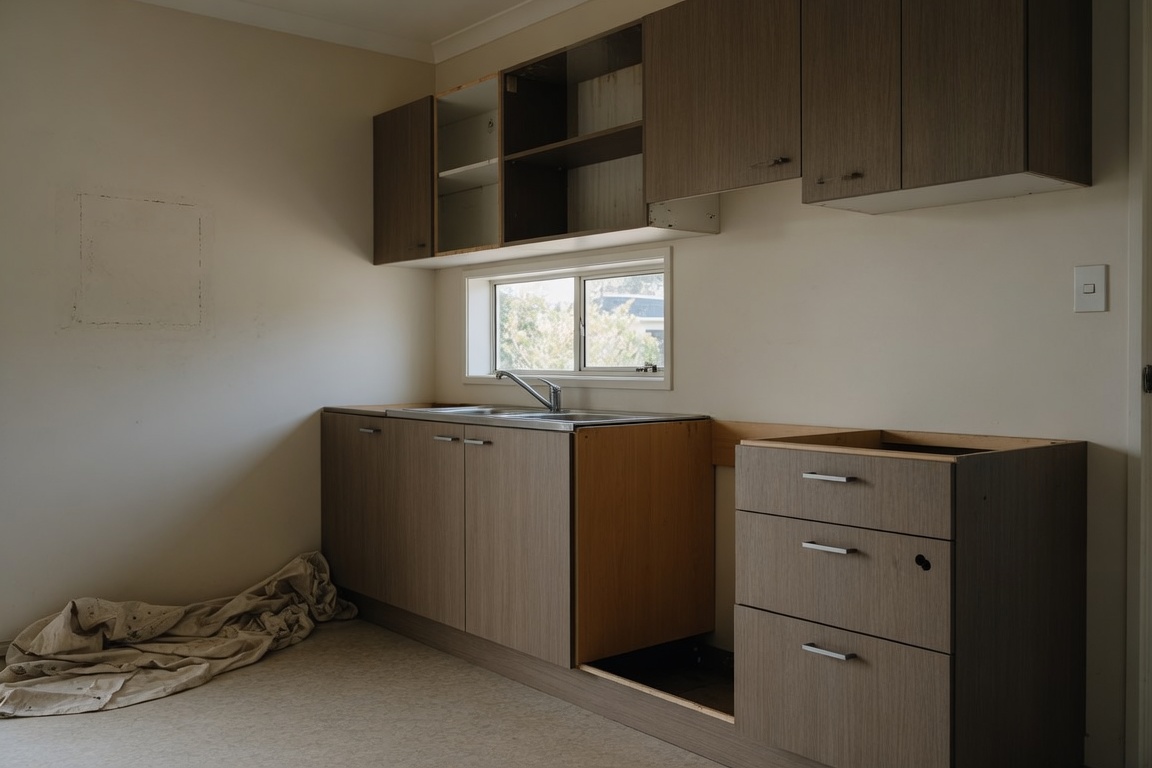
The cheapest, cleanest version is the one in the heading: new doors, new drawer fronts, new hinges and handles, fitted to the cabinet boxes you already own. Nothing structural moves. The plumbing stays. The benchtop stays. The single question that decides whether this is worth doing is the condition of your carcasses.
Open a cupboard and push on the side panel. Is it firm, square, and dry? Good — new fronts will sit true and you’ll get a result that genuinely looks like new cabinetry. Now check under the sink. If the base is swollen, soft, or carrying old water damage, you’ve got a different problem. New doors on a sagging box is lipstick on a leak. It’ll look fine for a year and then the hinges drop and the doors stop closing flush.
💡 Property tip: Before you brief anyone, take a torch and check the cabinet under the sink and the run nearest the dishwasher. Those two spots fail first. If the boxes there are sound, your kitchen is almost certainly a candidate for a front swap rather than a rebuild.
Where Fronts Stop and a Reface Begins
A front swap puts new doors on what you’ve got. A reface goes further — new doors, new drawer fronts, plus the visible cabinet ends and filler panels wrapped in a matching finish, so the whole run looks like one new piece. It’s a bigger job, a bigger spend, and usually a custom order. The jump from “swap the doors” to “reface the lot” is where a lot of people get caught out, because the second one costs several times the first.
Past that sits the full renovation: new carcasses, new benchtop, a changed layout. The moment you’re moving the sink, adding an island, or pulling out a wall, you’re not refreshing a kitchen — you’re building one. That’s a Superior Renovations conversation, and for custom joinery it’s Little Giant Interiors. We’ll bring them in through the same network rather than send you off to start again.
Rough Auckland Costs
Prices move with door count, material and finish, so treat these as the shape of the market rather than a quote. Individual replacement doors typically run from around $60 to $200 each, with drawer fronts on top, and Auckland trade labour generally sits around $120 to $150 an hour. A straightforward door-and-drawer-front swap on a standard kitchen lands in the low thousands; a full reface with new end panels climbs well past that; and a mid-range kitchen renovation in Auckland runs in the order of $28,000 to $35,000. We’ll confirm a fixed price for your own front-swap once we’ve taken a quick look at the kitchen.
If you want the full cost ladder broken down tier by tier, Superior Renovations has already done that work in their guide to the cost of replacing kitchen cupboard doors. We’re not going to repeat it here — our job is the practical decision, not the spreadsheet. For where a front swap fits among our other turnover work, see our minor kitchen alterations in Auckland.
For Landlords: The Between-Tenancy Refresh That Pays for Itself
For a rental, replacing kitchen cupboard fronts isn’t a taste decision. It’s an operational one. A fresh kitchen lets you list at the top of your market band, fills the place faster, and signals to a good tenant that the property’s looked after. The trick is doing it in the gap you’ve actually got — and knowing how the tax treats it.
Timing It to the Turnover
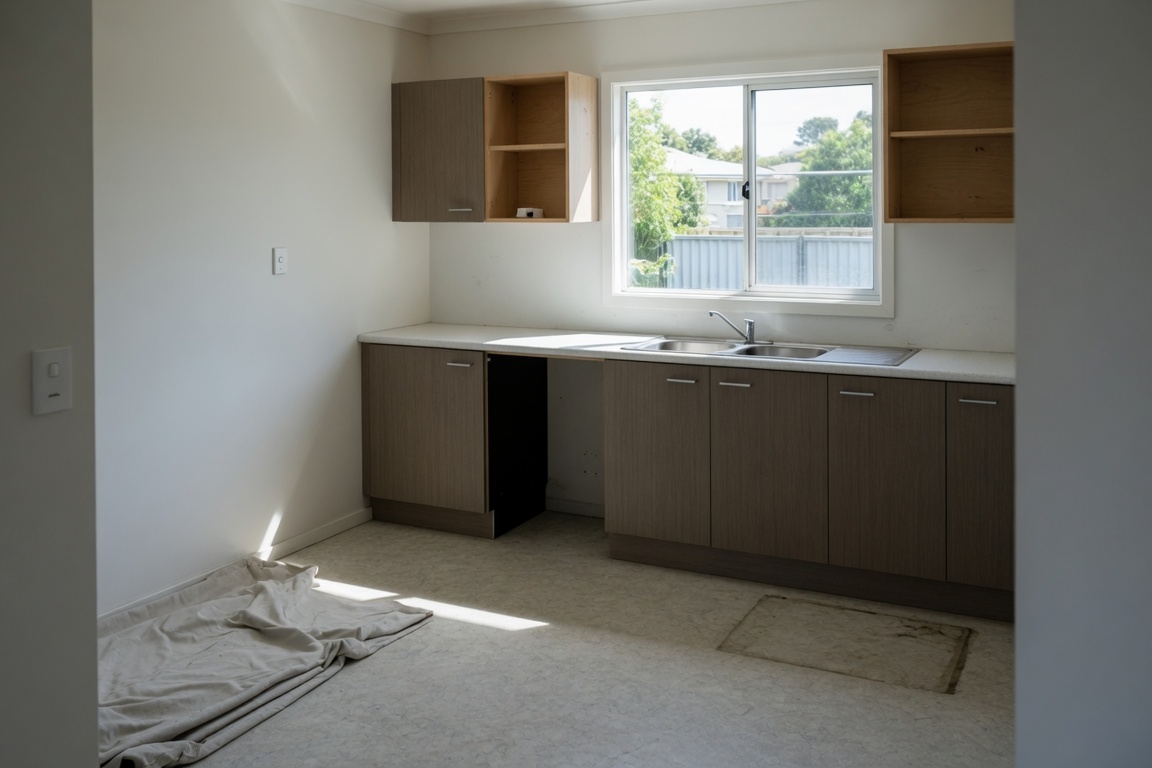
The window for this work is the same window you use for everything else between tenants. In a typical Auckland rental turnover you’ve got roughly 7 to 14 days from the old tenant moving out to the new one signing. New fronts fit that window comfortably — a standard kitchen is usually a one-to-two-day fit once the doors are made or ordered. The thing that blows the timeline isn’t the fitting; it’s the lead time on the doors. Order them the day the notice comes in, not the day the tenant leaves.
This is also the moment to bundle. If the hallway carpet’s tired or the floor’s lifting, doing it alongside the kitchen saves a second mobilisation — one crew, one timeline. We cover the flooring side of a turnover in our guide to laminate flooring costs and installation, which is the surface most Auckland landlords land on for exactly this reason.
💡 Property tip: Brief the kitchen, the floor and any paint touch-ups as one job, not three. A property manager in Henderson recently had us swap cupboard fronts, replace the splashback and lay new vinyl in a single five-day turnover — the tenant moved in on day six with no overlap and no second callout fee.
Spec It for Tenants, Not for Instagram
Homeowners pick fronts they love. Landlords should pick fronts that survive. The right rental spec is a hard-wearing laminate or melamine front in a mid-tone that hides marks, with soft-close hinges and simple handles a tenant can’t snap off. Skip the high-gloss white that shows every fingerprint and the trendy matte black that wipes streaky. You’re choosing a finish that’ll look decent through three tenancies, not one photoshoot.
Soft-close hinges are worth the small premium on a rental specifically because they take the slam out of daily use — the number-one reason cheap doors drop and stop sitting flush. It’s a quiet upgrade that cuts your next maintenance callout.
— Superior Property Services Team
Is It a Repair or a Capital Improvement?
Here’s the part the homeowner guides never cover, and it can change the maths. According to Inland Revenue, repairs and maintenance that restore a rental to its previous state are normally deductible against your rental income, while capital improvements that take the property beyond its original condition are not. Where your cupboard fronts land on that line depends on what you actually do.
Swapping worn-out doors for an equivalent modern replacement — like for like, restoring the kitchen to the state it was in — generally reads as a deductible repair. IRD’s own published example runs the same way for a toilet: replacing one that’s fallen into disrepair is likely repairs and maintenance, but redesigning and completely re-fitting the whole bathroom is more likely a non-deductible capital improvement. Scale and context decide it. A door swap is usually maintenance; folding that swap into a wider reface or layout change pushes the whole job toward capital.
One trap worth flagging: if you’re putting in something for the first time to meet a standard — say a compliant rangehood where there wasn’t one — that first-time work is generally treated as capital, not a repair. The numbers here aren’t ours to rule on. We’re tradespeople, not tax agents, so confirm the treatment of any specific job with your accountant and keep before-and-after photos as your evidence.
Healthy Homes compliance note: While the cabinet doors come off, check your kitchen ventilation. Under the Healthy Homes ventilation standard, a kitchen extractor fan or rangehood installed after 1 July 2019 must have a minimum diameter of 150mm (including ducting) or an exhaust capacity of at least 50 litres per second, and must vent to the outside — not back into the room or the roof space. A kitchen reset is the natural time to bring this up to standard. Breaching the Healthy Homes Standards can expose a landlord to exemplary damages.
If you manage a portfolio and want this run as a repeatable turnover process rather than a one-off scramble, that’s exactly what we set up for our property manager partners. For single-property owners, start with our landlord services.
For Homeowners: When New Cupboard Fronts Are Smart Money — and When They’re Not
If this is your own kitchen, the calculation’s different. You’re not timing a tenancy or worrying about deductions. You just want it to look better without the cost and upheaval of a full renovation. For a sound kitchen with a layout you actually like, replacing the cupboard fronts is one of the smartest small spends in the house. For a kitchen that doesn’t work, it’s a waste — and we’d rather tell you that now.
The Jobs That Are Genuinely Small
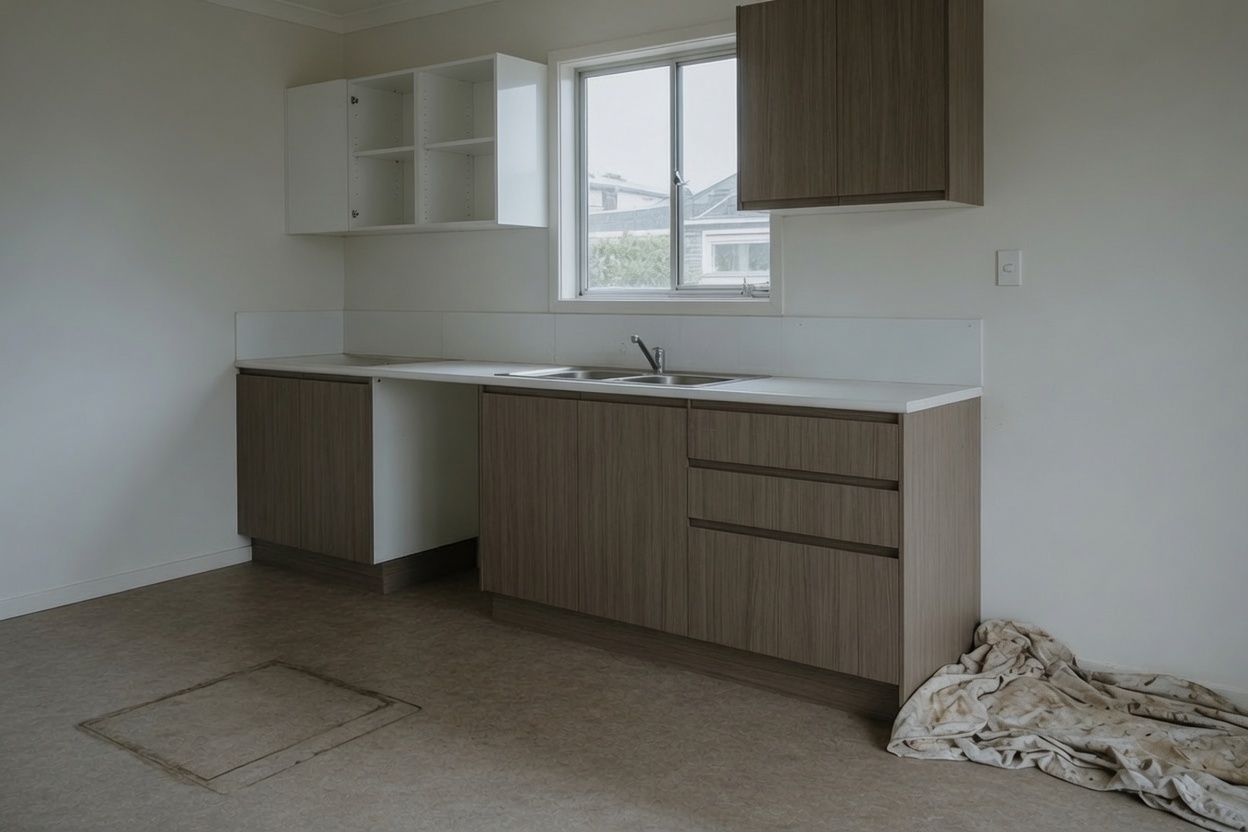
Plenty of kitchen jobs are too small for a renovation company to bother with, which is exactly the gap we fill. A few tired doors on an otherwise fine kitchen. A drawer front that’s delaminating. Hinges that have gone soft so the doors hang crooked. Swapping dated handles and adding soft-close. These are an afternoon’s work for the right tradie, and they’re the kind of job that’s surprisingly hard to get someone to turn up for.
We see this constantly in the character suburbs — Mt Eden, Grey Lynn, Epsom — where a 1990s kitchen has been shoehorned into a villa and the owner just wants it tidied up, not torn out. New fronts and handles can buy that kitchen another five or ten years for very little. That’s our lane.
💡 Property tip: If you’re prepping a Grey Lynn or Mt Eden home for sale, fresh cupboard fronts and new handles photograph far better than a scuffed original kitchen — and cost a fraction of a reno. Buyers read a tidy kitchen as a well-kept house. Pair it with a touch-up paint and the listing lifts.
When You’re Actually After a Reface or a New Kitchen
Here’s the honest bit. New fronts fix how a kitchen looks. They can’t fix how it works. If you’re short on bench space, fighting a dead corner, or living with an awkward work triangle, refacing is false economy — you’ll spend the money and still have the same frustrating kitchen, just with prettier doors. If the carcasses are sagging or water-damaged, same answer: you’re papering over a problem that’ll come back.
When the job is really a reface, a re-layout or a full rebuild, the right people are Superior Renovations for the renovation and Little Giant Interiors for custom joinery. We’re part of the same group, so you’re not starting from scratch with strangers — we hand the project across and the trades carry over. The point of having us in the network is that you get a straight answer about which job you need, from people with no reason to upsell you into the bigger one.
Getting Someone to Actually Turn Up
The real homeowner pain with a small kitchen job isn’t the cost — it’s finding a tradie who’ll return your call for something this size. Renovation outfits don’t want a half-day door swap. Independent tradies are flat out on bigger work. So the job sits on your list for six months while you chase quotes that never come. Sound familiar?
That’s the problem we’re built to solve. One call covers it, and we treat the small jobs as real work, not as favours squeezed between renovations. Browse what falls under our homeowner services or the broader property maintenance we handle across Auckland.
How We Handle a Cupboard Front Job Through the SCG Network
Replacing kitchen cupboard fronts looks like a single task, but it rarely arrives alone. There’s usually a tap that drips, a light that’s failed, a splashback that’s cracked, or a floor that’s due. The advantage of calling us isn’t just the doors — it’s that one call sorts every trade the job touches.
One Call, the Trades Sorted
Superior Property Services is part of the Superior Construction Group, which means we bring the full trade network to a job through a single point of contact. New fronts that need a sparky to move a switch? Sorted on the same visit. A bench that needs a plumber to disconnect the sink? Same crew, scheduled around the fit. You don’t coordinate five tradies — we do. And we respond to every enquiry within one working day, which on its own puts us ahead of most of the market.
Bundling the Turnover or the Refresh
This is where the three-pillar way we work earns its keep. Maintain, Replace, Improve — most cupboard front jobs touch all three. We replace the worn fronts and hinges, maintain or upgrade the ventilation to keep a rental compliant, and improve the finish with new handles or a fresh splashback. One scope, one timeline, one invoice. For a landlord, that’s the difference between a clean five-day turnover and a fortnight of chasing.
💡 Property tip: When you request a quote, list everything the kitchen needs in one go — fronts, handles, ventilation, splashback, floor. A single combined scope is almost always cheaper than calling us back three times, because we’re only mobilising once.
Where We Hand Off
We’re clear about our limits, and that’s a feature, not a weakness. Front swaps, drawer fronts, hinge and handle upgrades, minor alterations — that’s squarely us. Full refaces, new layouts, custom cabinetry and whole-kitchen renovations go to Superior Renovations and Little Giant Interiors, who sit in the same group. Whichever way your job breaks, you make one call to one number and the right team picks it up. From a place in Manurewa to a villa in Remuera, that’s the same promise.
➡ Request a free no-obligation quote from Superior Property Services
➡ Learn more about our minor kitchen alterations in Auckland
➡ Make an enquiry — we respond within 1 working day
What does replacing kitchen cupboard fronts involve?
It means removing your old cabinet doors and drawer fronts and fitting new ones to the existing cabinet boxes (carcasses), usually with new hinges and handles. The benchtop, plumbing and layout stay put. It's the fastest, lowest-cost way to refresh a tired kitchen, and it works well as long as the carcasses are sound. If the boxes are water-damaged or sagging, you're better off looking at a reface or renovation instead.
How much does it cost to replace kitchen cupboard fronts in Auckland?
Treat figures as market ranges rather than a quote. Individual replacement doors typically run around $60 to $200 each, with drawer fronts on top, and Auckland trade labour sits around $120 to $150 an hour. A straightforward door-and-drawer-front swap on a standard kitchen lands in the low thousands. A full reface with new end panels costs several times that, and a mid-range kitchen renovation in Auckland runs roughly $28,000 to $35,000. Get a written quote for your exact kitchen.
Can I just replace the doors and keep the cabinets?
Yes, provided the cabinet boxes are still solid, square and dry. That's the whole point of a front swap — you keep the structure you've already paid for and only renew the visible, hard-wearing parts. Check the cabinet under the sink and the one beside the dishwasher first, as those fail earliest. If they're firm, new fronts will sit true and the kitchen will look near-new. If they're swollen or soft, replacing the doors alone is a short-term fix.
Is replacing kitchen cupboard fronts tax deductible for a rental?
Often, but not always. Inland Revenue treats repairs and maintenance that restore a rental to its previous state as normally deductible, while capital improvements that take it beyond its original condition are not. Swapping worn doors for an equivalent modern replacement usually reads as a deductible repair. Folding it into a wider reface or layout change pushes the job toward capital. First-time work to meet a standard is generally capital. Confirm your specific job with your accountant and keep before-and-after photos.
How long does a cupboard front replacement take?
The fitting itself is usually one to two days for a standard kitchen once the doors are made or in stock. The variable is lead time on the doors, which is why we order them as early as possible. For a rental turnover, new fronts fit comfortably inside the typical 7 to 14 day gap between tenancies, especially if you brief the job the day notice comes in rather than the day the tenant leaves.
What is the difference between replacing cupboard fronts and a full reface?
A front swap puts new doors and drawer fronts on your existing cabinets. A reface goes further, adding new visible cabinet ends and filler panels in a matching finish so the whole run looks like one new piece — a bigger, usually custom, and more expensive job. Beyond a reface sits a full renovation with new carcasses, benchtop and layout. We handle front swaps; refaces and renovations go to Superior Renovations within the same group.
Do new cupboard fronts add value to a rental?
They help you let faster and at the top of your market band rather than adding capital value directly. A fresh, tidy kitchen reads to prospective tenants as a well-maintained property, which shortens vacancy and supports your rent. For the spend involved, it's one of the higher-return turnover jobs a landlord can do, provided the carcasses are sound and you spec a hard-wearing finish that survives multiple tenancies rather than a premium finish that scratches quickly.
Does a rental kitchen need an extractor fan to meet Healthy Homes?
Yes. Under the Healthy Homes ventilation standard, every kitchen with a cooktop must have an extractor fan or rangehood that vents to the outside. A fan or rangehood installed after 1 July 2019 must have a minimum diameter of 150mm including ducting, or an exhaust capacity of at least 50 litres per second. Fans installed before that date must still be in good working order and vent outside. A kitchen refresh is the natural time to confirm yours complies. See tenancy.govt.nz for the full standard.
When should I renovate instead of replacing the fronts?
When the problem is how the kitchen works, not just how it looks. If you're short on bench space, stuck with a dead corner, or the layout fights you, new fronts won't fix it — that's a renovation. Same if the carcasses are sagging or water-damaged. New doors on a failing box is a short-term patch. If any of that sounds like your kitchen, the better spend is sorting the layout once, which is a Superior Renovations job rather than a front swap.
Can you match new doors to my existing cabinets?
In most cases, yes. Auckland kitchens use a range of cabinet sizes and systems, so new doors are usually measured and made to fit your existing boxes, with hinge positions transferred across. Mixed or non-standard cabinet sizes are common in older homes and character villas, and that's exactly what a measured, made-to-fit approach handles. The first step is a look at your kitchen so we can confirm the carcasses are suitable and the doors will line up before anything is ordered.
References
- Inland Revenue — Rental expense deductions (repairs and maintenance vs capital improvements)
- Tenancy Services — Healthy Homes ventilation standard