
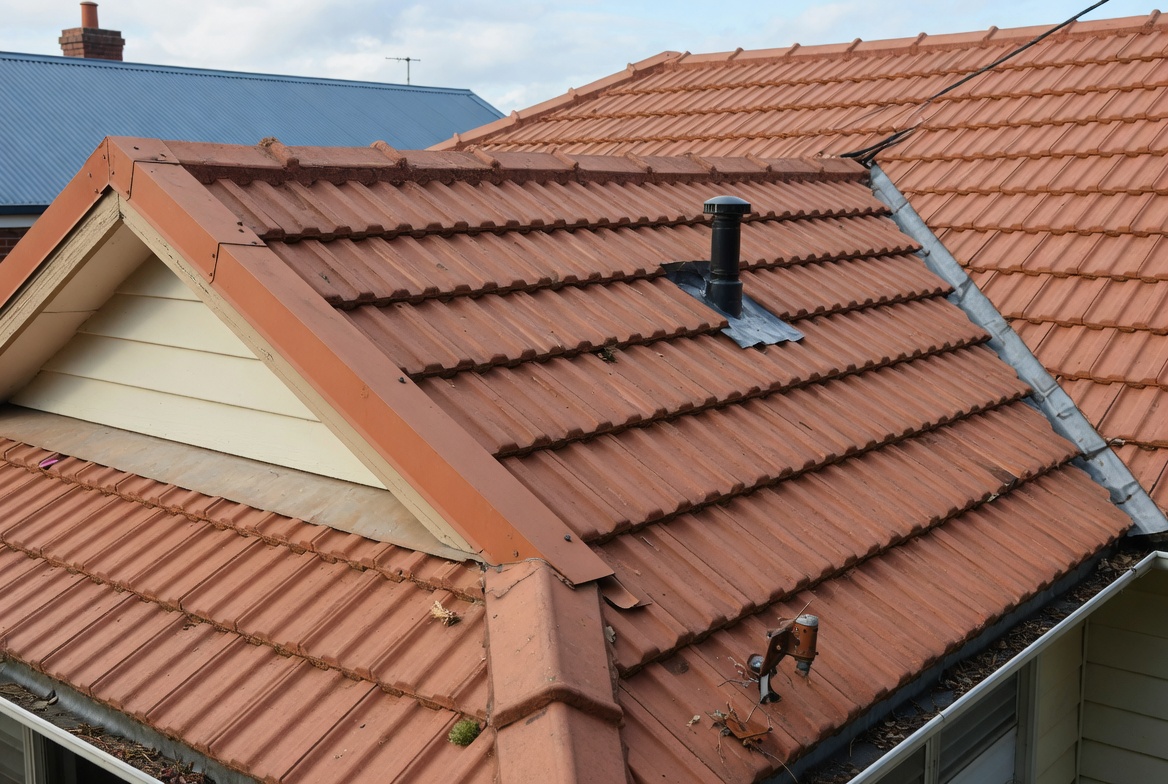
Leaky Roof Repair Auckland: Causes, Costs & What to Do
Quick answer: A leaky roof in Auckland most commonly comes down to failed flashing, cracked or slipped tiles, or blocked gutters — and depending on the cause, repair costs range from around $300 for a minor fix to $3,000+ for more significant work. The first thing to do is contain any interior water damage and get a qualified tradie on site to assess it before the damage spreads.
A leaking roof rarely announces itself at a convenient time. More often it’s a stain appearing on the ceiling after a particularly heavy Auckland downpour, or a slow drip making itself known in the middle of winter when the last thing you want is a repair job.
The problem with leaky roofs is that the damage you can see on the inside is almost never where the leak actually starts. Water travels along framing, roofing underlays, and ceiling linings before it finds a place to drip. By the time there’s a visible stain or a bucket-filling drip, the damage behind it can be considerably worse than it first appears.
Whether you’re a homeowner in Remuera watching a ceiling stain slowly grow, or a landlord in Manukau managing a rental where the tenant has flagged a leak, the steps are the same: act quickly, limit the interior damage, and get a proper assessment from someone who knows what they’re looking at.
This guide covers the most common causes of leaky roofs in Auckland homes, what you can realistically expect to pay for repairs in 2026, and exactly what to do first when a leak appears.
The Most Common Causes of Leaky Roofs in Auckland
Flashing Failure
Failed or deteriorated roof flashing is the single most common cause of roof leaks in Auckland. Flashing is the thin metal sheeting (usually aluminium or galvanised steel) that seals the joins where your roof meets a wall, chimney, skylight, or vent. Over time — particularly on older Auckland homes — flashing corrodes, lifts, or separates at the joins, and water finds its way in at exactly those points.
On a typical 1970s brick-and-tile home in Howick or Papakura, the flashing around chimneys and where the roof meets a parapet wall is often the first thing to go. It’s also one of the more affordable fixes when caught early — a licensed roofing tradie can reseal or replace a section of flashing for between $300 and $800 in most cases.
💡 Property tip: If your home has a chimney you no longer use, having it capped and the surrounding flashing properly sealed is one of the highest-return maintenance jobs you can do. Chimney flashing is responsible for a disproportionate number of roof leaks on older Auckland homes.
Cracked, Slipped, or Missing Tiles
Concrete and terracotta tile roofs are extremely common across Auckland’s older suburbs — Grey Lynn villas, Epsom bungalows, Flat Bush new builds. Individual tiles crack under foot traffic, shift after earthquakes or high winds, or simply degrade over time. A single cracked tile won’t always cause an immediate leak, but once the underlayment beneath it starts to fail, water will find a path.
The fix itself can be inexpensive — replacing a handful of cracked tiles and re-bedding slipped ridge capping typically runs $400–$1,200. The catch is that getting someone up on a tile roof to properly assess which tiles need attention (not just the obvious ones) matters enormously here. Replacing three tiles while ignoring seven others in the same area is a short-term fix.
Blocked or Damaged Gutters
This one surprises homeowners who assume gutter problems can’t cause ceiling leaks. Overflowing gutters — particularly in leaf-heavy areas like Titirangi, Hillsborough, or anywhere with established trees — can force water back up under the roof edge and into the ceiling space. Sagging, cracked, or poorly joined guttering creates the same problem.
Gutter clearing and minor gutter repairs are at the affordable end of the spectrum — typically $150–$400 — but they’re also the most commonly neglected maintenance item on Auckland residential properties. Sound familiar?
Roof Membrane and Flat Roof Failures
Flat roofs and low-pitch sections — common on 1960s–1980s Auckland homes and on additions and garage roofs — rely on a continuous waterproof membrane rather than overlapping tiles. When that membrane cracks, blisters, or separates at the joins, water pools and eventually finds its way through. This is a more significant repair category and is covered in more detail in our waterproofing guide.
“We had a call from a homeowner in Henderson who’d had a slow ceiling stain for about six months — assumed it was a minor gutter issue. When we got up there, the flashing on a dormer window had completely separated and there was significant damage to the framing underneath. What would have been a $600 job when it first appeared was a much bigger repair by the time we got to it.”
— Superior Property Services Team
How Much Does Leaky Roof Repair Cost in Auckland? (2026 Guide)
Roof repair costs in Auckland vary significantly depending on the cause, roof type, accessibility, and how long the leak has been active. Here’s a realistic breakdown based on common repair types.
| Repair Type | Typical Cost Range (NZD) | Notes |
|---|---|---|
| Flashing repair / reseal | $300 – $800 | Higher end if replacement required |
| Cracked / slipped tiles (minor) | $400 – $1,200 | Depends on tile availability and volume |
| Gutter clearing + minor repair | $150 – $400 | Access and gutter length affect cost |
| Flat roof membrane patch | $500 – $2,000 | Full re-membrane can be $4,000–$12,000+ |
| Skylight reseal / replacement | $400 – $1,500 | Higher for full unit replacement |
| Ceiling lining repair (post-leak) | $400 – $2,500 | Includes GIB replacement and repainting |
These figures are indicative for Auckland in 2026. The actual cost of your repair will depend on a proper on-site assessment — call-out and inspection fees typically range from $80–$150 and are usually applied toward the repair cost if you proceed.
💡 Property tip: Always get the roof assessed AND the ceiling space (if accessible) assessed at the same time. The visible ceiling damage and the actual source of the leak are often in different locations — and any mould or framing damage in the ceiling space needs to be identified before lining repairs begin.
Healthy Homes compliance note: For landlords, a leaking roof that causes moisture ingress — including ceiling staining, wet insulation, or mould growth — is a potential breach of the Healthy Homes moisture ingress and drainage standard. Landlords are required to address moisture issues promptly. See tenancy.govt.nz for obligations.
What Pushes the Cost Up
The longer a leak goes unaddressed, the more expensive it becomes — not because the roof repair itself changes, but because of what happens to the ceiling lining, insulation, and framing underneath. Wet insulation loses its R-value and often needs replacing. Wet timber framing can develop mould and rot. GIB ceiling linings that have been saturated need to come out and be replaced, not just repainted over.
Access also affects cost. A single-storey home in Papatoetoe is simpler to work on than a two-storey home with a steeply pitched roof in Remuera. Scaffolding requirements add to the cost on more complex jobs.
What to Do First When You Discover a Roof Leak
Step 1: Contain the Interior Damage
Your first priority isn’t the roof — it’s limiting water damage inside the house. If there’s active dripping, place containers to catch water and move furniture, electronics, and anything valuable away from the affected area. If the ceiling is bulging — which indicates water pooling above the lining — carefully puncture it with a screwdriver to release the water in a controlled way. A bulging GIB ceiling that collapses under its own weight causes far more damage than a controlled release.
Step 2: Find the Source (Carefully)
Don’t go up on the roof yourself in wet or windy conditions. Falls from residential roofs are one of the most common serious injury causes in NZ, and a slippery tile roof in Auckland winter weather is not the place to be investigating. If you can safely access the ceiling space from inside, a quick look with a torch can help identify the direction the water is coming from — but leave the roof itself to a qualified tradie.
Step 3: Call for an Assessment
Contact a licensed property maintenance company or roofing contractor for an assessment. At Superior Property Services, we respond within 1 working day across Auckland — and we can assess the roof, the ceiling space, and the interior damage in a single visit, rather than having three separate contractors each looking at their own piece of the problem.
When you call, note down: when you first noticed the leak, whether it appears after every rainfall or only heavy downpours, and whether there’s any visible discolouration or mould around the stain. That information helps with the diagnosis before anyone gets up on the roof.
“Roof leaks that only appear during heavy rain often indicate a flashing or tile issue at a specific point where water volume overwhelms a compromised seal. Leaks that appear in lighter rain or continuously after it stops are more likely a membrane, gutter, or roof valley issue. Knowing the pattern saves time on the diagnosis.”
— Superior Property Services Team
Step 4: Document Everything
If you have home insurance, photograph the ceiling damage before any temporary repairs are made. Most insurers require evidence of the damage in its original state. This applies to both homeowners and landlords — and for landlords, documenting the timeline of when the issue was reported and when it was addressed is important for Healthy Homes compliance records.
Once the leak is assessed and the source identified, your tradie should provide a written scope of works and a fixed-price quote before any work begins. If someone turns up, does an assessment, and starts talking about open-ended pricing “depending on what we find,” that’s a red flag. A reputable company quotes properly once they’ve assessed the situation. See how our property maintenance service works if you’d like to know what to expect from us.
When a Leaky Roof Means More Than a Roof Repair
Sometimes what looks like a simple roof leak turns out to be connected to a broader weathertightness issue — particularly on monolithic-clad homes built between 1994 and 2004. The leaky building era in NZ produced thousands of homes across Auckland where cladding systems failed to drain properly, and where water entered not just through the roof but through wall cladding, windows, and deck junctions.
If your home was built in this period and has a monolithic or EIFS cladding system, a roof leak may be one symptom of a wider problem that needs assessment beyond a standard roof repair. MBIE’s building performance guidance covers weathertightness assessment requirements for these properties.
For homes outside this era, a standard roof leak is almost always exactly that — and prompt, qualified repair work prevents the small problem from becoming a large one.
💡 Property tip: Annual or bi-annual gutter clearing and a visual roof inspection — particularly after winter or following significant storms — is the most cost-effective roof maintenance strategy for any Auckland property. Most serious roof repairs we attend could have been caught earlier with a basic inspection.
If your repair needs go beyond property maintenance and into full renovation territory — for example, a significant weathertightness remediation or major structural roof repair — our related brand Superior Renovations handles that scope of work.
➡ Request a free no-obligation quote from Superior Property Services
➡ Learn more about our property maintenance services in Auckland
➡ Make an enquiry — we respond within 1 working day
How much does leaky roof repair cost in Auckland?
Roof repair costs in Auckland depend on the cause and extent of damage. Minor repairs such as flashing reseals or a few cracked tiles typically cost $300–$1,200. More significant work — flat roof membrane repairs, extensive tile replacement, or ceiling lining repairs — can range from $1,500 to $5,000 or more. Get an on-site assessment for an accurate quote.
What causes a leaky roof in Auckland?
The most common causes are failed or corroded flashing (around chimneys, skylights, and wall junctions), cracked or slipped roof tiles, blocked gutters causing water to back up under the roof edge, deteriorated flat roof membranes, and failed skylight seals. Older Auckland homes are particularly susceptible to flashing failure and tile movement.
What should I do first when I notice a roof leak?
Contain interior water damage immediately — place containers, move valuables, and if the ceiling is bulging, carefully puncture it to release pooled water in a controlled way. Then photograph the damage for insurance purposes and contact a licensed tradie for an assessment. Do not go on the roof yourself in wet or windy conditions.
Does a leaky roof affect Healthy Homes compliance for landlords?
Yes. A roof leak that causes moisture ingress, wet insulation, ceiling staining, or mould growth is a potential breach of the Healthy Homes moisture ingress and drainage standard. Landlords are required to address moisture issues promptly and maintain the property in a reasonable state of repair under the Residential Tenancies Act.
How do I know if my roof leak is a flashing problem or a tile problem?
Leaks that appear after heavy rainfall at specific points — around chimneys, skylights, or where the roof meets a wall — are often flashing failures. Leaks that appear more broadly or in lighter rain may indicate cracked tiles, failed underlayment, or a membrane issue. A licensed roof inspector can identify the source accurately.
Can I fix a leaky roof myself in Auckland?
Minor gutter clearing is manageable for most homeowners. Anything involving getting onto the roof — tile replacement, flashing repair, membrane work — should be handled by a licensed tradie. Falls from residential roofs are a serious risk, and unlicensed roof repairs can also void your home insurance or create liability issues for landlords.
How quickly does a roof leak need to be repaired?
As soon as possible. Water damage compounds quickly — wet ceiling linings, insulation, and timber framing deteriorate the longer they stay wet. What might cost $500 to repair if addressed promptly can become a $3,000–$5,000 job if left for a season. For landlords, delays in addressing leaks can constitute a breach of landlord obligations.
Does Superior Property Services repair leaky roofs in Auckland?
Yes. We provide property maintenance services across Auckland including roof assessment, leak investigation, flashing repair, gutter work, and coordination of tile and membrane repairs. We respond within 1 working day and provide fixed-price quotes after assessment. Call us on 0800 199 888 or request a quote online.