

Insulation Cost NZ – 2026 Ceiling & Underfloor Price Guide
Quick answer: Insulating a standard three-bedroom Auckland home (approximately 100m²) costs between $3,000 and $5,000 for ceiling and underfloor insulation combined — with ceiling insulation running $11 to $40 per square metre installed and underfloor insulation costing $12 to $25 per square metre installed, depending on the product and R-value chosen.
Free cost calculator
How much will insulation cost?
Get an instant Auckland price range for your project — no details required to see it.
In an uninsulated timber-framed house, 30 to 35 per cent of the heat goes out through the roof, 21 to 31 per cent through the windows and 18 to 25 per cent through the walls, with the floor and air leakage accounting for the rest. Your heater is not underpowered. The house is leaking faster than the heater can fill it.
Insulation is the cheapest square metre of comfort you can buy in an Auckland house. Look at the split above and the reason is obvious: the roof is the single largest escape route in an uninsulated home, and ceiling insulation is also the easiest and cheapest area to retrofit. It cuts what you spend heating the place, it lowers the moisture load that feeds mould, and unlike most maintenance spending it is visible to a buyer or a tenant.
For landlords, it’s not optional. The Healthy Homes Standards require all rental properties to meet specific insulation requirements. The deadlines have passed. If your rental isn’t compliant, you’re exposed.
This guide covers what insulation costs across ceiling, underfloor, and wall applications — with Auckland-specific pricing and practical advice from our property maintenance team.
Ceiling Insulation Cost in NZ
Ceiling insulation is where you get the biggest bang for your dollar. Up to 40% of heat loss in a typical NZ home goes straight through the ceiling — so this is always the first priority.
| Product Type | R-Value | Installed Cost (per m²) |
|---|---|---|
| Glasswool batts (e.g. Pink Batts, Earthwool) | R2.6–R3.6 | $11–$18 |
| Polyester batts (e.g. GreenStuf, Mammoth) | R2.6–R3.6 | $14–$25 |
| Wool batts (e.g. Terra Lana) | R2.6–R3.6 | $18–$30 |
| High-performance (R6.0–R7.0) | R6.0–R7.0 | $25–$40 |
For a standard 100m² Auckland home, ceiling insulation typically costs $1,500 to $2,500 installed for R2.9 to R3.6 products. Going higher to R6.0 or R7.0 increases the cost but delivers noticeably better performance — and the difference in comfort is real.
Which Ceiling Insulation Product Should You Choose?
Glasswool (fibreglass) batts like Pink Batts and Earthwool are the most affordable option. They work well and are widely used across NZ. The trade-off is that they can be itchy to handle during installation and absorb moisture if exposed to leaks.
Polyester batts like GreenStuf are non-itchy, breathable, and handle moisture better — making them a good choice for Auckland’s humid climate. They cost more than glasswool but are increasingly popular, especially in homes where ceiling access might be needed later.
Wool products like Terra Lana offer excellent moisture management and acoustic properties. They’re the premium choice and particularly good in older Auckland villas where breathability matters.
💡 Property tip: The R-value is what matters for thermal performance — an R3.6 glasswool batt performs identically to an R3.6 polyester batt once installed. The product choice is about other factors: moisture handling, breathability, comfort during installation, and price.
Underfloor Insulation Cost in NZ
If your home has a raised timber floor with a crawl space underneath, underfloor insulation is the second priority after ceilings.
| Product Type | R-Value | Installed Cost (per m²) |
|---|---|---|
| Polyester batts (e.g. Mammoth, GreenStuf) | R1.3–R1.6 | $12–$25 |
| Polystyrene panels (e.g. Expol) | R1.2–R1.6 | $15–$22 |
| Ground moisture barrier (polythene) | N/A | $7–$15 |
Underfloor insulation for a 100m² home typically costs $1,500 to $3,000 installed, depending on the product, the R-value, and how accessible the crawl space is. Tight crawl spaces (under 400mm clearance) take longer to work in and increase labour costs.
Ground Moisture Barriers
If your subfloor space is damp, a ground moisture barrier (heavy-duty polythene sheeting laid on the ground under the house) is essential. Moisture barriers cost $7 to $15 per square metre installed. Worth getting the category right, because it trips up landlords doing their own compliance paperwork: the ground moisture barrier is not part of the insulation standard. It sits under the separate moisture ingress and drainage standard, which says that where a rental has an enclosed subfloor, a barrier must be installed if it is possible to do so. The specification is precise: either a polythene sheet installed in accordance with section 8 of NZS 4246:2016, or a product with a vapour flow resistance of at least 50MNs/g installed by a professional installer. Tenancy Services notes the polythene option can be laid by a house owner or a building professional, and that landlords are not required to install an alternative where a polythene barrier cannot physically go in. Our guide to all five Healthy Homes standards covers how the pieces fit together.
Damp subfloors are common in older Auckland suburbs: Grey Lynn, Mt Eden, Ponsonby and a lot of North Shore properties built before the 1980s. If the ground under your house is visibly wet after rain, a moisture barrier should be installed before or alongside underfloor insulation. Insulation is only one leg of a warm, dry rental, too — the Healthy Homes heating standard and the ventilation rules both sit alongside it, and getting all three sorted in one visit is usually cheaper than three separate callouts.
Healthy Homes compliance note: Auckland sits in climate zone 1, so the insulation standard requires ceiling insulation of at least R 2.9 and underfloor insulation of R 1.3. Existing ceiling insulation installed before 1 July 2016 passes if it is at least 120mm thick; thinner than that is only acceptable where the landlord can show it met the required R-value when installed and has not degraded by more than 30 per cent. All existing insulation must still be in reasonable condition, meaning no mould, dampness, damage or gaps, and new insulation must be installed in accordance with NZS 4246:2016. The ground moisture barrier is a separate requirement under the moisture ingress and drainage standard. Landlords who do not meet their obligations are in breach of the Residential Tenancies Act 1986 and may face financial penalties of up to $7,200. See the insulation standard on tenancy.govt.nz for the full requirements.
Wall Insulation Cost in NZ — Retrofit and Injected Options
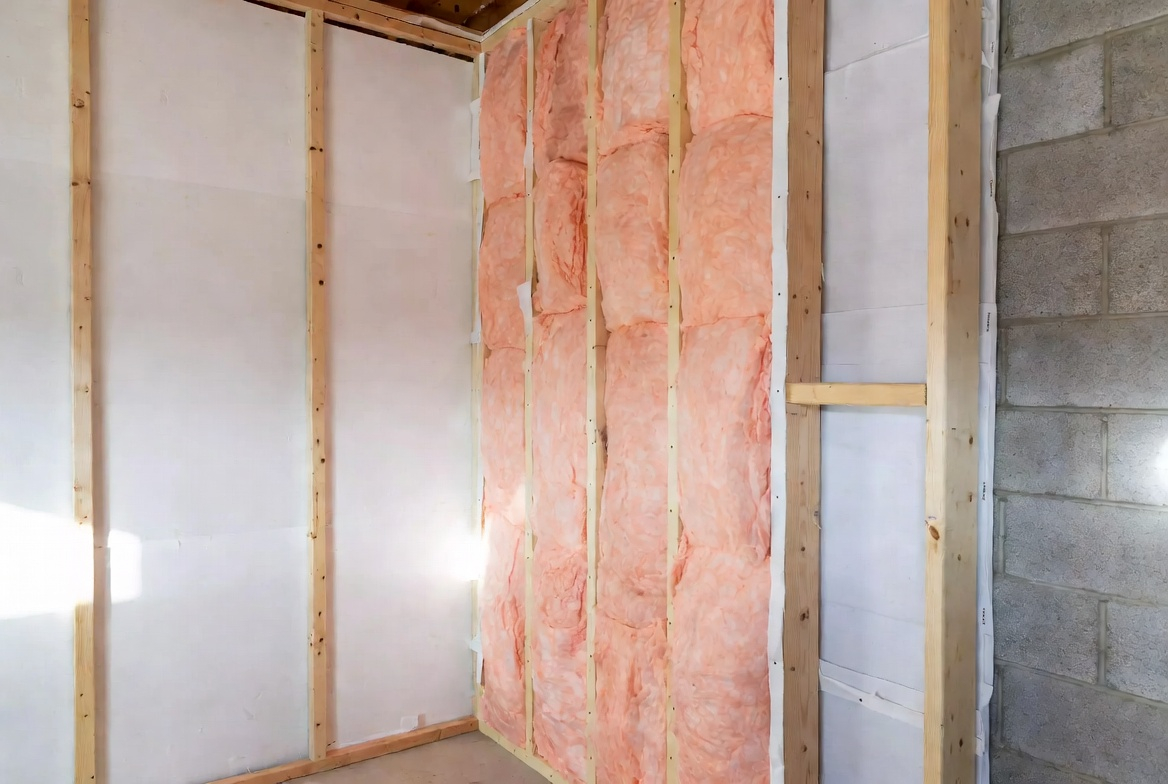
Walls account for about 24% of heat loss, but they’re the hardest and most expensive area to retrofit insulation into. Unlike ceilings and floors, you can’t just lift a hatch and lay batts — the cavity is sealed behind the lining on one side and the cladding on the other.
Retrofitting wall insulation costs from $13 to $30+ per square metre, and unlike ceiling and underfloor work it needs a building consent. The reason is written into the exemption rather than into the method. Schedule 1, clause 13 of the Building Act 2004 exempts “building work in connection with the installation of thermal insulation in an existing building” from consent, “other than in an external wall of the building, or an internal wall of the building that is a fire separation wall”. External walls are carved straight out. Internal walls that are not firewalls are not, which is a distinction worth knowing if you are insulating between a garage and a living area. Which method you use for the external walls comes down to how you get at the cavity.
Injected (Blown-In) Wall Insulation
Injected wall insulation is the least disruptive retrofit, at around $15 to $30 per square metre. An installer drills a grid of small holes, usually from outside through the cladding, and pumps a loose-fill material into each cavity before patching the holes. The fill is polyester fibre, blown mineral wool or a polyurethane foam. There’s no need to strip linings, so you can insulate an occupied home in a day or two. The catch: it only works where the cavity is genuinely empty and accessible, so a pre-work borescope check is worth it on older Auckland weatherboard and brick-veneer homes where framing or dwangs can block the fill.
Open-Wall (Batt) Retrofit
Where the lining is already coming off, standard R2.2–R2.8 wall batts go straight into the open framing for $13 to $22 per square metre in materials and labour. For most Auckland homeowners, this makes the most sense during a renovation when the walls are opened up anyway. Retrofitting into a closed wall this way is possible but means removing and reinstating gib, so it’s far more disruptive and expensive as a standalone job. If you’re planning work through Superior Renovations, that’s the ideal time to add wall insulation.
💡 Property tip: Wall insulation is not part of the Healthy Homes Standards — only ceiling and underfloor are required for rentals. If budget is tight on a compliance job, do the ceiling, underfloor, and moisture barrier first (that’s what the law requires) and treat walls as a later comfort upgrade.
Total Cost: Ceiling + Underfloor + Walls
| Insulation Scope | Typical Cost (100m² home) |
|---|---|
| Ceiling only (R3.2–R3.6) | $1,500–$2,500 |
| Underfloor only (R1.3–R1.6) | $1,500–$3,000 |
| Ceiling + underfloor | $3,000–$5,000 |
| Ceiling + underfloor + walls | $8,000–$15,000+ |
💡 Property tip: No building consent is required for retrofitting ceiling or underfloor insulation in NZ. Wall insulation retrofits do require a building consent from Auckland Council. Ceiling and underfloor installations are typically completed in a single day for a standard home.
Subsidies, Grants and How to Save on Insulation
Warmer Kiwi Homes Programme
EECA’s Warmer Kiwi Homes programme runs grants of 50 to 90 per cent off the cost of ceiling and underfloor insulation. The 90 per cent tier, capped at $3,450, applies if you hold a Community Services Card or a SuperGold Combo card, or live in one of the highest-need areas; 80 per cent applies in certain other areas; 50 per cent is the base tier. The eligibility test that catches most people is ownership: you have to own and live in a home built before 2008. That makes it an owner-occupier programme, so a landlord insulating a rental to meet the Healthy Homes standard cannot use it.
EECA puts the average cost of an insulation retrofit at about $4,300. On the 50 per cent grant you would pay about $2,150. On the 80 to 90 per cent tiers, EECA says to expect to pay between $280 and $800, depending on house size and whether you need ceiling insulation, underfloor, or both. Those are EECA’s published figures rather than our estimates. Check your own position with the Warmer Kiwi Homes eligibility checker, which takes about five minutes.
Auckland Council Retrofit Your Home Scheme
Auckland Council’s Retrofit Your Home scheme let homeowners borrow for insulation and clean heating and repay it through their rates. It closed to new applications in 2020 and has not reopened, so it is not an option for work you are pricing now. If you took a loan out under it before then, you are repaying over nine years through a targeted rate on your rates bill, and the loan carries interest rather than being interest-free. The Council sets the rate annually. We mention it only because a lot of older Auckland insulation advice still lists it as a live option, and it is not.
Other Ways to Reduce Insulation Costs
Most of the major banks run a low-interest or zero-interest top-up on an existing home loan for energy-efficiency work, and insulation is explicitly on the eligible list. EECA maintains the comparison, and the rates as at June 2026 were: Westpac Greater Choices at 0 per cent for five years, up to $50,000; ANZ Good Energy Home Loan at 1 per cent fixed for three years, $3,000 to $80,000; ASB Better Homes Top Up at 1 per cent fixed for three years, up to $80,000; and BNZ Better Future Home Loan Top Up at 1 per cent for up to three years, up to $80,000. Each one requires an existing home loan with that bank and each reverts to the standard rate once the fixed period ends, so the discipline is to clear it inside the low-interest window. EECA’s page on home energy loans has the current terms.
Do the grant arithmetic before the finance arithmetic. A Warmer Kiwi Homes grant reduces what you owe; a loan only changes when you pay it.
— Superior Property Services Team
For landlords, insulation rarely arrives on its own. It usually lands in the same job as a heat pump for the living-area heating standard and a ventilation fix, and we supply and fit ceiling and underfloor insulation across Auckland as part of that. We can scope the lot as a single rental compliance maintenance package so it’s one quote, one visit, one invoice.
Need insulation sorted for your Auckland home or rental?
➡ Request a free no-obligation quote from Superior Property Services
➡ Learn more about our services for Auckland landlords
➡ Make an enquiry — we respond within 1 working day
Supply-Only Versus Installed: Where the Money Actually Goes
Every price in this guide is installed, which is how insulation is quoted and how it should be compared. Batts are sold by the pack, and each pack states the area it covers on the label, so the only way to line a retail price up against an installed quote is to divide the pack price by the coverage and get to a rate per square metre.
That single step exposes what most people are actually asking when they price a bag of insulation. Materials are the smaller half of a ceiling job. The labour, the travel, the disposal of old material and the time spent working in a roof space in an Auckland summer are the rest of it, and they do not shrink because you bought the batts yourself.
Can You Install It Yourself?
Ceiling insulation is the one people attempt, and it is legal to do. Nothing in the Building Act requires a licensed person to lay batts in your own ceiling: Schedule 1, clause 13 exempts thermal insulation from building consent everywhere except an external wall or a fire separation wall. What stops most people is not the law.
The practical obstacles are the ones you find out about on the day. Old ceiling batts are a confined-space job in a hot roof cavity with no floor, and the downlights are the part that matters most: a batt pushed over a fitting that is not rated for it is a fire risk, and the clearances differ by fitting. Underfloor is worse again, because a crawl space under 400mm is genuinely difficult work and the fixing pattern is what determines whether the batts stay up in five years or sag into a useless air gap.
For a landlord there is a further catch. Insulation installed to meet the Healthy Homes standard must be installed in accordance with NZS 4246:2016, and if a tenant later disputes compliance, an installer’s documentation is the evidence. Saving the install cost is a poor trade against a Tenancy Tribunal claim.
Where the Genuine Savings Are
| What people try | Does it save money? | Why |
|---|---|---|
| Buying batts yourself and paying for labour only | Rarely | Installers buy at trade rates, and most will not warrant an install using product they did not supply |
| Doing ceiling and underfloor in the same visit | Yes | One set-up, one travel charge, one crew mobilisation instead of two |
| Choosing the cheapest R-value that still complies | Marginally | The gap between R 2.9 and R 3.6 is small on the quote and permanent in the comfort |
| Taking a Warmer Kiwi Homes grant if you are eligible | Substantially | EECA covers 50 to 90 per cent of the cost, which no product choice can match |
| Bundling with a heat pump or ventilation fix | Yes | Compliance work is one visit if it is scoped as one job |
💡 Property tip: If you are pricing a job yourself, ask each quote to separate materials from labour and to state the R-value and product by name. Two quotes that look $600 apart are often the same labour with a different R-value underneath, and that is the one line that changes how the house feels.
How to Get and Compare an Insulation Quote in Auckland
Insulation quotes are unusually hard to compare, because the thing that varies most is the thing quotes describe least. Two prices for the same house can be $800 apart and both correct, once you know what is inside them.
A quote you can actually compare states five things. The product by brand and type. The R-value for each area. The area in square metres for ceiling and for underfloor separately. Whether a ground moisture barrier is included and to what specification. And whether old material is being removed or new material is going on top.
The Five Questions That Separate the Quotes
| Ask this | What you learn |
|---|---|
| What R-value are you quoting, and is that the installed R-value? | Whether you are comparing like with like. R 2.9 and R 3.6 look similar on a page and differ on the invoice |
| Is the existing ceiling insulation being removed or topped up? | Removal and disposal is real cost. Topping up over degraded material is a real problem |
| How are you handling the downlights and the clearances? | Whether the installer has actually been in the roof space or is pricing off a floor plan |
| Is the ground moisture barrier in this price, and to which specification? | The barrier is a separate Healthy Homes standard and it is often quoted separately |
| What documentation do I get on completion? | For a rental, this is the evidence of compliance. For an owner-occupier it is the warranty |
Get the Site Visit
An insulation quote given over the phone off a floor area is a guess. The two things that move the price, subfloor clearance and roof-space access, are the two things nobody can assess without going in. If a crawl space is under 400mm, the labour changes. If the roof space has no safe access route, the labour changes again. An installer who prices without looking is either padding for the risk or about to hit you with a variation.
For a rental, get the insulation quote alongside the rest of the compliance work rather than on its own. The heating standard, the ventilation requirements and the moisture problems that follow when a house is under-insulated all interact, and the cheapest way through is one scope covering the lot. Our guide to annual rental maintenance costs puts the compliance spend in the context of the rest of the year.
💡 Property tip: Windows are the gap this guide does not cover, and on the numbers above they are the second-largest heat loss in an uninsulated house at 21 to 31 per cent. Insulation is the cheaper fix first, but if you are already planning work, our window replacement cost guide covers what glazing does to that figure.
When a Rental Is Exempt From the Insulation Standard
Not every rental can be insulated, and Tenancy Services allows for that. There are three insulation exemptions, set out in Subpart 3 of the Healthy Homes Standards Regulations, and a landlord relying on one needs to be able to point at which.
The first covers access. Where a professional installer cannot reach or insulate part of a home safely or practicably, because of the design, limited access, the potential for substantial damage or health and safety, that part is exempt until it becomes possible, for example when the property is next re-roofed. Note the boundary Tenancy Services draws: this does not extend to having to create an access way.
The second is partial, and it has two limbs. Existing underfloor insulation installed when the home was built or converted is acceptable if it is still in reasonable condition and the landlord holds the compliance document from the time, such as a code compliance certificate or a certificate of acceptance. Separately, where a low-pitched roof or a limited ceiling cavity makes the ceiling standard unachievable, the landlord must compensate with higher levels of floor, wall and window insulation meeting the Building Code, and that limb applies to properties consented after 31 October 2007, 30 June 2008 or 30 September 2008 depending on climate zone.
The third covers ceilings and floors with other habitable spaces directly above or below, which is the apartment and multi-unit case.
The September 2025 Amendments
Amendments to the Healthy Homes Standards took effect on 25 September 2025 and are worth knowing about if you own older stock. They resolve technical inconsistencies and overlaps with older regulations: a property that was already compliant under the Smoke Alarm and Insulation Regulations 2016 may be exempt from further insulation work, and the standards now override specified conflicting provisions in the Housing Improvement Regulations 1947 covering heating, ventilation, window openings and drainage. The practical effect is that landlords follow one set of rules rather than reconciling three.
An exemption still has to be recorded. It goes in the healthy homes compliance statement attached to the tenancy agreement, and the reasoning has to hold up if a tenant challenges it. If you are not certain which exemption applies to a property, get the assessment done and documented rather than assuming, because the burden of proof sits with the landlord.
💡 Property tip: Tenancy Services runs a free online insulation tool that tells you whether a rental needs an upgrade, and the guidance document behind the standard sets out the exemptions in full. Both are linked from the insulation standard page in the references below. Where your obligations sit more broadly, our guide to landlord repair obligations covers the rest of the Residential Tenancies Act picture.
How much does insulation cost in NZ?
For a standard three-bedroom NZ home (approximately 100m²), ceiling and underfloor insulation combined typically costs $3,000 to $5,000 installed. Ceiling insulation alone runs $1,500–$2,500 and underfloor insulation costs $1,500–$3,000. Adding wall insulation during a renovation pushes the total to $8,000–$15,000+. Government subsidies through Warmer Kiwi Homes can reduce out-of-pocket costs to $500–$1,000 for eligible households.
How much does ceiling insulation cost per square metre in NZ?
Ceiling insulation costs between $11 and $40 per square metre installed in New Zealand. Glasswool batts (Pink Batts, Earthwool) at R3.2–R3.6 cost $11–$18/m². Polyester batts (GreenStuf, Mammoth) run $14–$25/m². Wool insulation like Terra Lana costs $18–$30/m². Higher R-value products (R6.0–R7.0) for maximum performance cost $25–$40/m².
What insulation R-value is required for Healthy Homes in NZ?
The Healthy Homes Standards require ceiling insulation of at least R2.9 for new installations (existing pre-July-2016 ceiling insulation passes at 120mm thickness in reasonable condition), and underfloor insulation of R1.3 minimum. Auckland is climate zone 1, so R 2.9 and R 1.3 are the figures that apply. A ground moisture barrier is required where a rental has an enclosed subfloor and installation is possible, but that requirement sits under the separate moisture ingress and drainage standard, not the insulation standard. All existing insulation must be in reasonable condition with no mould, dampness, damage or gaps, and new insulation must be installed in accordance with NZS 4246:2016.
Do I need a building consent for insulation in NZ?
No building consent is required for retrofitting ceiling or underfloor insulation in New Zealand. Wall insulation retrofits do require a building consent from your local council because they involve modifying the external wall cavity. Ceiling and underfloor installations are typically completed in a single day for a standard-sized home.
What government subsidies are available for insulation in NZ?
The Warmer Kiwi Homes programme provides subsidies of 80–90% of insulation costs for eligible households. To qualify, your home generally needs to be built before 2008 and you need a Community Services Card, SuperGold card, or live in a qualifying low-income area. Auckland Council's former Retrofit Your Home loan scheme closed to new applicants in 2020 — check EECA's Warmer Kiwi Homes for current support.
How much does underfloor insulation cost in NZ?
Underfloor insulation in New Zealand costs $12–$25 per square metre installed, depending on the product type and accessibility. Polyester batts run $12–$25/m² and polystyrene panels cost $15–$22/m². A ground moisture barrier adds $7–$15/m². For a 100m² home, total underfloor insulation including moisture barrier costs $1,500–$3,000.
Is insulation a good investment for Auckland homeowners?
Yes. Insulation typically pays for itself within 3–5 years through energy savings of 20–30% on heating costs. Beyond energy savings, insulation reduces moisture and mould, improves comfort, and adds property value — 90% of NZ homebuyers rate energy efficiency as a priority. For rental property owners, insulation is a Healthy Homes legal requirement.
What is the best insulation for Auckland's climate?
Auckland's mild but humid climate suits polyester or wool insulation products that handle moisture well without trapping it. GreenStuf polyester is a popular choice for its breathability and non-irritant properties. Terra Lana wool excels in older villas where breathability and acoustic performance matter. Glasswool (Pink Batts) is the most affordable option and performs well when installed correctly in dry conditions.
Does Superior Property Services install insulation in Auckland?
Yes. Superior Property Services coordinates insulation installation across Auckland — ceiling, underfloor, and moisture barriers. We are particularly set up for landlords needing Healthy Homes compliance work, bundling insulation with other maintenance like LED upgrades, ventilation, and general property maintenance through a single point of contact. Call 0800 199 888 or request a quote online.
How much is a bag of insulation in NZ?
Batts are sold by the pack and each pack states the area it covers, so the only useful comparison is price per square metre rather than price per bag. Installed, ceiling insulation runs $11-$40/m2 and underfloor $12-$25/m2 depending on product and R-value. Materials are the smaller half of a ceiling job: the labour, travel and time spent working in a roof cavity make up the rest, and buying the batts yourself rarely beats an installer's trade pricing, because most installers will not warrant an install using product they did not supply.
Can a landlord get a Warmer Kiwi Homes grant for a rental property?
No. Warmer Kiwi Homes requires you to own and live in the home, which makes it an owner-occupier programme. A landlord insulating a rental to meet the Healthy Homes insulation standard pays the full cost. Grants run from 50 to 90 per cent for eligible owner-occupiers in homes built before 2008, with the 90 per cent tier capped at $3,450 for Community Services Card or SuperGold Combo card holders and those in the highest-need areas.
When is a rental property exempt from the healthy homes insulation standard?
There are three exemptions under Subpart 3 of the Healthy Homes Standards Regulations. Where a professional installer cannot safely or practicably access an area, that part is exempt until it becomes possible, for example at the next re-roof, though this does not extend to creating an access way. A partial exemption covers existing underfloor insulation installed at build or conversion where the landlord holds the compliance document, and properties with low-pitched roofs or limited ceiling cavities that compensate with higher floor, wall and window insulation. The third covers ceilings and floors with other habitable spaces directly above or below. Any exemption must be recorded in the healthy homes compliance statement.
References
- Tenancy Services – healthy homes insulation standard (R-values, 120mm rule, exemptions)
- Tenancy Services – moisture ingress and drainage standard (ground moisture barrier)
- Building Act 2004, Schedule 1 clauses 13 and 13A – thermal insulation and ground moisture barrier exemptions
- EECA – Warmer Kiwi Homes grant tiers, eligibility and average costs
- EECA – home energy loans offered by New Zealand banks
- Level (BRANZ) – typical heat losses from an uninsulated house
- Auckland Council – Retrofit Your Home repayments (scheme closed to new applications)